Blog
2026 Best Iron Square Pipe Types for Global Buyers?
Choosing the best Iron Square Pipe for 2026 requires more than comparing price lists. Global buyers now face unstable freight costs, changing energy prices, and uneven steel availability. The World Steel Association’s Short Range Outlook, published in October 2024, projected global steel demand near 1.77 billion tonnes in 2025. That scale shows why small specification errors can create large procurement risks.
Not every pipe suits every project. Carbon steel square pipe often serves structural frames, machinery guards, and warehouse supports. Galvanized pipe performs better where moisture reaches exposed surfaces. Hollow sections manufactured under EN 10219 may fit European structural projects, while ASTM A500 products remain common in North American construction. ISO 657-1 also provides useful dimensional guidance for welded steel hollow sections. Standards matter more than attractive photographs.
Look closely at the details. A buyer should verify grade, wall thickness, outside dimensions, corner radius, weld quality, coating mass, and mill test certificates. A 100 × 100 millimeter pipe with a thin wall may look strong, yet fail a demanding load calculation. That is where experience becomes valuable. No single type wins everywhere.
This guide compares the leading Iron Square Pipe types expected to matter in 2026. It considers strength, corrosion resistance, fabrication, compliance, lead time, and total delivered cost. Data from recognized steel organizations supports the discussion, but local conditions still decide the final choice. This is not a perfect formula. Regional standards, supplier consistency, and real inspection results can change the answer. Smart purchasing leaves room for verification.
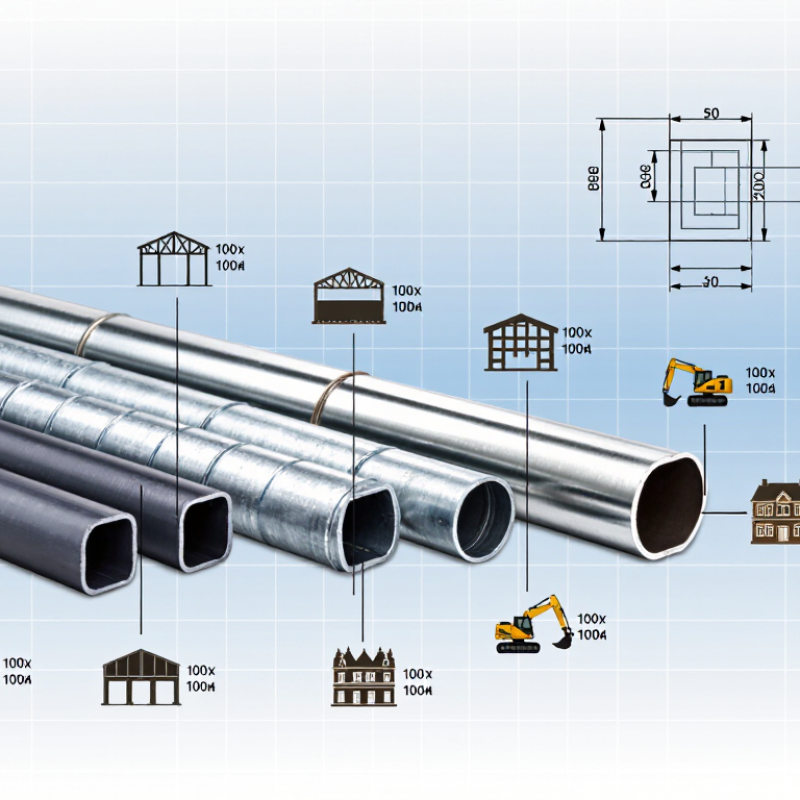
What Are Iron Square Pipes and How Are They Classified?
2026 Best Iron Square Pipe Types for Global Buyers?
What Are Iron Square Pipes and How Are They Classified?
“Iron square pipe” usually means a square hollow section made from carbon steel, not pure iron. Its four flat sides create efficient load distribution for frames, gates, supports, and mechanical structures. The World Steel Association reported approximately 1.89 billion tonnes of crude steel production in 2023, showing the broad industrial base behind these products.
Classification starts with manufacturing method. Cold-formed welded pipes are common because they offer accurate dimensions and efficient production. Seamless square sections are less common and generally serve demanding applications. Standards such as ASTM A500 and EN 10219 classify structural hollow sections by mechanical performance, dimensions, and manufacturing requirements. Check the weld.
Buyers also compare steel grade, wall thickness, outside dimensions, surface condition, and length tolerance. Typical finishes include black steel, galvanized steel, and painted surfaces. Galvanizing improves corrosion resistance, but it does not repair poor welding or thin walls. The World Steel Association’s World Steel in Figures 2024 also highlights steel’s continued importance in construction and manufacturing, yet market terminology remains inconsistent.
A practical specification should state 40 × 40 mm dimensions, a 2.0 mm wall, grade, length, coating, and inspection documents. Do not rely on “heavy duty” alone. It sounds useful, but it is not a measurable classification. A mill certificate can still be misread, especially when local naming differs from international standards.
Which Iron Square Pipe Types Suit Different Construction Applications?
Choosing the right iron square pipe depends on the construction application, not appearance alone.
Hot-rolled square pipes suit heavy frames, warehouse columns, and equipment supports because they tolerate substantial loads.
Cold-formed pipes offer cleaner dimensions and smoother surfaces for partitions, furniture frames, and light structural work. Their thinner walls can reduce weight, but may deform under concentrated loads.
Galvanized square pipes perform better outdoors, especially for fences, walkways, and agricultural structures exposed to rain. Stainless iron-based pipes are useful near coastal areas or processing environments, where corrosion resistance matters more than initial cost.
Wall thickness, outside dimensions, weldability, and load direction should be checked against the project drawings. A pipe can look strong and still fail when unsupported spans are too long. That mistake is easy to underestimate.
Tips: Confirm the required steel grade, tolerance, and coating thickness before purchase. Ask for mill test certificates and inspect several random bundles.
Measure corner squareness and wall thickness, not only length. Local standards may differ, so technical approval should come from a qualified engineer.
In practice, buyers sometimes focus on price and overlook cutting waste, transport weight, or protective coating repairs.
I have found that a slightly heavier section often provides better reliability, but this is not universal. Soil moisture, connection design, and maintenance access can change the decision.
How Do Steel Grades, Sizes, and Wall Thicknesses Affect Performance?
Choosing the best iron square pipe starts with the steel grade, not the lowest quoted price. ASTM A500/A500M lists minimum yield strength of 46 ksi for Grade B and 50 ksi for Grade C. That difference can matter under heavy frames, repeated loading, or impact. European buyers may compare S235JRH and S355J2H, with nominal yield strengths of 235 and 355 MPa for thinner sections. Always check the exact edition and thickness range.
Size changes performance dramatically. A 50 × 50 mm square section behaves differently from a 100 × 100 mm section, even with the same wall thickness. Larger outside dimensions increase bending stiffness because material moves farther from the neutral axis. The American Institute of Steel Construction uses this section-property approach in its design manuals. ASTM A500 also controls outside dimensions, wall thickness, and corner geometry. Tight corners are not cosmetic. They influence stress concentration and usable area.
Wall thickness affects strength, weight, welding heat, and corrosion allowance. A 3 mm wall may suit light partitions, while 6 mm is more credible for exposed supports or machinery frames. The extra steel also raises shipping cost. World Steel Association data recorded about 1.89 billion tonnes of crude steel production in 2023, but global volume does not guarantee consistent tube quality. Mill certificates, ultrasonic checks, and actual thickness measurements remain necessary. I would not trust nominal size alone. One overlooked issue is local buckling. A thin wall can dent before the whole pipe reaches its calculated capacity.
What Manufacturing Standards and Surface Treatments Should Buyers Compare?
2026 Best Iron Square Pipe Types for Global Buyers
Global buyers should compare square pipe by standard, grade, dimensions, and intended service. “Iron pipe” often means steel hollow section in commercial listings. Confirm this before requesting quotations. Common references include EN 10219 for cold-formed structural sections and ASTM A500 for structural tubing. These standards address strength, tolerances, testing, and manufacturing controls. Ask for mill certificates, heat numbers, welding records, and third-party inspection options. A low price means little if wall thickness varies along a two-meter length.
Surface treatment deserves equal attention. Black steel pipe retains mill scale and usually needs painting or further protection. Hot-dip galvanizing provides a zinc coating for outdoor exposure, but buyers should compare coating thickness, appearance, and relevant galvanizing requirements, such as ISO 1461. Powder coating offers color and a clean finish, yet damaged edges may expose steel. Zinc-rich primers can improve repairability, though preparation quality remains critical. I have seen attractive surfaces hide poor weld cleanup. That mistake is expensive.
Tips: Match treatment to moisture, salt, abrasion, and installation conditions. Request coating-thickness readings from several points, not one polished sample. Check cut ends, corners, and internal surfaces. Confirm whether bundled pipes can be stored outdoors. Specify dimensional tolerances in the purchase contract. Small omissions cause large disputes. Also, avoid comparing certificates alone; inspect packing, labeling, and traceability. Standards guide production, but consistent factory practice determines whether the pipes perform reliably.
How Can Global Buyers Evaluate Suppliers, Costs, and Delivery Requirements?
Global buyers should compare square pipe suppliers through measurable evidence, not attractive quotations. Ask for steel grade, outside dimensions, wall thickness, length tolerance, welding method, and surface finish.
Welded pipes suit many structural projects, while seamless types may serve demanding applications. Galvanized pipes offer better corrosion resistance but usually cost more. Request recent mill certificates and an independent inspection before shipment.
Cost needs a detailed breakdown. Compare material price, cutting, coating, packing, inland transport, ocean freight, insurance, and customs-related charges. A low offer can hide thin walls or loose tolerances.
Check whether prices are based on weight, length, or theoretical weight. This detail matters. Delivery also deserves practical testing.
Confirm production days, inspection timing, loading capacity, port schedule, and moisture-resistant packaging. Photos of bundled pipes can reveal poor protection. Still, photos are not proof.
Tips
Prepare one technical sheet for every supplier. Include drawings, tolerances, quantity, bundle weight, destination port, and required documents.
Ask suppliers to explain delays from raw material shortages or port congestion. Their answer shows experience. A sample test is useful, but it cannot represent every production batch.
Recheck critical dimensions after arrival. Buyers often focus too heavily on unit price and underestimate storage costs caused by late delivery. That mistake is common.
Good evaluation combines technical verification, transparent costing, and a realistic delivery plan.
Article Source:
Exclusive Access
Unlimited Resources
Detailed information on our products to assist you with the planning of your cable management project
Register Now