Blog
2026 Best MCCB Circuit Breaker Types for Global Buyers?
Choosing the right Mccb Circuit Breaker in 2026 requires more than comparing prices or ampere ratings. Global buyers must examine fault levels, installation standards, operating environments, and long-term maintenance needs. A 400 A breaker for a 415 V motor panel may need adjustable thermal and magnetic protection. Its Icu and Ics ratings must match the prospective short-circuit current. Small details matter.
The IEA Electricity 2024 report projects global electricity demand to grow by about 4% annually through 2026. This growth increases pressure on industrial plants, data centers, renewable projects, and commercial buildings. Grand View Research also identifies infrastructure development, industrial expansion, and grid modernization as important circuit breaker market drivers. These trends support stronger demand for reliable MCCB products, but market forecasts cannot replace engineering judgment.
John Cadick, electrical safety author and founder of Cadick Corporation, wrote, “The purpose of grounding is safety, not the operation of equipment.” His point remains practical. A breaker cannot compensate for poor grounding, incorrect conductor sizing, or weak maintenance procedures. It is only one part of a protection system. Buyers should compare IEC 60947-2 or UL 489 compliance, temperature derating, altitude limits, accessory availability, and local certification requirements. Some catalogs look complete. They are not always complete.
This guide compares major MCCB types for global applications. It considers thermal-magnetic, electronic-trip, adjustable, and current-limiting designs. It also examines breaking capacity, selectivity, installation conditions, and service support. The imperfect reality is simple: the cheapest breaker may become the most expensive choice after one serious fault.
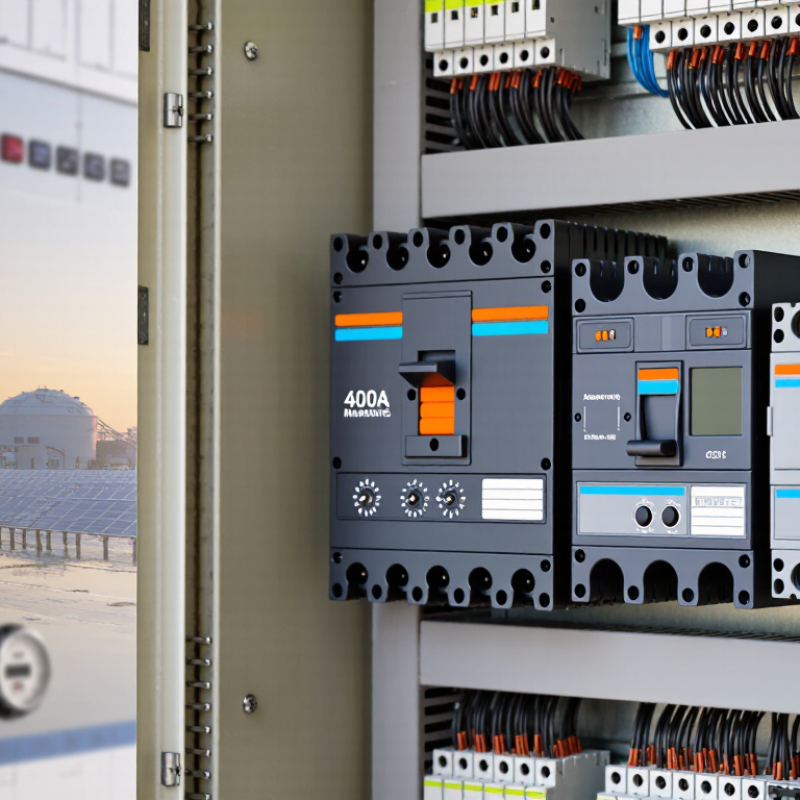
MCCB Circuit Breaker Basics and Core Protection Functions
2026 Best MCCB Circuit Breaker Types for Global Buyers?
MCCB means molded case circuit breaker. It protects low-voltage circuits from overloads and short circuits. Its thermal trip responds to sustained heating. Its magnetic trip reacts almost instantly to severe fault current. Electronic trip units can add adjustable protection and ground-fault sensing. Small detail, major consequence.
The International Energy Agency’s Electricity 2024 report expects global electricity demand to grow by an average 3.4% annually through 2026. Its World Energy Investment 2024 report estimates total energy investment will reach about USD 3 trillion in 2024. More electrical projects mean more attention to interrupting capacity, coordination, and safe isolation. Buyers should compare rated operational voltage, continuous current, Icu, and Ics values under IEC 60947-2. A high ampere rating alone proves little.
In practical panel work, protection settings must match cable size, load behavior, and ambient temperature. Thermal performance can change inside a hot enclosure. Derating is easy to overlook. Selective coordination helps an upstream breaker remain closed when a downstream fault occurs. Adjustable electronic units offer better control, but incorrect settings can weaken protection. I have seen specifications copied between projects without checking prospective fault current. That shortcut needs reconsideration. Mechanical endurance, terminal quality, test access, and auxiliary contacts also matter for global installation teams. Each market still requires verification against applicable local codes.
2026 Best MCCB Circuit Breaker Types for Global Buyers
MCCBs are commonly selected by trip-unit type. Thermal-magnetic units provide thermal overload and magnetic short-circuit protection. Electronic LSI units add adjustable long-time, short-time and instantaneous protection, while LSIG units also include adjustable ground-fault protection. Actual settings, breaking capacity and accessories vary by product and installation requirements.
Function classification based on common MCCB protection terminology used with IEC 60947-2 low-voltage circuit breakers.
Key MCCB Types for Different Voltage, Current, and Application Needs
Choosing the right MCCB starts with system voltage, fault level, and the load’s operating pattern. For low-voltage distribution, many MCCBs serve AC systems up to 1,000 V, while DC applications need specifically rated devices. Check the working voltage, insulation voltage, and short-circuit breaking capacity together. A 400 V panel may still require a high interrupting rating when installed near a transformer.
Current selection should match the conductor and the real load, not only the equipment nameplate. Thermal-magnetic MCCBs suit general feeders, lighting panels, and small motors. Electronic-trip MCCBs provide more precise overload and short-circuit adjustment for large feeders. Adjustable settings can improve coordination between upstream and downstream protection. However, excessive adjustment creates risk. A poorly set trip unit may protect the breaker but stress the cable.
Application details also change the preferred type. Two-pole units fit single-phase circuits, while three-pole and four-pole models serve three-phase systems with or without neutral switching. Motor circuits may need magnetic settings that tolerate starting current without delaying fault protection. Solar and battery systems require DC-rated MCCBs, correct polarity handling, and suitable isolation capability. In humid factories, enclosure protection and terminal corrosion deserve equal attention. Field experience shows that many selection errors come from ignoring ambient temperature and cable grouping. The catalog value is not always the installed value. Verification should include local standards, coordination studies, torque checks, and actual enclosure conditions.
How to Compare MCCB Breaking Capacity, Trip Units, and Pole Configurations
For global buyers, MCCB selection should begin with breaking capacity, not price. IEC 60947-2 separates ultimate breaking capacity, Icu, from service breaking capacity, Ics. Icu is the maximum fault current the breaker can interrupt. Ics indicates whether it can continue operating afterward. A 25 kA breaker may be unsuitable beside a transformer delivering 36 kA. Confirm the prospective short-circuit current at the installation point. Do not rely on catalog appearance.
Trip units require equal attention. Thermal-magnetic units suit many basic feeders and provide simple overload and instantaneous protection. Electronic units offer adjustable long-time, short-time, instantaneous, and ground-fault functions. These settings improve selectivity between upstream and downstream breakers. However, adjustment without a coordination study can create dangerous delays. Field measurements matter. Cable length, motor starting current, ambient temperature, and enclosure heating can change the decision.
Pole configuration follows the system, not personal preference. Two-pole devices commonly protect single-phase circuits, while three-pole versions serve three-phase loads. Four-pole MCCBs can switch the neutral, but the neutral pole may need a specific switching sequence. IEC 60947-2 remains the key reference for low-voltage performance verification. MarketsandMarkets’ 2024 low-voltage circuit breaker assessment projects market growth from about USD 4.9 billion in 2024 to USD 6.9 billion by 2029. That growth increases choice, but not clarity. A neat comparison can still miss harmonics, maintenance access, or future load expansion.
| MCCB Type | Typical Rated Current (In) | Typical Ultimate Breaking Capacity (Icu) at 400/415 V AC | Common Trip Unit | Pole Configuration | Typical Applications | Main Buying Advantages | Selection Cautions |
|---|---|---|---|---|---|---|---|
| Compact thermal-magnetic MCCB | 16–160 A | 18–36 kA | Fixed thermal overload and fixed magnetic short-circuit protection | 2P, 3P, 4P | Small commercial distribution boards, workshops, pumps, and general feeder protection | Simple operation, low maintenance, economical installation, and no auxiliary power required | Long-time and instantaneous settings are usually limited; verify ambient-temperature derating and cable coordination |
| Adjustable thermal-magnetic MCCB | 63–630 A | 25–70 kA | Adjustable thermal overload and adjustable magnetic short-circuit trip | 3P, 4P | Industrial feeders, motor control panels, building distribution, and transformer secondary protection | Better coordination with downstream breakers and greater flexibility for changing loads | Check the available adjustment range, minimum magnetic setting, and coordination study requirements |
| Electronic trip MCCB | 100–1,600 A | 36–100 kA | Electronic L, S, I or L, S, I, G functions; some models include neutral protection | 3P, 4P | Main low-voltage switchboards, data centers, industrial plants, and high-load commercial buildings | Accurate adjustable protection, improved selectivity, event indication, and optional measurement functions | Confirm control-power requirements, sensor rating, electromagnetic compatibility, and battery or display features |
| High-breaking-capacity MCCB | 125–1,600 A | 70–150 kA | Thermal-magnetic or electronic adjustable trip unit | 3P, 4P | Utility incomers, industrial substations, generator outputs, and installations with high prospective fault current | Suitable for systems where the calculated short-circuit current exceeds standard MCCB ratings | High Icu does not automatically equal high Ics; compare both ratings at the actual system voltage |
| Current-limiting MCCB | 63–800 A | 50–150 kA | Fast thermal-magnetic or electronic trip system with current-limiting construction | 2P, 3P, 4P | Dense commercial installations, industrial distribution, and systems requiring reduced let-through energy | Can reduce peak let-through current, arc energy, and mechanical stress on downstream equipment | Verify current-limiting curves, let-through energy, fuse or breaker coordination, and replacement requirements |
| MCCB for motor circuits | 16–800 A | 25–100 kA | Adjustable magnetic protection, motor-compatible overload protection, or coordinated motor-protection arrangement | 3P | Three-phase motors, compressors, conveyors, fans, pumps, and machine-building applications | Can accommodate motor starting current when correctly coordinated with contactors and overload relays | Do not use a standard instantaneous setting without checking inrush current, locked-rotor current, and Type 1 or Type 2 coordination |
| MCCB with earth-fault protection | 100–1,600 A | 36–100 kA | Electronic L, S, I, G trip unit; ground-fault pickup and time delay are adjustable on selected models | 3P, 4P | Large feeders, generators, transformers, commercial mains, and systems requiring improved earth-fault protection | Supports selective ground-fault coordination and can help reduce equipment damage from sustained earth faults | Confirm grounding system, residual-current sensing method, neutral arrangement, and local code requirements |
| Four-pole MCCB with switched neutral | 63–1,600 A | 25–100 kA | Thermal-magnetic or electronic trip unit; neutral pole may be switched and may be protected depending on design | 4P | TT or TN-S systems, transfer switching, generator changeover, mixed single-phase loads, and commercial buildings | Provides simultaneous isolation of three phases and neutral where required by the installation design | Determine whether the neutral is switched, solid, or protected; never assume the neutral-pole rating or operation |
| Three-pole MCCB for balanced three-phase loads | 16–1,600 A | 18–150 kA | Thermal-magnetic or electronic L, S, I trip unit | 3P | Three-phase motors, balanced heaters, industrial feeders, and three-phase distribution circuits without a switched neutral requirement | Efficient use of panel space and straightforward protection for three-phase conductors | Check whether the neutral can carry harmonic or unbalanced current and whether local regulations require neutral isolation |
| Important comparison note: Icu is the rated ultimate short-circuit breaking capacity, while Ics is the rated service short-circuit breaking capacity under IEC 60947-2. The values above are representative market ranges rather than universal ratings. Final selection must be based on the manufacturer’s test data, system voltage and frequency, prospective short-circuit current, installation category, ambient temperature, altitude, conductor size, selectivity study, and applicable local standards. | |||||||
Global Standards, Certifications, and Installation Requirements for MCCBs
2026 Best MCCB Circuit Breaker Types for Global Buyers?
Global MCCB selection starts with standards, not appearance. IEC 60947-2 defines performance requirements, including rated ultimate short-circuit capacity, Icu, and service capacity, Ics. North American projects commonly require UL 489 compliance and documented short-circuit current ratings. NFPA 70 also guides protection, conductor sizing, grounding, and installation practices.
IEA’s Electricity 2024 report expects global electricity demand to grow by an average 3.2% annually through 2026.
That growth increases pressure on distribution equipment, especially in factories, data centers, and commercial buildings.
Certification is not interchangeable.
CE marking confirms applicable European conformity, but it does not replace product testing or local approval. Buyers should request test reports, calibration records, declaration documents, and production traceability.
Check the interrupting rating against the site’s prospective fault current. Confirm voltage, frequency, poles, trip characteristics, and ambient-temperature derating.
Installation details matter too. Verify terminal torque, cable bending space, enclosure IP rating, altitude limits, and clearance requirements. A breaker can meet its certificate yet fail a poorly designed coordination study. This is often overlooked.
Tips:
Ask for the latest IEC or UL test evidence, not a marketing sheet. Compare Icu, Ics, and SCCR carefully. Inspect one sample before bulk purchasing. Record torque values during installation. Allow margin for heat and future loads. Engineers sometimes select ratings too tightly; that decision deserves a second review.
A Practical Guide to Selecting the Best MCCB for International Projects
Selecting an MCCB for an international project requires more than comparing rated current. The correct device must match system voltage, frequency, fault level, and installation conditions. Start with the project’s one-line diagram and confirm the prospective short-circuit current at each panel. A breaker’s interrupting capacity should exceed that value, with a practical safety margin. Check IEC 60947-2 or the standard required by the destination market.
Thermal-magnetic MCCBs suit many small and medium distribution panels. Electronic-trip models offer finer adjustment, useful for large feeders, generators, and selective coordination. Count the poles carefully. A four-pole unit may be necessary where neutral switching is required.
Confirm terminal size, enclosure temperature, altitude, humidity, and available accessories before ordering. Small details can delay a shipment.
Field commissioning reports often show the same problem: the breaker was selected correctly, but the cable or upstream protection was not. Protection settings should reflect the actual conductor capacity and motor starting current. Ask for test certificates, trip curves, dimensional drawings, and routine inspection records. Documents matter across borders. They support inspection and future maintenance.
A cheaper MCCB may become expensive after rework. One overlooked point remains important: calculated fault current can differ from site conditions, especially after transformer changes. Recheck the design before procurement and again before energization.
Article Source:
Exclusive Access
Unlimited Resources
Detailed information on our products to assist you with the planning of your cable management project
Register Now