

China Best Permanent Formwork Magnet Supplier?
Choosing the China Best Permanent Formwork Magnet Supplier? A useful answer starts with more than a low unit price. Formwork magnets hold steel shutters in position during concrete casting, so reliable clamping force, repeatable dimensions, and durable housings matter on site. A magnet that slips on a vibrating table can cause delays and rework. Small details count.
The market context is significant. Global Construction Perspectives and Oxford Economics projected in their Global Construction 2030 report that worldwide construction output would grow by 85% by 2030, reaching US$15.5 trillion. This was a forecast, not a measured result, but it highlights the scale of demand for efficient building systems. McKinsey Global Institute’s 2017 report, Reinventing Construction, estimated that construction labor productivity had risen about 1% annually over the previous two decades, compared with 2.8% for the global economy. Better equipment can help, though magnets alone will not fix productivity.
For buyers, the practical question is whether a supplier can prove performance under real production conditions. Ask for pull-force test methods, steel-grade details, coating options, dimensional tolerances, and sample inspection records. Request clear guidance on magnet placement and release procedures, too. Check factory capacity and communication before a large order. A polished brochure is not proof.
There is no universal “best” supplier. A suitable Permanent Formwork Magnet should match the formwork profile, casting process, and reuse target. Some specifications remain easy to overlook. That deserves a second look.
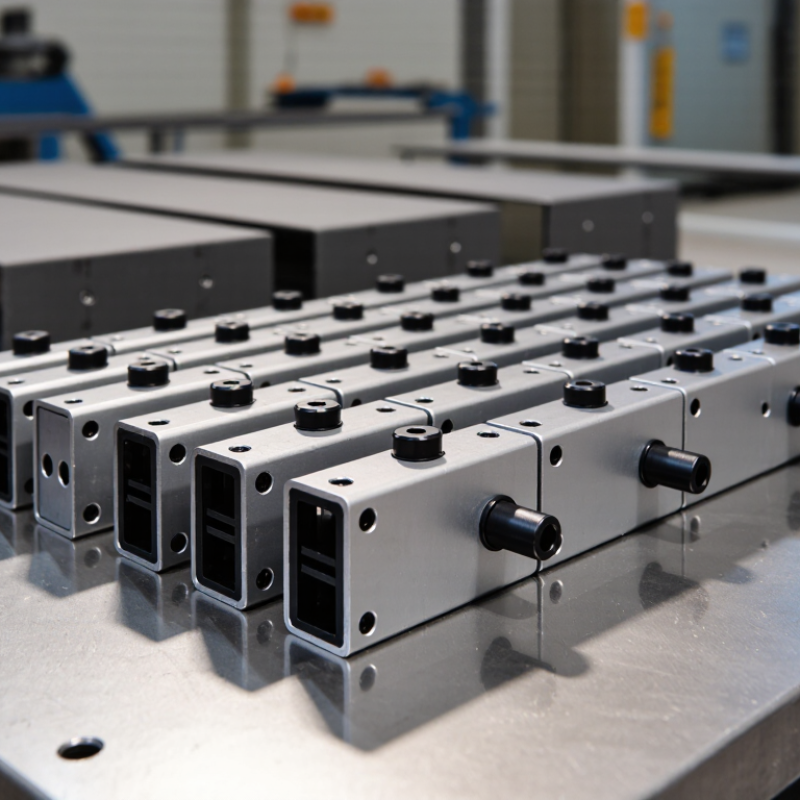
What Is a Permanent Formwork Magnet?
A permanent formwork magnet is a fixture that holds formwork against a steel casting bed during precast concrete production. It uses permanent magnets to create a strong holding force without continuous electrical power. No wiring is needed. Many designs sit inside a steel housing and connect to side rails or formwork profiles.
Some models use a lever or button to redirect the magnetic field, making placement and removal easier. The magnet keeps the formwork steady as concrete is poured and vibrated, helping maintain the intended dimensions. In practice, performance depends on more than the magnet’s rated force. A thin layer of concrete residue, a rough bed, or a small air gap can weaken contact. That detail is easy to miss. A magnet that worked well yesterday may not hold as securely on a dirty surface today.
Before use, operators should check the casting bed, magnet contact face, and release mechanism. Formwork height, concrete pressure, and vibration also affect the required holding force. Choosing a unit by its advertised capacity alone can be misleading; actual conditions matter. Even careful checks are not perfect, so trial fitting and regular inspection remain useful.
| Topic | What It Means | Practical Selection or Verification Point |
|---|---|---|
| Definition | A permanent formwork magnet is a magnetic fixing unit used to secure formwork or shuttering to a ferromagnetic steel casting bed. | Confirm that the unit is designed for the formwork profile, bed surface, and casting process being used. |
| How it works | Permanent magnets provide holding force. Many units use a mechanical button or lever to switch the magnetic circuit between holding and release positions. | Check the operating method, access clearance, and whether the magnet can be released safely after casting. |
| Typical components | A housing, permanent-magnet assembly, switching mechanism, and contact face; some designs include adapters or replaceable connection parts. | Ask for drawings, material details, wear-part information, and instructions for cleaning and maintenance. |
| Common applications | Fixing steel side forms and compatible formwork profiles on steel beds in precast concrete production. | Verify compatibility with the bed and formwork. A magnet intended for one profile may not fit another without a suitable adapter. |
| Holding-force rating | Manufacturers may state a rated holding force, commonly in newtons (N) or kilogram-force (kgf). The rating is a test value, not automatically a safe working load. | Request the test method and conditions. Actual performance depends on contact, steel thickness, surface condition, air gaps, and load direction. |
| Load direction | Magnetic pull-off force and resistance to sliding are different. Side loads, vibration, and forces from fresh concrete can affect the fixing. | Assess the complete formwork arrangement and follow engineering guidance; do not size a system from the pull-off figure alone. |
| Contact surface | Rust, concrete residue, paint, debris, unevenness, or a gap between the magnet and steel can reduce effective holding force. | Specify clean, flat contact surfaces and include inspection and cleaning procedures in operating instructions. |
| Supplier documentation | Useful documentation includes product drawings, dimensions, rated-force information, operating instructions, material details, and inspection guidance. | Evaluate whether documents are clear, consistent, and relevant to the exact model and configuration offered. |
| Quality and traceability | Consistent production and traceable inspection records help buyers assess repeatability between units and batches. | Ask about inspection procedures, batch identification, dimensional checks, and how nonconforming products are handled. |
| Sampling and testing | A sample can help check fit, switching operation, contact, and performance under the buyer’s actual conditions. | Agree on acceptance criteria and test conditions before ordering in volume. Compare results using the same setup. |
| Supplier comparison | The “best” supplier depends on application fit, documented performance, quality controls, communication, lead time, and after-sales support. | Compare suppliers against the same specification and request written confirmation of deviations, delivery terms, and warranty coverage. |
| Safety note | Magnets can create pinch hazards and may be affected by impact or improper handling. A magnetic fixing is only one part of a formwork system. | Follow the product instructions and site safety procedures; have the complete setup assessed for the intended loads and working conditions. |
Specifications and ratings vary by design. Confirm all dimensions, performance claims, and safe-use requirements with the supplier for the exact product and application.
Exclusive Access
Unlimited Resources
Detailed information on our products to assist you with the planning of your cable management project
Register Now
BIM Files

Step Files

Installation Manuals

User Guides

Best Practice Guides
