China Best Aluminum Machining Part Supplier?
Finding the China best Aluminum Machining Part supplier requires more than comparing prices or polished websites. China remains a major aluminum manufacturing center. The U.S. Geological Survey’s Mineral Commodity Summaries 2025 identifies China as the world’s leading primary aluminum producer. This industrial scale supports strong material access, machining capacity, and export experience.
But scale is not enough.
Market research from Grand View Research highlights automotive, aerospace, electronics, and industrial equipment as major users of machined aluminum components. These sectors demand tight tolerances, stable anodizing, traceable materials, and repeatable production. A capable supplier should therefore provide more than CNC equipment. Look for documented inspection procedures, calibrated measuring tools, first-article reports, and clear control over alloys such as 6061-T6, 7075-T6, and 6082-T6.
Details matter.
A reliable factory should explain its process clearly. Ask how it controls tool wear, burrs, surface scratches, dimensional drift, and packaging damage. The International Aluminium Institute also emphasizes recycling, energy efficiency, and lower-carbon production across the aluminum value chain. These factors increasingly influence responsible sourcing decisions.
However, no supplier ranking is perfect. A factory that excels at prototypes may struggle with monthly production. Another may offer excellent machining but limited finishing control. This guide compares China-based suppliers through engineering capability, quality evidence, communication, lead time, and total cost. The objective is practical: identify a partner that can produce a consistent Aluminum Machining Part, not merely deliver an attractive sample.
What Defines a Reliable Aluminum Machining Part Supplier in China?
A reliable China aluminum machining part supplier proves consistency before discussing price. The International Aluminium Institute reported global primary aluminum production above 70 million tonnes in 2023. This scale creates opportunity, but raw material volume does not guarantee machining quality. A capable supplier should provide alloy certificates, heat-lot traceability, and documented control of cutting tools, coolant, and temperature.
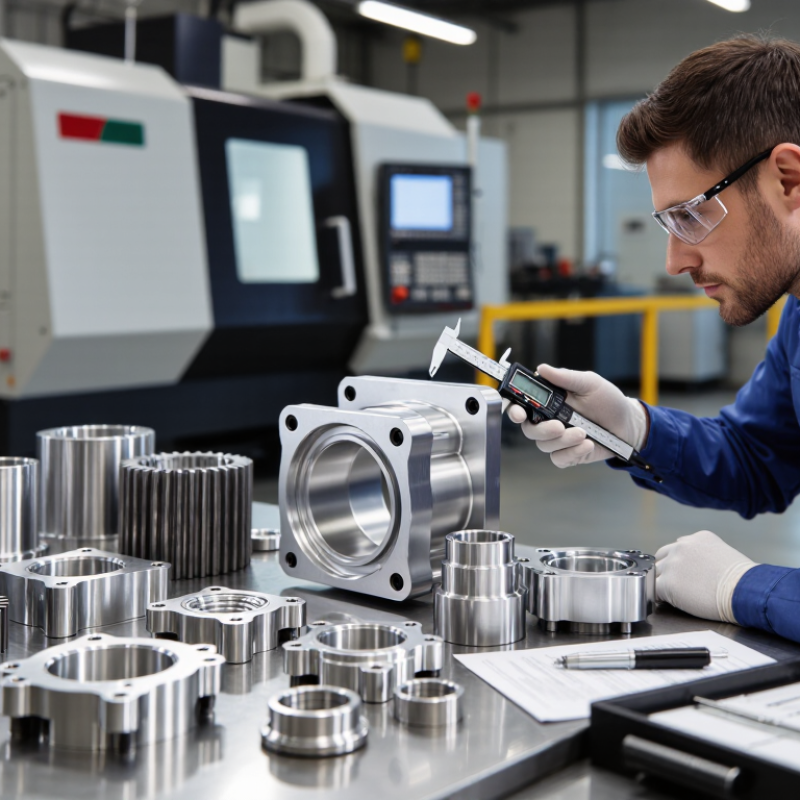
Ask for evidence from the factory floor. Measurement equipment should include calibrated CMMs, height gauges, and surface-finish testers. Inspection reports must show actual values, not only “passed.” ISO’s 2023 Survey recorded more than 1.2 million ISO 9001 certificates worldwide, yet certification alone is not proof of process discipline. Review corrective-action records, first-article samples, and capability data for critical dimensions. Small details matter.
Delivery reliability needs equal attention. The supplier should confirm capacity, backup equipment, packaging methods, and realistic lead times. A clear change-control process prevents an unnoticed material or tool substitution. I would also inspect a production batch, not just a polished sample. No supplier is perfect. Even experienced teams can miss burrs inside a deep pocket or distort thin walls after anodizing. Honest communication about such risks is often more valuable than a flawless sales presentation.
How to Evaluate Supplier Quality, Precision, and Production Capacity
Choosing a China aluminum machining part supplier requires more than comparing quotations. In my experience, quality becomes visible in the details suppliers can prove. Ask for material certificates, inspection reports, and clear process records. A reliable factory should identify the alloy, temper, lot number, and heat-treatment status. Request a sample part made on the intended equipment, not a demonstration piece. Check threads, edge breaks, anodized surfaces, and tool marks. Small details matter.
Precision claims need measurable evidence. Review drawing tolerances, datums, surface-finish readings, and actual CMM reports. Ask how operators control burrs, thermal movement, and fixture repeatability during long runs. First-article inspection can reveal problems before production expands. However, one perfect sample proves little. Inspect several parts from different batches and compare critical dimensions. Suppliers may present their best result, which is understandable, but not enough for a dependable decision.
Production capacity should match your schedule, not just a machine list. Confirm available CNC hours, backup equipment, staffing, inspection capacity, and maintenance planning. Ask for a realistic pilot plan, weekly output, packaging method, and response process for nonconforming parts. A factory may own many machines yet lack skilled night-shift control. That gap is easy to miss. Request an audit, while remembering that audits capture one day. Quality must survive rushed changes, ordinary pressure, and imperfect communication. This is where trust is earned.
Comparing Costs, Lead Times, Certifications, and Customization Services
China Best Aluminum Machining Part Supplier?
Choosing the best aluminum machining supplier requires more than comparing unit prices. A low quote may exclude tooling, surface treatment, packaging, or inspection reports. Ask for a detailed cost breakdown. Material grade, tolerance, batch size, and geometry can change the final price significantly. A reliable supplier should explain these factors clearly.
Lead time also needs careful comparison. Standard parts may ship within one to two weeks, while complex five-axis parts require longer preparation. Confirm drawing review, prototype approval, production, and delivery dates separately. Certification matters too. ISO 9001 can indicate controlled quality processes, but it does not replace part inspection. Request material certificates, dimensional reports, and traceability records when your application requires them.
Tips: Send complete 2D drawings, 3D files, tolerances, quantities, and finishing requirements. Ask for a sample before approving mass production. Check how the supplier handles design changes. Customization should include DFM feedback, anodizing options, threaded holes, and packaging suited to your product. A supplier that only accepts files may miss practical machining risks. I would also compare communication quality, not just price. Delayed answers often create hidden lead-time problems. My own assessment would remain cautious if promised savings seem unusually large.
Steps for Selecting the Best China Aluminum Machining Partner
China Best Aluminum Machining Part Supplier?
Steps for Selecting the Best China Aluminum Machining Partner
Choosing a reliable aluminum machining partner starts with your drawing, not a sales promise. Define the alloy, tolerances, surface finish, annual volume, and delivery window. Include critical dimensions and inspection methods. Small details matter. Ask for recent examples with similar complexity, rather than attractive general photos. A capable supplier should explain tooling choices, machining risks, and expected production limits in clear language.
Review the factory’s equipment and quality process carefully. Confirm whether its machines suit your part size and tolerance requirements. Check its coordinate measuring machines, gauges, calibration records, and material traceability. Request a sample, followed by a small pilot order. Examine burrs, tool marks, hole positions, and dimensional reports. Ask how the team handles drawing revisions, rejected parts, and unexpected aluminum distortion. Their response often reveals more than a polished quotation.
Reliability also depends on communication. Identify one technical contact who can discuss tolerances without vague answers. Confirm inspection approval, packaging, labeling, lead times, and shipping documents before production begins. A written quality agreement can prevent expensive misunderstandings. Certifications may support trust, but they do not replace direct evidence. A perfect checklist can still miss daily process discipline. That is the uncomfortable part. Recheck important assumptions after the first delivery, especially when the surface looks flawless but internal dimensions remain unverified.


