China Top 10 Cone Mantle Liner Manufacturers in 2026
China’s cone crusher industry continues to support demanding operations in mining, aggregates, and construction. In this market, Cone Mantle Liner quality directly affects crushing efficiency, wear life, and maintenance costs. A reliable liner must withstand repeated impact, abrasion, and pressure inside the crushing chamber.
This guide, “China Top 10 Cone Mantle Liner Manufacturers in 2026,” introduces companies with relevant manufacturing experience and technical capabilities. The selection considers material quality, casting precision, production capacity, product range, and after-sales support. Factory certifications, testing procedures, export experience, and customer feedback also deserve careful attention. Details matter here. A small change in liner profile can influence feed distribution and final product shape.
However, no manufacturer is perfect for every crushing site. Ore hardness, crusher model, operating settings, and replacement schedules can change the best choice. Some suppliers may offer competitive prices but limited technical support. Others may provide stronger engineering assistance with higher initial costs. This guide aims to offer a practical reference, not an absolute ranking. Verify specifications carefully before purchasing. Ask for material certificates, dimensional drawings, wear reports, and application records. Real performance should be judged inside the quarry, not only through polished brochures. Certain information may also change during 2026, so direct confirmation remains essential.
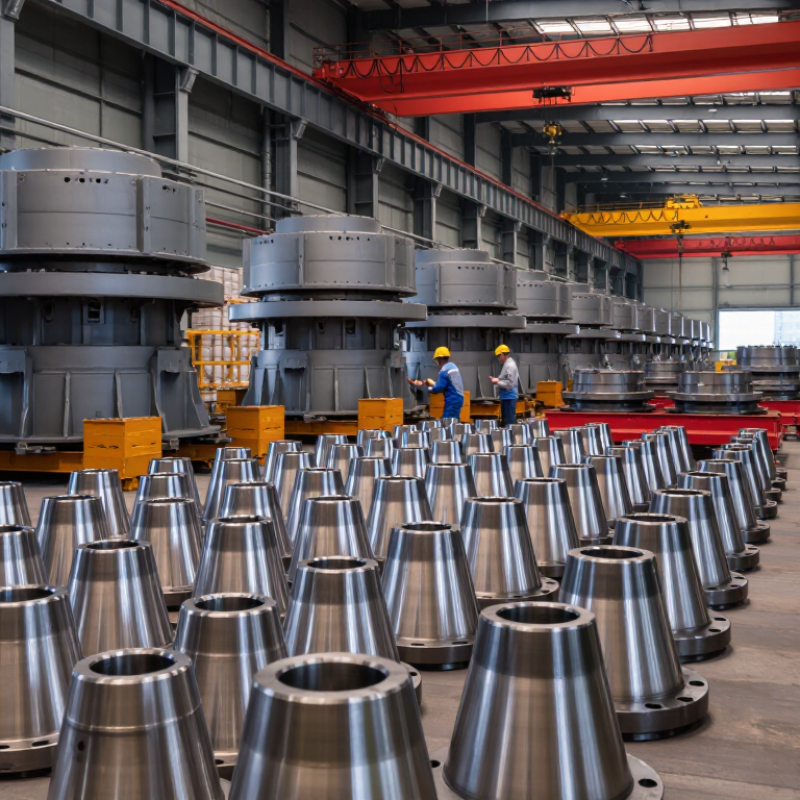
What Is a Cone Mantle Liner and Why It Matters
A cone mantle liner is the replaceable wear surface mounted around a cone crusher’s moving head. It works against the fixed bowl liner, compressing rock inside a narrowing chamber. The mantle absorbs repeated impact, sliding abrasion, and high compressive forces. Its profile controls the crushing chamber’s effective geometry.
This component matters because small wear changes can alter the closed-side setting. Product size may drift, while recirculation and energy use increase. The U.S. Geological Survey reported approximately 1.5 billion metric tons of crushed stone production in the United States during 2024. At that scale, liner performance affects more than maintenance costs. It influences throughput, aggregate consistency, and unplanned downtime.
Field inspections often show uneven wear near the feed zone. That pattern can indicate poor feed distribution, excessive fines, or incorrect operating settings. A mantle should not be selected by alloy name alone. Operators should compare feed size, rock abrasiveness, chamber design, and expected operating hours. The Global Cone Crusher Market report by Grand View Research identifies mining and construction demand as major market drivers, but market growth does not guarantee correct liner selection. That assumption is often wrong. Useful checks include measuring mantle thickness, tracking power draw, and recording product gradation. Operators sometimes replace liners too late, then blame the crusher. The equipment may be innocent.
How Cone Mantle Liners Are Designed and Manufactured
Cone mantle liners are engineered for a difficult balance between wear resistance, crushing efficiency, and safe replacement. Designers begin with the crusher chamber, feed size, material hardness, and expected throughput. They use measured operating data rather than relying only on standard drawings. Small changes in mantle profile can alter pressure distribution and product grading.
The manufacturing process usually starts with alloy selection and pattern development. High-manganese steel is commonly chosen because it can harden under repeated impact. Engineers create a casting pattern with controlled thickness and accurate locking surfaces. Molten steel fills the mold, then the liner receives heat treatment. This stage improves toughness and helps reduce premature cracking. After cooling, machining removes excess material and verifies critical dimensions.
Inspection is practical, not cosmetic. Technicians check hardness, chemical composition, surface defects, and dimensional tolerance. Trial fitting can reveal problems that drawings miss. In service, uneven wear near the feed zone may indicate poor loading or an unsuitable chamber profile. No design is perfect. Field measurements should return to the engineering team for revision. Even a small casting inconsistency can create vibration, downtime, or uneven product size. Reliable manufacturers document each batch and connect test results with actual crusher performance. Contentious assumptions deserve review.
Key Criteria for Evaluating Chinese Manufacturers in 2026
China Top 10 Cone Mantle Liner Manufacturers in 2026
Key Criteria for Evaluating Chinese Manufacturers in 2026
Selecting a cone mantle liner manufacturer requires more than comparing kilogram prices. The 2025 Global Mining Equipment Market report estimates continued equipment demand growth through 2030, driven by copper, iron ore, and aggregate production. This pressure makes wear life measurable, not promotional. Ask for laboratory records covering chemical composition, hardness distribution, impact resistance, and microstructure. A reliable producer should connect each liner to a heat number, inspection record, and production date. In field use, uneven wear near the feed opening often reveals poor casting control or an unsuitable chamber profile.
Manufacturing experience also matters. Review previous export projects, average replacement intervals, and failure investigations. ISO 9001 certification supports process discipline, but it does not prove liner performance by itself. Independent dimensional checks are valuable. So are controlled pilot tests using the customer’s feed size, moisture, abrasiveness, and operating settings. The 2024 USGS Mineral Commodity Summaries reports global growth in several mined commodities, yet ore conditions vary sharply between sites. A generic liner may therefore perform well in one quarry and poorly in another. This is easy to underestimate.
Tips: Request a sample inspection plan before ordering. Compare cost per processed tonne, not purchase price. Confirm mold tolerances, packaging, spare-part availability, and technical response time. One overlooked detail is documentation quality. Clear drawings and wear photographs can prevent expensive misunderstandings. Some suppliers provide impressive data but weak feedback after delivery. That gap deserves careful questioning.
China’s Top 10 Cone Mantle Liner Manufacturers in 2026
China’s Top 10 Cone Mantle Liner Manufacturers in 2026 reflect a mature, highly competitive casting sector. This selection focuses on verified production experience, metallurgy expertise, inspection discipline, and dependable export support. Factory visits, sample reviews, and service records matter more than polished catalog claims. In crushing operations, a mantle liner must resist abrasion, impact, heat, and uneven feed. Small chemistry changes can alter hardness and fracture behavior. That detail is easy to underestimate.
Leading manufacturers typically use controlled alloy recipes, heat-treatment logs, and dimensional checks after machining. They may offer manganese steel grades matched to feed size, chamber design, and operating conditions. Useful evidence includes test certificates, hardness maps, casting traceability, and photographs from final inspections. Experienced suppliers also ask about closed-side setting, throughput, moisture, and tramp iron. The questions reveal competence. Still, no supplier fits every quarry.
A reliable comparison should examine liner life, replacement time, packaging, technical response, and total operating cost. Lower purchase prices can become expensive when profiles wear unevenly or delivery schedules slip. Buyers should request recent references and compare measured service hours, not promises alone. Some published performance figures remain difficult to verify. That is where this review needs caution. Transparent data, repeatable quality, and practical field support remain essential indicators for China’s leading ten manufacturers in 2026.
Applications, Maintenance, and Purchasing Considerations
China Top 10 Cone Mantle Liner Manufacturers in 2026
Cone mantle liners support crushing operations in mines, quarries, and aggregate plants. They protect the cone surface while shaping the material flow. Selection should match feed size, rock hardness, moisture, and required product grading. A liner designed for abrasive granite may perform poorly with sticky, wet ore. That detail is easy to overlook.
Maintenance begins with regular checks of the wear profile, discharge opening, and fastening system. Uneven wear can indicate poor feeding, incorrect settings, or chamber overloading. Operators should record liner weight, running hours, and product changes. Replace liners before the backing material becomes exposed. Small delays can cause major damage. Purchasing teams should request accurate drawings, material specifications, heat-treatment details, and inspection records. Traceable production data improves reliability and simplifies quality discussions.
Tips: Compare total operating cost, not only the initial quotation. Ask about expected service life, delivery capacity, and technical support. Confirm tolerances before ordering. Keep one replacement set available when downtime is expensive. A low-cost liner may appear attractive, but frequent replacement can reduce productivity. This is where judgment matters. Supplier rankings can guide research, yet actual performance depends on the crusher model, operating habits, and local material conditions. Even a well-made liner can fail early when feed control is neglected.


