

How to Choose an Oilless Reciprocating Compressor in 2026?
Choosing an Oilless Reciprocating Compressor in 2026 requires more than comparing catalog prices. The right machine must match your pressure, airflow, duty cycle, and operating environment. A compressor running beside a dusty packaging line faces different demands from one supplying laboratory instruments. Small details matter. Cylinder design, sealing materials, cooling airflow, and acoustic performance can influence daily reliability.
Machinery reliability authority Heinz P. Bloch expressed a practical principle: “Equipment should be selected for its service, not simply for its price.” That principle remains highly relevant. An Oilless Reciprocating Compressor may avoid oil contamination, but it still needs careful sizing and disciplined maintenance. Check the required air quality, outlet pressure, receiver volume, start frequency, and expected working hours. Also examine replacement parts, service access, warranty conditions, and the manufacturer’s testing records. A low purchase price can age badly.
Real-world selection is rarely perfect. A quieter compressor may provide less airflow. A compact model may run hotter in a crowded plant room. Higher efficiency may require a greater initial investment. These trade-offs deserve honest attention. Do not trust impressive specifications without asking how they were measured. Request performance data at your actual pressure and temperature. Listen to the machine during operation. Feel the vibration. Inspect the drain system and ventilation path.
This guide explains how to compare models in 2026, including efficiency, durability, air purity, controls, maintenance, and total ownership cost. It also questions a common assumption: oil-free always means maintenance-free. It does not. Reliable performance still depends on correct installation, clean intake air, and timely inspection.
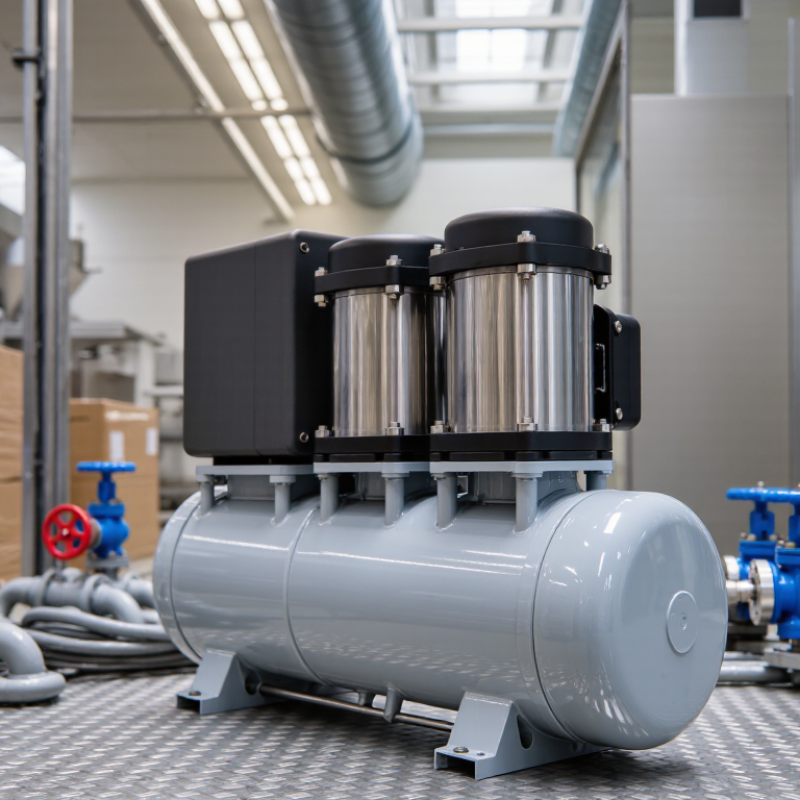
What Is an Oilless Reciprocating Compressor?
How to Choose an Oilless Reciprocating Compressor in 2026?
What Is an Oilless Reciprocating Compressor?
An oilless reciprocating compressor compresses air without oil entering the compression chamber. A piston moves inside a cylinder, reducing the air volume and raising pressure. Special rings, low-friction materials, and carefully selected coatings support this operation. The result is cleaner compressed air for laboratories, medical equipment, food processing, and sensitive manufacturing tasks.
Oil-free does not mean maintenance-free. The compressor still needs inspection. Check piston rings, valves, filters, cooling paths, and condensate drains regularly. In practical equipment selection, I would examine the duty cycle before the advertised pressure. A small unit may reach high pressure, yet struggle during continuous operation. Noise, heat, starting frequency, and receiver size also affect daily performance. The word “oilless” can be misunderstood.
Tips: Match the compressor’s free-air delivery with actual demand, not only the motor rating. Review air-quality requirements and confirm independent test documentation when contamination matters. Ask about replacement intervals for wear parts. Consider the installation room, too. Poor ventilation can shorten service life. If the compressor will run intermittently, leave enough recovery time between cycles. When comparing models, record pressure, flow, noise, power use, and maintenance access in one table. This makes weak assumptions easier to notice.
| Selection Dimension | Typical Data or Requirement | What It Means for an Oilless Reciprocating Compressor | Recommended Evaluation Method |
|---|---|---|---|
| Definition | A positive-displacement compressor that uses reciprocating pistons to compress air without adding lubricating oil to the compression chamber. | The piston, cylinder, and sealing components are designed to operate with dry-running materials or permanently lubricated components outside the air path. | Confirm that the manufacturer clearly identifies the compression chamber as oil-free or oil-less and provides an air-quality specification. |
| Common Applications | Dental air Laboratory instruments Electronics Packaging Spray finishing Small automation | Suitable where oil contamination could affect products, instruments, test results, or process cleanliness. | Match the compressor to the application’s required air purity, pressure stability, duty cycle, and allowable noise level. |
| Air Purity | Oil-free compression does not automatically mean contaminant-free air. | Ambient dust, moisture, wear particles, and vapors can still enter the compressed-air system. | Check the complete air-treatment package, including intake filtration, aftercooling, moisture separation, storage, and final filtration. For critical processes, verify compliance with the applicable ISO 8573-1 air-quality class. |
| Pressure Range | Many small reciprocating units operate in the approximate range of 6–10 bar gauge; specialized models can be designed for higher pressures. | Higher pressure generally increases compression heat, power demand, and mechanical stress. | Select a rated maximum pressure above the actual operating requirement while avoiding excessive pressure margins that reduce efficiency. |
| Flow Capacity | Small units commonly provide several tens to several hundreds of litres per minute, depending on cylinder size, speed, and pressure. | Free-air delivery decreases as discharge pressure rises, so the stated flow must be read together with its test pressure. | Compare delivered air or FAD at the required pressure rather than comparing theoretical piston displacement alone. |
| Demand Profile | Intermittent, cyclic, or continuous demand. | Reciprocating compressors are well suited to intermittent use, while continuous operation requires careful thermal and duty-cycle verification. | Estimate average flow, peak flow, operating hours, start frequency, and unloading time. Select a duty rating that matches the real operating pattern. |
| Duty Cycle | Common small compressors may be rated for intermittent duty, such as 50%–75% operating time, while industrial designs may support higher duty cycles. | A unit operated beyond its duty rating can overheat, shorten seal life, and require more frequent maintenance. | Use the manufacturer’s stated duty cycle and maximum continuous running time; do not infer duty capability from motor power alone. |
| Motor Power | Small systems often use fractional-horsepower to several-kilowatt motors; larger systems require proportionally higher input power. | Motor power affects flow, starting current, heat generation, and electrical operating cost. | Check rated voltage, phase, frequency, full-load current, starting method, and motor efficiency against the available electrical supply. |
| Noise Level | Noise varies substantially with speed, cylinder arrangement, enclosure, mounting, and operating pressure. | Reciprocating motion can create tonal noise and vibration even when overall sound pressure is moderate. | Compare sound-pressure data measured under the same conditions. Consider an acoustic enclosure, resilient mounts, remote installation, or a lower-speed design. |
| Vibration | Higher than many rotary compressor designs because of piston reciprocation and changing loads. | Excessive vibration may affect nearby instruments, piping, fittings, and building structures. | Review balancing, crankcase design, anti-vibration mounts, foundation requirements, flexible connectors, and recommended installation clearances. |
| Cooling | Air-cooled systems are common; cooling performance depends on ambient temperature, ventilation, and operating duration. | Compression generates heat, and oil-less designs may have tighter temperature limits for piston rings and cylinder materials. | Verify allowable ambient temperature, ventilation rate, discharge temperature, thermal protection, and clearance around cooling surfaces. |
| Air Receiver | A receiver is normally selected according to demand variation, compressor output, allowable pressure band, and start frequency. | A correctly sized receiver reduces rapid cycling, smooths pulsation, and provides short-term peak-flow support. | Use a receiver rated for the maximum working pressure and installed with a safety valve, pressure gauge, drain, and compliant inspection documentation. |
| Moisture Management | Compressed air produces condensate whenever air is cooled below its dew point. | Oil-less compression removes oil from the compression process but does not remove water vapour. | Include an aftercooler, moisture separator, automatic or manual drain, and a dryer when the application requires a controlled pressure dew point. |
| Maintenance Items | Air filters, piston rings, rider rings, valves, gaskets, check valves, drains, and receiver safety components. | Dry-running components are wear parts and may have a finite service life even though no crankcase oil change is required. | Request the maintenance schedule, replacement intervals, spare-parts availability, service procedure, and expected life under the intended duty cycle. |
| Energy Efficiency | Efficiency depends on pressure ratio, flow demand, motor efficiency, control method, leakage, and operating schedule. | A compressor that is efficient at one pressure or duty cycle may not be efficient under another operating condition. | Compare specific power, such as kW per unit of delivered air, at the required pressure and realistic load profile. |
| Control Method | Typical controls include start/stop, pressure switch control, unloaders, and electronic monitoring. | The control strategy determines pressure stability, motor starts per hour, energy use, and component wear. | Choose controls that match demand variability and confirm allowable starts per hour, pressure differential, alarm functions, and restart behaviour. |
| Installation Environment | Ambient temperature, dust, humidity, altitude, ventilation, and available floor space all affect performance. | Contaminated intake air can shorten filter and ring life, while poor ventilation can cause thermal shutdown. | Check the operating envelope, enclosure protection, intake location, ventilation requirements, drainage, and accessibility for maintenance. |
| Selection Checklist | Required pressure, delivered flow, air purity, duty cycle, noise, power supply, receiver volume, air treatment, and total cost of ownership. | The best selection is based on the complete compressed-air system rather than compressor purchase price alone. | Obtain performance curves, test conditions, certification information, warranty terms, maintenance costs, energy data, and lifecycle assumptions before purchasing. |
Exclusive Access
Unlimited Resources
Detailed information on our products to assist you with the planning of your cable management project
Register Now
BIM Files

Step Files

Installation Manuals

User Guides

Best Practice Guides
