Main menu Open search

Blog

How to Choose Laser Cleaning Equipment in 2026?

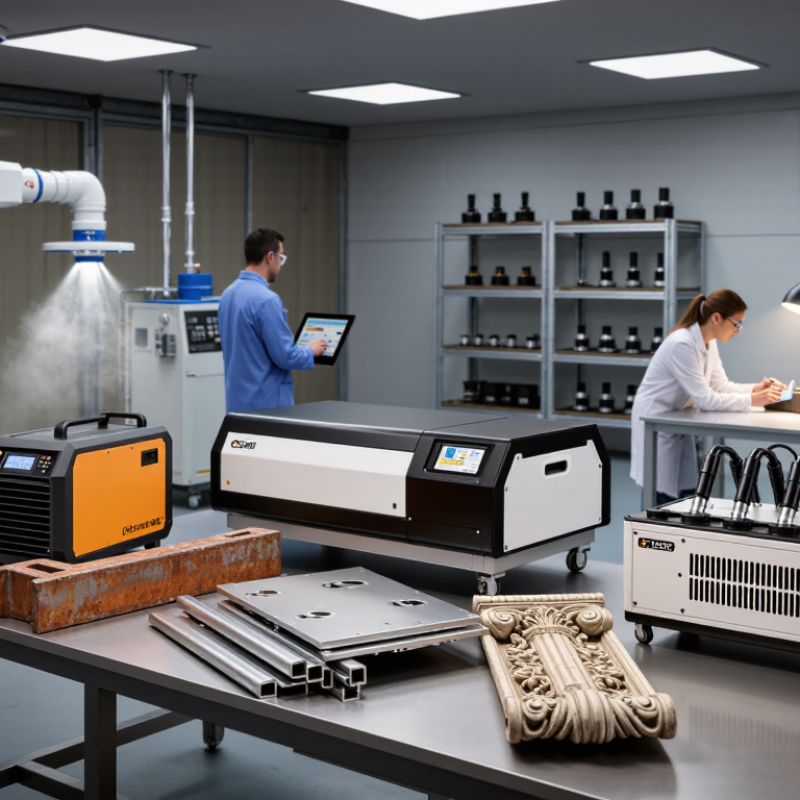
Choosing Laser Cleaning Equipment in 2026 starts with the surface, not the machine. A rusted steel bracket, a painted aluminum panel, and a delicate stone detail need different cleaning settings. The wrong choice can leave uneven marks or remove more material than intended. That is why buyers should compare pulse energy, average power, spot size, scanning speed, and extraction options against real samples. Specifications matter. So does a test.

Laser pioneer Theodore Maiman is often credited with the caution, “A laser is a solution looking for a problem.” For buyers, that idea is practical: confirm that laser cleaning suits the task before comparing equipment. Ask suppliers to demonstrate the process on your material, under realistic conditions. Look closely at the cleaned edge, surface texture, and residue. Request clear details on operator training, maintenance, safety features, and service support. A smooth demonstration is useful, but it cannot answer every production question. Sometimes, the result is less tidy than expected.

This guide explains how to choose Laser Cleaning Equipment for your workload, facility, and budget in 2026. It covers equipment types, key specifications, testing, and ownership costs. Consider throughput alongside finish quality. A faster pass may not be the better pass. Record what works, and revisit your assumptions before committing.
How to Choose Laser Cleaning Equipment in 2026?

Define the Contaminant, Substrate, and Required Cleaning Outcome

A laser cleaner should be selected for the material on the workbench, not just its maximum power. Identify the contaminant first: loose rust, a thick coating, oil, or a thin oxide layer will respond differently. Note its thickness and whether it sits evenly across the surface. A dark, flaky patch behaves differently from a thin, stubborn film.

Then identify the substrate and its condition. Steel may tolerate a process that marks thin aluminum, a painted panel, or a heat-sensitive part. Check for edges, seams, and areas where residue could collect. Small details matter. A test patch on a hidden area can reveal discoloration, texture changes, or incomplete removal before a full job begins. It is not a perfect prediction, though; uneven contamination can change the result.

Define what “clean” means for the next step. Removing visible rust is not the same as preparing a surface for coating or preserving a specified finish. Set practical acceptance checks, such as remaining residue, surface appearance, or a measured profile where required. During trials, adjust pulse energy, scan speed, and overlap one at a time. Record the settings and inspect under consistent lighting. If the substrate changes color or feels rougher, pause and reassess rather than increasing power. A slower process may be the right choice.

Compare 100–2,000 W Laser Power Options for Different Cleaning Loads

A 100–300 W laser is often a sensible starting range for small parts, thin oxide, or light surface contamination. It allows careful control around edges and heat-sensitive areas. For wider panels or moderate rust and coating loads, compare 500–1,000 W systems. They can cover more area per pass, but only if scanning speed, spot size, and extraction keep pace. Heavy deposits and continuous production may justify 1,000–2,000 W. More power is not automatically faster. It can increase heat input and leave a rougher finish if settings are poorly matched.

Treat these ranges as screening bands, not guaranteed production rates. A 2,000 W unit has twenty times the rated output of a 100 W unit, yet cleaning speed does not scale directly with power. Pulse duration, repetition rate, beam overlap, and deposit thickness all matter. Ask suppliers for test results on your actual substrate, including removal rate, surface temperature, and residue. Small test coupons help. Check safety provisions against ISO 11553-1:2020, which covers general safety requirements for laser-processing machines; it does not certify cleaning productivity. One imperfect detail: sample tests may not reflect corners, seams, or inconsistent corrosion on a full production part.

Evaluate 1,064 nm Wavelength, Pulse Duration, and Cleaning Precision

When comparing laser cleaning equipment in 2026, treat 1,064 nm as a useful reference, not a guarantee of compatibility. This wavelength is common in pulsed systems, but cleaning results depend on the surface, contaminant, and laser settings. A dark coating on steel may respond differently from light oxidation on aluminum. Check the intended material range and request test results on representative samples.

Pulse duration shapes how energy reaches the surface. Short pulses can limit heat spreading, which may help preserve delicate edges or thin substrates. Longer pulses may suit some robust jobs, but can increase heating if settings are poorly matched. Small details matter. Ask for the pulse-duration range, adjustable energy, and spot size—not just maximum power. A high power rating alone says little about precision.

Precision also depends on scan speed, beam overlap, focus, and operator control. Look for repeatable settings and clear guidance for adjusting them across surface conditions. Before choosing, inspect cleaned sample areas under magnification and compare them with untreated areas. Check for residue, discoloration, or unwanted texture changes. One limitation is easy to miss: a clean-looking surface may still have altered roughness. That deserves measurement.

How to Choose Laser Cleaning Equipment in 2026? — Evaluate 1,064 nm Wavelength, Pulse Duration, and Cleaning Precision
Evaluation Factor Typical Options or Range How to Choose What to Verify Before Purchase
Wavelength 1,064 nm pulsed fiber lasers are widely used for industrial cleaning. Other wavelengths are available for specialized material interactions. Consider 1,064 nm as a common starting point, not a guarantee of suitability. Absorption varies with the substrate, coating, surface condition, and laser settings. Request cleaning trials on the actual part and contaminant. Check for discoloration, surface damage, and residue after cleaning.
Pulse duration Industrial pulsed systems commonly use nanosecond pulses; available durations vary by laser design. Picosecond systems serve more specialized applications. Shorter pulses can help limit heat diffusion, but cleaning results also depend on pulse energy, spot size, repetition rate, and material response. Ask for the pulse-duration range and confirm whether it is adjustable. Compare results at the intended production settings, not only at a nominal specification.
Average power Commercial pulsed cleaning systems are offered across a broad range, from tens of watts to several hundred watts or more. Higher average power can improve area throughput, but excessive energy can heat or alter sensitive substrates. Select power for the required process window. Confirm rated output at the workpiece, duty-cycle limits, cooling requirements, and whether power is stable during continuous operation.
Pulse energy and repetition rate Pulse energy and repetition rate vary by model; increasing repetition rate does not necessarily increase energy per pulse. Match pulse energy to the removal threshold of the contaminant while keeping the substrate below its damage threshold. Evaluate both settings together. Request the pulse-energy range across the full repetition-rate range. Check whether the displayed values are measured or calculated.
Cleaning precision Precision depends on the focused spot, scanning pattern, process settings, part geometry, and operator control; there is no single universal precision value. For small features or delicate surfaces, prioritize controllable output, a suitable scan head, and a repeatable process over headline power alone. Define an acceptance test using feature dimensions, allowable surface change, and cleaning completeness. Measure results on representative parts.
Spot size and scan width Both vary with the optical configuration and working distance. A smaller spot can support localized treatment; a wider scan can cover more area per pass. Choose optics and scan width for the smallest feature and largest area in the job. Wider coverage may require more passes or different settings to achieve uniform results. Verify the usable scan field, focus tolerance, working distance, and edge uniformity at the intended setup.
Substrate and contaminant Common tasks include removing rust, oxide, paint, oil, or process residues from metals; results vary by material and layer. Test the exact combination of substrate, contaminant thickness, and surface finish. A setting that removes one coating may damage another surface. Document cleaning rate, residual contamination, surface roughness or appearance, and any change to the part after treatment.
Throughput Cleaning speed depends on power, scan speed, overlap, number of passes, contaminant load, and the required finish. Compare complete cycle time per part rather than relying on maximum scan speed or nominal laser power. Run a timed production-style trial that includes loading, positioning, cleaning, inspection, and any required repeat passes.
Safety and extraction Laser cleaning can create hazardous direct or reflected laser exposure and airborne particles or fumes. Controls depend on the laser class and process materials. Plan the equipment layout, enclosure or controlled area, interlocks, suitable eyewear, and extraction before installation. Review the laser classification, applicable local safety requirements, material safety information, and extraction provisions with a qualified safety professional.
2026 purchase decision Compare systems by process capability, repeatability, serviceability, and total operating requirements—not by a single specification. Shortlist equipment only after a documented sample test meets both quality and throughput targets. Request written test conditions, acceptance criteria, training, maintenance requirements, warranty terms, and availability of replacement parts.
Note: Ranges and capabilities vary by system configuration and application. Treat specifications as screening information and validate performance on representative workpieces before production use.

Validate Throughput with Test Panels, Scan Width, and Surface-Quality Data

Choose test panels that match the real part, not just the same metal. Include its coating, corrosion, edges, and heat-sensitive areas. A flat steel coupon may clean quickly, while a painted seam behaves differently. Record the panel’s condition before testing, including coating thickness where practical.

Measure twice. Test several scan widths and travel speeds, then record the area cleaned per minute. Use the same operator, nozzle distance, and overlap for each trial. A machine’s stated maximum width may not be its useful width; edges can receive less consistent energy. Repeat the test on multiple panels, because one unusually easy sample can distort the result.

Set surface-quality limits before the trial. Inspect for remaining residue, discoloration, roughness, and unwanted substrate damage under consistent lighting. Photograph each panel with a scale, and keep settings beside the images. A clean appearance is not enough. Compare cleaning time against the agreed quality criteria, including any time spent on rework. These measurements will not capture every production variable, but they reveal more than a brief showroom demonstration. Be prepared to revise your criteria if testing exposes a trade-off between speed and finish.

Check Class 4 Laser Safeguards and IEC 60825-1 Compliance

Choosing laser cleaning equipment in 2026 means treating Class 4 safeguards as a purchase requirement, not an add-on. IEC 60825-1:2014, including Amendment 1:2021, covers laser product classification and radiation safety. Request the classification report for the exact source and configuration, not a generic brochure. Check its wavelength, output, pulse settings, accessible emission, and safety labels. Small details matter.

Class 4 beams can injure eyes and skin, and ignite combustible materials. Reflections from polished fixtures can also be hazardous. Look for an enclosed beam path, interlocked access panels, keyed controls, warning indicators, an emergency stop, and clear alignment procedures. Choose eyewear for the equipment’s wavelength and pulse regime. Glasses cannot replace good enclosure design.

BLS’s 2023 Survey of Occupational Injuries and Illnesses recorded 2.6 million nonfatal workplace injuries and illnesses in U.S. private industry. That broad figure is not laser-specific, but it supports documenting safeguards. Before ordering, request interlock test records and a commissioning checklist. Have a qualified laser-safety professional review the installation and room layout. I would still inspect reflections at the workpiece; paperwork cannot anticipate every setup.

Exclusive Access

Unlimited Resources

Detailed information on our products to assist you with the planning of your cable management project

Register Now

BIM Files

Step Files

Installation Manuals

User Guides

Best Practice Guides

Technical Charts