How to Choose the Right Voltage Load Switch for Your Application?
Choosing the right Voltage Load Switch can significantly impact your project. Industry expert Dr. Emily Chen once stated, “Selecting the right switch is crucial for efficiency.” With various types and specifications available, understanding your application’s needs becomes essential.
A Voltage Load Switch helps manage power delivery in electronics. It can protect circuits and improve overall system performance. However, picking the wrong switch can lead to inefficiencies and potential failures. The specifications may seem overwhelming at first glance, but breaking them down reveals important insights.
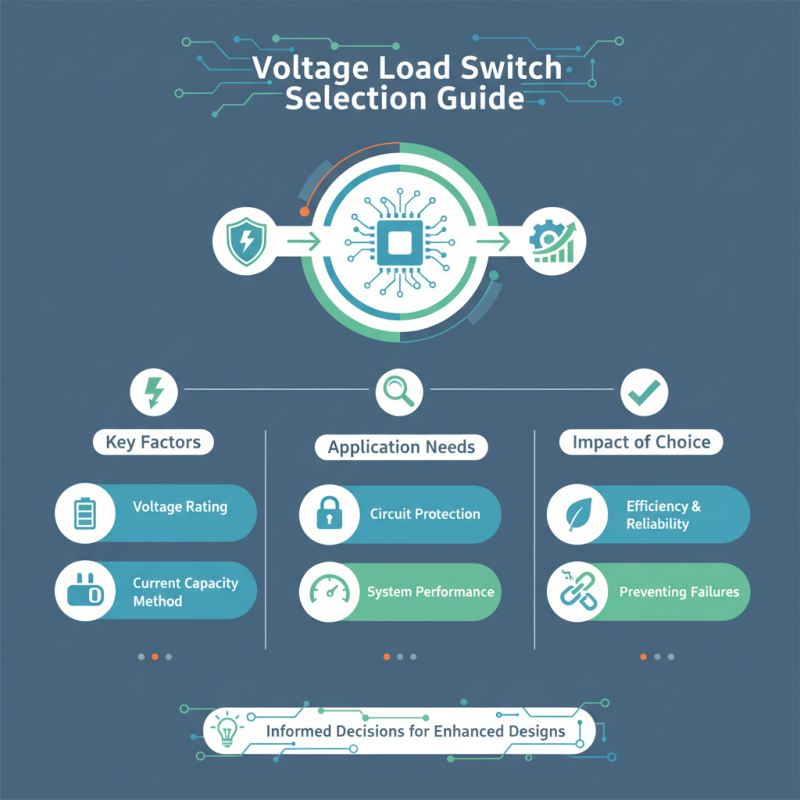
Choose wisely by considering factors like voltage ratings, current capacity, and control methods. Each detail matters to ensure reliability. Real-world applications often reveal that small errors in choice can lead to significant issues. There is no universal solution; each application is unique. An informed choice in Voltage Load Switch usage can lead to enhanced reliability and efficiency in your designs.
Understanding Voltage Load Switch Basics and Types
Voltage load switches play a crucial role in managing power in electronic devices. Understanding the basics of these switches is essential for making informed choices. At their core, voltage load switches control the flow of power to various circuits. They vary in designs, including ideal switch types, low side, high side, and bidirectional switches. Each type serves different applications and requirements. According to a market report by MarketsandMarkets, the global voltage switch market is expected to reach $5.6 billion by 2025, indicating a steady demand for efficient power management solutions.
Selecting the right switch depends on the application needs. For example, high-side switches are common in battery-powered devices due to their efficient performance. They minimize power loss, which is critical for maximizing battery life. Meanwhile, low-side switches might be preferable for load sharing applications. Reports indicate that improper voltage switch selection can lead to increased power consumption and reduced lifespan for devices. Designers often find it challenging to balance performance with efficiency. Understanding these nuances is vital to ensure reliability in your designs.
Key Factors to Consider When Selecting a Voltage Load Switch
When selecting a voltage load switch, numerous factors come into play. Voltage rating is crucial. Ensure the switch can handle your application's maximum voltage without risk of failure. Overrating can offer extra margin but may add unnecessary cost.
Next, consider the current capacity. This determines how much load the switch can bear. A switch rated too low can lead to overheating or even damage. Make sure to evaluate your actual usage scenarios and the peak load conditions.
The switching speed is another important aspect. Different applications require varying response times. A fast switch is beneficial for high-frequency operations but might not suit slower requirements. Also, think about the package size. It should fit within your layout constraints without compromising performance. Always review the application environment, as temperature and humidity can affect reliability.
Finally, public reviews and industry standards can provide insights into the switch's performance. Oversights in evaluations may lead to suboptimal choices, so diligent research is key. Each decision point is a chance to refine the selection process.
Evaluating Voltage Ratings and Current Capacity in Your Application
When selecting a voltage load switch, evaluating voltage ratings and current capacity is crucial. The voltage rating determines how much electrical potential the switch can handle. A voltage rating below the application's requirements may lead to failure. According to industry data, improper voltage specifications are the leading cause of component failure. For instance, a report by the IEEE indicates that nearly 30% of system failures stem from voltage miscalculations.
Current capacity is equally important. It reflects the maximum load the switch can manage without overheating or damaging itself. Manufacturers typically provide datasheets with these specifications, but interpreting them can be challenging. The International Electrotechnical Commission (IEC) emphasizes the need for careful analysis of both steady-state and transient current ratings. An overwhelming 25% of projects experience delays due to misjudgments in current handling.
Testing under real-world conditions is vital. Simulated environments often do not replicate actual scenarios accurately. It is recommended to leave some margin on both voltage and current ratings. This precaution can help accommodate unexpected surges or loads. Engineers frequently overlook this aspect during initial designs, leading to long-term issues.
Importance of Thermal Management in Load Switch Selection
Thermal management is crucial when selecting a voltage load switch. Excessive heat can lead to failure. A well-designed load switch should handle thermal challenges effectively. This increases reliability and performance in applications like power management.
When assessing thermal management, consider the switch's thermal resistance. A low thermal resistance can transfer heat efficiently. Proper heat dissipation ensures the switch remains within safe operating temperatures. Designers often overlook this aspect. Ultimately, neglecting thermal performance can lead to catastrophic failures.
Ensure comprehensive testing under real-world conditions. Consider the ambient temperature, load conditions, and usage duration. Monitoring temperature variations can provide insightful data. This practice helps refine designs. By focusing on thermal aspects, applications gain higher longevity and efficiency.
Analyzing Reliability and Switching Speed for Optimal Performance
When selecting a voltage load switch, reliability and switching speed are crucial factors. A reliable switch ensures your device operates without interruptions. It’s essential to assess the manufacturing quality. Look for components that have undergone rigorous testing. These tests should simulate real-world conditions to validate performance. Also, environmental factors can impact reliability. Humidity, temperature, and vibration must be considered.
Switching speed plays a significant role in performance. A fast switch can improve efficiency and response time. However, faster isn't always better. Sometimes, a balance is necessary to avoid excessive electromagnetic interference. Designers often overlook this aspect, leading to potential circuit disruptions. Analyzing your specific application can help determine the ideal speed. Assess load requirements and switching frequency to find the right match.
When evaluating options, don't forget to review datasheets and consult experts. They can provide insights based on experience and expertise. Understanding these elements helps in making informed decisions. Every application is unique, and what works for one may not work for another. Always be prepared to reassess your choice if initial tests reveal issues.


