

How to Choose the Best Remote Gates in 2026?
Choosing the best Remote Gates in 2026 means looking beyond the remote itself. A reliable system should match the gate’s weight, movement, daily use, and surroundings. A sliding gate on a sloped driveway has different needs from a pair of swing gates exposed to strong winds. Small details matter. Check the operator’s rated capacity, opening speed, control range, and backup options against the manufacturer’s specifications. A rating that barely meets your gate’s requirements may leave little room for wear or future changes.
Start with the site. Measure the gate and note nearby walls, vehicle access, drainage, and the distance between the operator and its controls. Think about who will use the system, how often it will cycle, and whether you need keypad, phone, or vehicle access. Weather resistance matters, too; rain, dust, heat, and cold can affect components over time. Ask a qualified installer to assess structural condition, safe operation, and maintenance needs before you buy. Confirm that replacement parts and support are available. Still, the neatest specification is not always the best choice. A quiet, feature-rich model can be a poor fit if its controls are difficult to use or servicing is inconvenient. Compare written warranties and installation details, then verify important claims with product documentation. In this guide, you’ll learn how to weigh performance, compatibility, safety features, and long-term costs. The right choice should work smoothly in your actual driveway—not just on a product page.
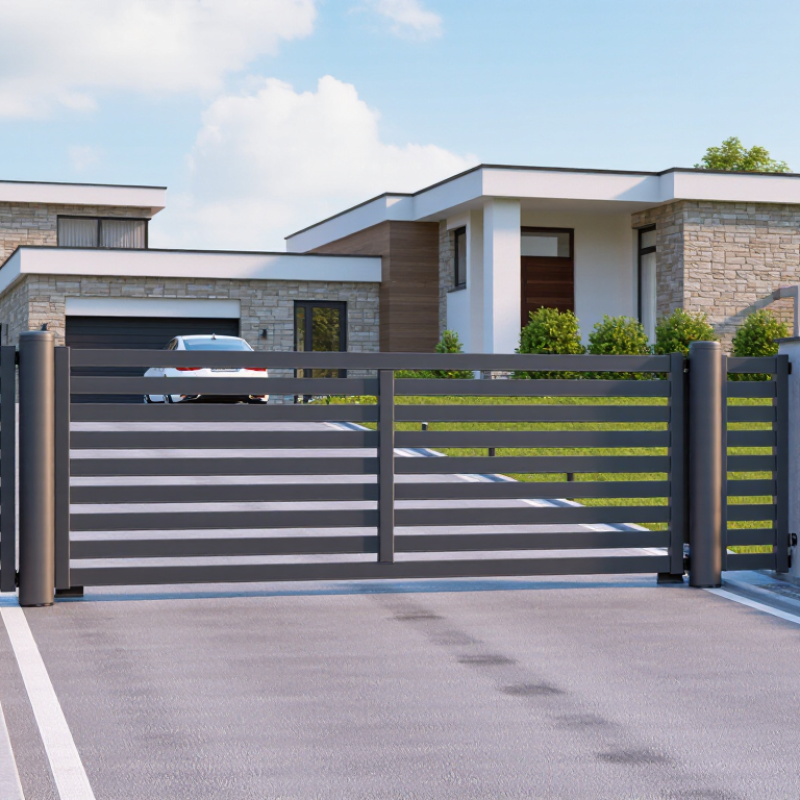
Understanding Remote Gates and Their Main Types
Remote gates are powered entry systems operated by a handheld transmitter, keypad, or another access control device. The remote sends a signal to a receiver, which activates a motor. The gate itself may swing, slide, or lift. Each design suits a different site. Space matters.
Swing gates open inward or outward on hinges, much like large doors. They need clear room for the gate leaf to move, so sloping driveways or parked cars can cause problems. Sliding gates travel sideways along a track or cantilever system. They often suit narrow entrances, but need unobstructed space beside the opening. Barrier arms rise vertically and work well at controlled vehicle entrances. They manage traffic flow, but do not provide the same physical enclosure as a full gate.
Consider the approach, ground surface, and typical vehicle size before choosing a type. A heavy gate may need a stronger motor, while frequent daily use puts extra demands on the mechanism. Ask how obstruction sensors work and whether the system has a manual release during a power outage. Small details matter. Remote range can vary with walls, metal structures, and interference, so test it at the actual entrance. It is easy to focus on convenience and overlook maintenance; tracks collect grit, and hinges need periodic checks. No design is perfect for every property.
| Gate Type | How It Opens | Space Requirements | Common Applications | Key Advantages | Points to Consider |
|---|---|---|---|---|---|
| Sliding gate | Moves horizontally along a track or a cantilever system beside the entrance. | Needs clear space alongside the opening for the gate to travel; does not swing into the driveway. | Residential driveways and commercial entrances with limited depth behind the gate. | Useful where a swinging gate would obstruct vehicles or a sloped driveway. | Track systems need a suitable, relatively level surface and regular attention to debris. Cantilever systems avoid a ground track but need room for the counterbalancing section. |
| Swing gate | One or two leaves rotate on hinges, opening inward or outward. | Requires a clear arc for each leaf; ground slope and the direction of travel affect clearance. | Homes and properties with a level approach and enough room for the leaves to move. | Simple layout with few moving parts in the gate structure; can suit openings where there is no space along the boundary for a sliding gate. | Check for obstructions, wind exposure, hinge-post strength, and safe pedestrian access. The opening arc must not create a hazard for people or vehicles. |
| Vertical lift gate | Raises vertically, with the gate leaf moving upward rather than across or into the driveway. | Needs adequate overhead clearance and room for the lifting mechanism. | Sites where lateral space is limited and the entrance layout can accommodate vertical movement. | Keeps the driveway clear of a swinging arc and does not require a long side run. | Overhead obstructions, structural support, and safe clearance must be assessed. Installation and maintenance needs can be more specialized than for simpler gate layouts. |
| Vertical pivot lift gate | Rotates upward around a pivot, typically lifting the gate leaf to a raised position. | Requires overhead and pivot clearance, with space planned for the moving leaf. | Entrances where a conventional swing or side-sliding arrangement is impractical. | Can avoid the need for a long sliding run alongside the entrance. | Confirm the gate’s travel path, mounting structure, and nearby overhead features with a qualified installer. |
| Bi-fold gate | Two or more hinged sections fold as the gate opens, commonly moving to the sides of the entrance. | Needs less side room than a full-length sliding gate, but requires space for the folded sections and their operating mechanism. | Restricted entrances and sites that need a relatively fast opening cycle. | Can reduce the amount of space needed beside the opening compared with a single sliding leaf. | More hinges and moving components require careful installation and maintenance. Confirm that the folded sections will not obstruct pathways or traffic. |
| Automatic rising barrier | A boom arm raises and lowers to control vehicle access. | Needs room for the arm’s movement and a suitable location for the operator; does not provide the same physical enclosure as a solid gate. | Car parks, managed access lanes, and other vehicle-control points. | Provides a clear visual signal and can suit frequent vehicle entry and exit. | Generally controls vehicle passage rather than securing a perimeter. Consider pedestrian protection, vehicle detection, visibility, and the required level of access control. |
Exclusive Access
Unlimited Resources
Detailed information on our products to assist you with the planning of your cable management project
Register Now
BIM Files

Step Files

Installation Manuals

User Guides

Best Practice Guides
