Main menu Open search

Blog

How to Choose the Right Abrasion Resistant Steel Plate

Choosing the right abrasion resistant steel plate starts with the application, not the catalogue grade. In a quarry, crushed stone can strike a loader bucket with sharp, repeated impact. In a cement plant, fine dust may create slower but continuous sliding wear. These conditions demand different steel properties.

The World Steel Association reports that global crude steel production reached approximately 1.89 billion tonnes in 2023. This scale highlights steel’s importance, but volume alone does not determine service life. ASTM G65 testing measures abrasive wear under controlled conditions, while Charpy impact testing helps assess toughness. Hardness remains useful, yet it is only one part of the decision. A very hard plate may resist scratching but perform poorly under severe impact or welding stress.

Real conditions matter more.

This guide evaluates hardness, toughness, plate thickness, welding requirements, operating temperature, and total lifecycle cost. It also considers recognized grades such as AR400, AR450, and AR500, while acknowledging that grade names can vary between manufacturers. The Steel Construction Institute and ISO material guidance both emphasize traceability, testing, and documented mechanical properties when selecting structural steel products. Buyers should request mill test certificates, actual hardness ranges, impact data, and recommended fabrication procedures.

A common mistake is choosing the highest hardness available. That choice can increase cracking risk, fabrication difficulty, and replacement costs. I have seen specifications fail because they measured sliding wear but ignored impact energy and plate support. The correct abrasion resistant steel plate balances wear resistance with toughness, weldability, and practical maintenance needs. Sometimes, the “strongest” plate is not the best one.
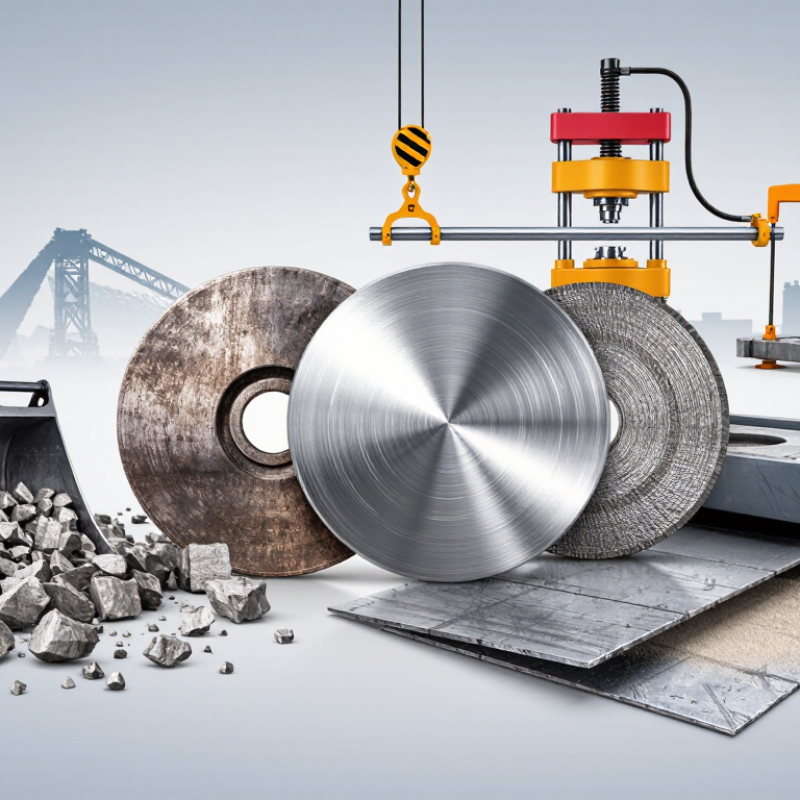
How to Choose the Right Abrasion Resistant Steel Plate

Understanding Abrasion Resistant Steel Plate and Its Key Properties

Abrasion resistant steel plate is designed to withstand repeated contact with sand, rock, coal, ore, and other harsh materials. Its performance depends on more than surface hardness. Carbon and alloying elements create a hardened microstructure, often containing martensite, which resists cutting and gouging. Hardness is commonly measured in Brinell units, but the test value does not tell the entire story.

Toughness matters too. A plate can be very hard yet crack when it meets a sharp impact or sudden temperature change. In field inspections, I look for edge damage, weld cracking, and uneven wear rather than relying on a datasheet alone. Plate thickness also affects service life, although thicker steel is not automatically the better choice. It can add weight, complicate forming, and increase fabrication costs.

Cutting and welding require controlled procedures. Excessive heat may soften the heat-affected zone, while rapid cooling can create brittle areas. Preheating, suitable filler metal, and interpass temperature control should follow the applicable material standard and supplier guidance. Abrasion resistance varies with the wear mechanism: sliding sand, heavy impact, and mineral gouging demand different priorities. A harder grade may last longer in sliding wear, but it may perform poorly under severe impact. This is where selection becomes less certain. Actual material samples, operating data, and periodic thickness measurements often reveal weaknesses that laboratory comparisons miss.

How to Choose the Right Abrasion Resistant Steel Plate - Understanding Abrasion Resistant Steel Plate and Its Key Properties
Selection Dimension AR400 AR450 AR500 How to Use This Information
Nominal Brinell Hardness Approximately 360–440 HBW Approximately 410–490 HBW Approximately 450–540 HBW Choose a higher hardness level when sliding or impact abrasion is severe. Exact hardness ranges depend on the applicable specification and mill certificate.
Primary Wear Resistance Good resistance to general abrasion Very good resistance to moderate-to-heavy abrasion Excellent resistance to severe sliding abrasion Hardness generally improves resistance to abrasive wear, but it does not by itself predict performance in every service condition.
Impact and Shock Conditions Suitable for moderate impact and abrasion Suitable for combined abrasion and moderate impact Best suited to severe sliding wear; impact suitability must be verified For repeated heavy impact, review impact toughness, plate thickness, temperature, and the manufacturer's technical data.
Relative Formability Higher formability than AR450 and AR500 Moderate formability Lower formability; larger bending radii are normally required Harder grades require more forming force and greater minimum inside bend radii. Follow the plate supplier's forming recommendations.
Welding Considerations Generally the easiest of the three to weld Requires controlled heat input and procedure qualification Requires careful preheating, interpass-temperature control, and hydrogen management Weldability depends on carbon equivalent, thickness, restraint, consumables, hydrogen control, and preheat conditions—not hardness alone.
Typical Applications Chutes, bins, hoppers, liners, construction equipment, and truck bodies Crusher liners, conveyor components, screens, feeders, and heavy-duty wear plates Mining liners, high-wear chutes, rock-processing equipment, and severe-duty wear components Match the grade to the dominant wear mechanism, material handled, impact level, operating temperature, and required service life.
Relative Machinability Better than harder abrasion-resistant grades, but more difficult than mild steel Moderate to difficult Difficult; use rigid setups and suitable carbide tooling Use slower cutting speeds, secure workholding, and tooling recommended for quenched-and-tempered wear plate.
Plate Thickness Selection Commonly selected where moderate thickness and easier fabrication are priorities Selected when additional wear life is needed without moving to the highest hardness level Selected when wear resistance is the primary requirement and fabrication constraints are acceptable Increasing thickness can improve structural capacity and wear allowance, but it may increase weight, forming difficulty, and welding demands.
Best Choice When Fabrication, weldability, impact tolerance, and balanced wear resistance are important A balance between wear life, toughness, and fabrication is required Severe sliding abrasion dominates and fabrication can be carefully controlled Do not select only by the AR number. Confirm the required hardness range, chemistry, thickness tolerance, delivery condition, and test documentation.
Important Verification Items Hardness test method, chemical composition, carbon equivalent, plate thickness, impact requirements, weld procedure, bend requirements, operating temperature, and applicable purchase specification Generic AR400, AR450, and AR500 designations are widely used industry classifications. They are not universally identical across all producers, so the governing technical specification and certificate should control acceptance.
Hardness values and performance descriptions are representative industry ranges for generic abrasion-resistant plate classifications. Actual values and fabrication limits vary by product standard, thickness, heat treatment, and supplier documentation.

Identifying the Wear Conditions and Service Requirements

Choosing abrasion resistant steel starts with the wear condition, not the hardness number. A plate facing sliding sand may need different protection from one receiving repeated rock impact. Record the material size, travel speed, contact pressure, and operating hours. Small details matter.

Inspect the working environment closely. Dry dust causes cutting wear, while wet slurry can accelerate erosion and corrosion. Check whether the plate experiences impact, abrasion, or both. Measure operating temperature as well. Some grades lose toughness in cold service, even when their hardness appears suitable. Plate thickness must match the load and support structure. An excessively thin plate may deform before wearing through.

Service requirements also include fabrication and maintenance. Confirm cutting methods, bending limits, welding procedures, and available repair time. Higher hardness can improve wear life, but it may reduce formability and increase cracking risks during fabrication. Toughness is often underestimated. I have seen a very hard plate fail early because impact loads were ignored. That choice looked efficient on paper.

Ask for verified test data, dimensional tolerances, and traceable inspection records. Compare expected wear life with replacement access, downtime, and total operating cost. Field measurements are more reliable than assumptions. Keep a worn sample when possible. Its grooves, dents, and thinning pattern reveal what calculations may miss. There is no perfect selection. Conditions change. Recheck the plate after installation.

Comparing Steel Grades, Hardness, Toughness, and Thickness

How to Choose the Right Abrasion Resistant Steel Plate

Choosing abrasion resistant steel starts with the working conditions, not the hardest available grade. Hardness slows surface wear, but it does not guarantee long service life. A plate exposed to sharp rock may need better toughness than a plate handling fine sand. Impact, sliding abrasion, temperature, and material shape all matter. The application decides.

Steel grades often use hardness values as a guide, commonly measured by Brinell testing. Higher hardness can reduce gouging, yet it may increase cracking risks during cutting, forming, or welding. Toughness helps the plate absorb sudden impact without breaking. Ask for certified test results, including hardness and impact data when relevant. Do not rely on a single number.

Thickness must match both wear allowance and structural loading. A thin plate may wear through quickly in a chute carrying crushed stone. An overly thick plate adds weight, fabrication effort, and cost. Measure the current plate after service, if possible. The wear pattern tells a useful story. Uneven wear may indicate poor material flow, weak support, or an incorrect grade.

In fabrication, preheating and controlled welding procedures can protect performance. The exact method depends on carbon content, thickness, and joint design. Sometimes the “best” grade performs poorly because installation was rushed. That is worth admitting. Review service records, cutting methods, and failure locations before choosing again. Reliability comes from matching verified data with real operating evidence.

Selecting the Right Plate Through Performance and Cost Evaluation

Choosing abrasion resistant steel plate should begin with actual service conditions, not only hardness values. Identify the material causing wear, such as crushed stone, sand, coal, or recycled metal. Then examine impact energy, sliding distance, plate thickness, and operating temperature. A plate that performs well in a dry chute may fail quickly in a wet, high-impact hopper.

Performance and cost must be evaluated together. Higher hardness can reduce replacement frequency, but it may complicate cutting, drilling, or welding. Those fabrication costs can change the original calculation. Compare expected service life, downtime, installation labor, and maintenance access. In field projects, a slightly thinner plate sometimes lowers weight and handling costs. That choice may be wrong under severe impact. Real operating records are more reliable than attractive laboratory figures.

Tips: Request verified test data and confirm the testing method. Compare wear results under conditions close to your own equipment. Check whether the supplier provides traceable mill certificates and practical fabrication guidance. Do not select solely by purchase price. A cheaper plate can become expensive after two unexpected shutdowns. My own evaluation would also include a small trial section, because calculations can miss abrasive angles, uneven loading, and poor support. No plate is perfect.

How to Choose the Right Abrasion Resistant Steel Plate

Selecting the right plate through performance and cost evaluation

Nominal AR grades are commonly identified by their approximate Brinell hardness: AR400, AR500, and AR600 represent about 400, 500, and 600 HBW respectively. Higher hardness can improve wear resistance, but it may also reduce formability and increase fabrication difficulty. The most cost-effective choice should consider material price, expected service life, plate thickness, impact conditions, welding requirements, and replacement downtime. Actual hardness ranges depend on the applicable standard and mill certificate.

Checking Fabrication, Welding, Installation, and Maintenance Needs

How to Choose the Right Abrasion Resistant Steel Plate

Choosing abrasion resistant steel starts with the worksite, not the catalog. Identify impact, sliding wear, temperature, plate thickness, and support spacing. ASTM G65 testing measures abrasive mass loss, but laboratory results cannot reproduce every quarry, chute, or dump-body condition. A harder grade may last longer, yet it can complicate cutting and forming. A hardness number can mislead.

Fabrication needs careful planning. Confirm the supplier’s cutting limits and use controlled thermal cutting to reduce edge cracking. Welding requires a qualified procedure, suitable low-hydrogen consumables, and monitored preheat. Keep heat input consistent. Fit-up matters. Uneven gaps can create stress concentrations around stiffeners and bolt holes. ISO 9606-1 and ISO 15614-1 provide useful qualification frameworks, though site conditions still demand judgment. I have seen installation delays caused by missing lifting points and incorrect hole positions.

Installation should include safe lifting plans, stable supports, and protection against gouging. The ILO reported approximately 2.93 million work-related deaths and 395 million non-fatal injuries globally in 2023, making handling controls essential. Maintenance teams should record crack locations, liner thickness, impact marks, and repair dates. Use ultrasonic thickness checks where practical. ASTM G31 may help assess corrosion exposure, but it does not replace field inspection. Maintenance records are often incomplete. That weakness deserves attention. Evaluate drainage, trapped fines, loose fasteners, and weld toe cracking during each inspection.

Exclusive Access

Unlimited Resources

Detailed information on our products to assist you with the planning of your cable management project

Register Now

BIM Files

Step Files

Installation Manuals

User Guides

Best Practice Guides

Technical Charts