

How to Choose an MP330 Planetary Concrete Mixer in 2026?
Choosing a concrete mixer in 2026 requires more than comparing drum size and motor power. The Mp330 Planetary Concrete Mixer should be assessed against production targets, material characteristics, maintenance conditions, and site constraints. A glossy specification sheet is not enough.
The Global Cement and Concrete Association reports that concrete remains the world’s most widely used construction material, with billions of cubic metres produced annually. The International Energy Agency also identifies cement production as a major industrial source of carbon dioxide emissions. These findings make mixing efficiency, reduced material waste, and dependable service increasingly important. A planetary mixer can offer intensive mixing, consistent distribution, and flexible batch control. However, performance depends on blade design, liner quality, motor configuration, moisture control, and operator practice.
Look closely.
This guide explains how to evaluate an Mp330 Planetary Concrete Mixer for commercial plants, precast production, and demanding construction projects. It will consider mixing capacity, discharge speed, energy use, component durability, safety features, cleaning access, and after-sales support. Manufacturer claims should be checked against verified test results, warranty terms, and references from comparable facilities. Standards from organizations such as ASTM International and the American Concrete Institute can also support a more reliable assessment.
No selection formula is perfect. I may favor lifecycle value over the lowest purchase price, but that choice can fail when budgets are extremely restricted. Likewise, higher output is not automatically better if the mixer causes segregation or difficult cleaning. The right decision connects measurable performance with real operating experience, documented maintenance records, and the concrete quality demanded by each application.
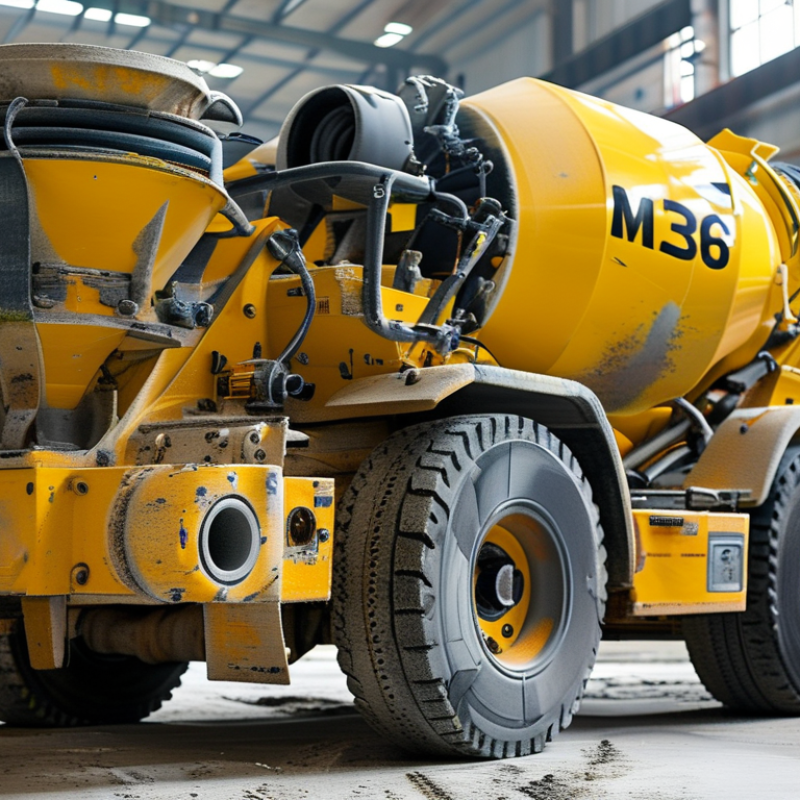
MP330 Planetary Concrete Mixer: Definition and Core Mixing Principles
An MP330 planetary concrete mixer uses a vertical mixing shaft and rotating arms. The arms move around the vessel while paddles rotate independently. This creates overlapping mixing paths, unlike a simple drum’s rolling action. Cement, water, sand, and coarse aggregate repeatedly pass through high-shear zones. The result is a more consistent paste coating and aggregate distribution.
That consistency matters. The Global Cement and Concrete Association reports that the world uses about 14 billion cubic metres of concrete annually. At this scale, small variations can affect pumpability, strength, and surface finish. ASTM C94 also emphasizes uniformity between concrete batches. In practice, I check the MP330’s effective volume, motor power, paddle layout, liner thickness, and discharge speed. A larger nominal capacity is not always better. Wet, sticky mixes may require more usable space.
Watch the details.
Operators should observe dead zones near the corners and inspect material buildup after discharge. Moisture sensors can improve water control, but they do not replace sampling. A 2024 technical review by the National Ready Mixed Concrete Association highlights moisture management as a practical quality factor. I would also compare the required batch cycle with the mixer’s actual loading and cleaning time. Product brochures often show ideal figures. Real aggregates are rarely ideal.
| Evaluation Dimension | Recommended Reference for an MP330-Class Mixer | Typical Technical Value or Requirement | Why It Matters |
|---|---|---|---|
| Mixer Definition | Planetary concrete mixer with a stationary mixing pan and rotating tools | One horizontal mixing cycle with planetary tool movement | The mixing tools rotate around their own axes while also orbiting around the pan, producing multidirectional material movement. |
| Nominal Batch Capacity | Select according to the required output per batch rather than the empty pan volume | Approximately 330 L nominal batch class | Actual output depends on the recipe, aggregate grading, moisture content, and the safe filling level of the pan. |
| Concrete Output | Allow for loading, mixing, discharge, and cleaning time when estimating production | Theoretical output = batch volume × batches per hour | A 330 L batch does not automatically equal 330 L of finished concrete; production estimates must include cycle losses and operating delays. |
| Mixing Action | Choose planetary movement for uniform distribution of cement paste, water, sand, and coarse aggregate | Radial, circumferential, and vertical material circulation | The combined movement reduces dead zones and helps expose more particles to the mixing action than simple single-shaft rotation. |
| Mixing Time | Confirm the required cycle time using the actual mix design and aggregate size | Often about 45–90 seconds after all materials enter the pan | Dry, stiff, fiber-reinforced, or high-performance mixes may require longer mixing than conventional workable concrete. |
| Aggregate Size | Check the approved maximum aggregate size against the mixer clearance and recipe | Common concrete aggregate sizes include 10 mm, 16 mm, 20 mm, and 25 mm | The mixer must accommodate the specified aggregate without excessive impact, bridging, or abnormal wear. |
| Drive Power | Compare motor power with batch size, material density, slump, and starting load | Typically selected within a manufacturer-defined industrial motor range | Stiff and low-slump concrete requires more torque during start-up and peak mixing than fluid concrete. |
| Speed Control | Variable-speed control is useful for different recipes and start-up conditions | Low speed for loading and start-up; optimized speed for mixing | Controlled speed can reduce splashing, limit dust generation, and improve consistency across different formulations. |
| Mixing Tools | Inspect the number, geometry, adjustment method, and replacement availability of tools | Paddles, mixing arms, and scrapers with wear-resistant working surfaces | Tool geometry determines the circulation pattern, while scrapers help prevent material build-up on the pan wall and bottom. |
| Wear Protection | Prioritize replaceable wear parts for abrasive aggregates and frequent operation | Replaceable liners, paddles, scrapers, and wear plates | Concrete ingredients can be highly abrasive; replaceable components reduce downtime and protect the mixer structure. |
| Water and Cement Addition | Use metered dosing where repeatable quality is required | Water dosing accuracy should match the mix-design tolerance | Small changes in water-to-cement ratio can affect slump, strength, durability, and setting behavior. |
| Discharge System | Select a bottom, side, or pneumatic discharge arrangement compatible with the plant layout | Fast, complete discharge with minimal residual material | A clean discharge reduces batch-to-batch contamination and shortens the total production cycle. |
| Cleaning Access | Look for large inspection openings, safe access, and easy removal of buildup | Daily cleaning should be practical without entering the mixer | Hardened concrete buildup can reduce capacity, change mixing performance, and create a serious maintenance hazard. |
| Dust Control | Use a sealed cover and connect the mixer to a suitable dust-extraction system | Covered loading zone with correctly sized extraction connection | Cement and fine mineral dust require effective containment and workplace controls to protect operators and equipment. |
| Electrical Requirements | Verify supply voltage, frequency, starting current, enclosure rating, and local regulations | Common industrial supplies include three-phase 380–415 V at 50 Hz, subject to site conditions | Electrical compatibility prevents nuisance trips, overheating, unsafe installation, and unexpected commissioning costs. |
| Control and Safety | Require interlocked covers, emergency stops, overload protection, and lockout capability | Safety circuit with guarded access and motor overload protection | The mixer should not operate when access doors are open, and maintenance should be possible only after energy isolation. |
| Installation Footprint | Reserve space for loading, discharge, inspection, maintenance, and safe operator movement | Confirm certified overall dimensions and service clearances before ordering | The mixer body alone does not represent the complete space requirement of a working installation. |
| Moisture and Slump Range | Match the mixer to the intended concrete products and consistency range | Suitable for conventional, dry, stiff, and some low-slump mixes when correctly configured | Very fluid or highly cohesive materials may require different tool settings, discharge arrangements, or process controls. |
| Maintenance Planning | Check lubrication points, inspection frequency, spare parts, and wear-part replacement procedures | Inspect tools and liners regularly; lubricate according to the service schedule | Preventive maintenance protects bearings, drive components, seals, and mixing accuracy while reducing unplanned downtime. |
| Selection Decision | Choose the model only after confirming recipe, output, site utilities, safety, and maintenance requirements | Best choice = required batch performance + compatible installation + manageable lifecycle cost | Capacity alone is not enough; reliable concrete quality depends on the complete mixing system and operating conditions. |
Exclusive Access
Unlimited Resources
Detailed information on our products to assist you with the planning of your cable management project
Register Now
BIM Files

Step Files

Installation Manuals

User Guides

Best Practice Guides
