Main menu Open search

Blog

How to Choose the Right Skid Steer Loader in 2026?

Choosing the right Skid Steer Loader in 2026 requires more than comparing horsepower and purchase prices. Jobsite conditions, attachment demands, operator comfort, and service support can change the true cost of ownership. A machine that feels powerful in a dealer yard may struggle in wet clay, narrow alleys, or uneven demolition zones.

Industry data supports this practical approach. The Association of Equipment Manufacturers’ U.S. Market Data reports continue to track strong demand for compact construction equipment, including skid steer loaders and compact track loaders. Off-Highway Research also identifies compact equipment as an important part of global construction machinery demand. These reports show market direction, but they cannot choose a machine for your specific soil, workload, or maintenance team.

Think about the daily details. Will the loader carry a 1,500-pound pallet, run a cold planer, or clear snow before sunrise? Rated operating capacity, hydraulic flow, lift path, and tipping load matter more than a glossy brochure. High-flow hydraulics may be essential for trenchers, brush cutters, and breakers. A simpler standard-flow model could be wiser for landscaping and material handling. Do not overlook visibility, joystick control, cab sealing, and access to filters. Small frustrations become expensive after eight working hours.

No checklist is perfect. A lower-priced loader can cost more when downtime, fuel use, and weak dealer support accumulate. Before deciding, compare verified specifications, local service response, attachment compatibility, warranty terms, and total operating costs. The best Skid Steer Loader is not always the largest or newest. It is the machine that matches real work consistently, safely, and with fewer unpleasant surprises.
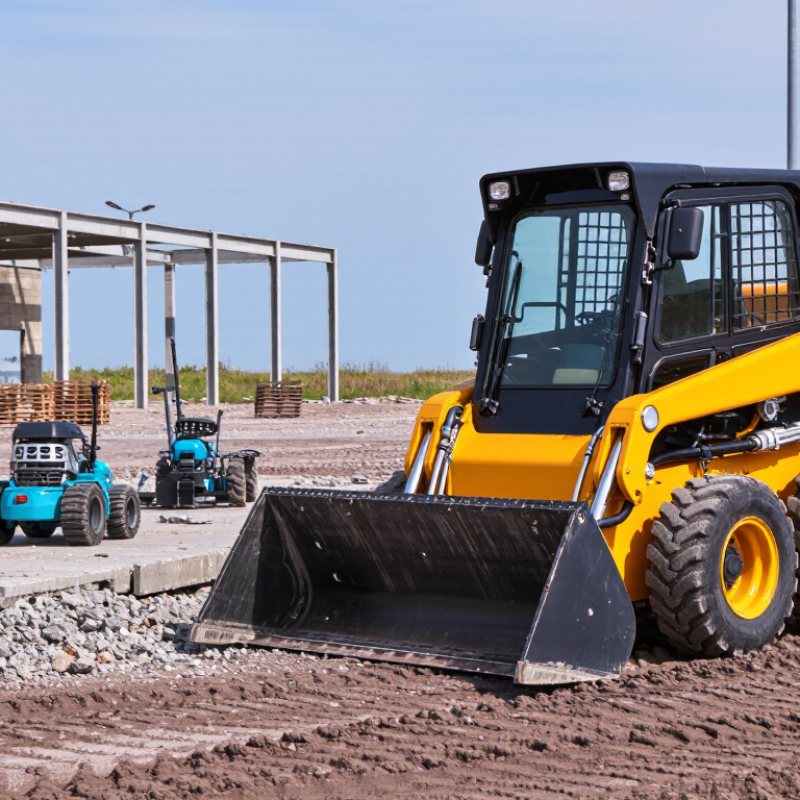
How to Choose the Right Skid Steer Loader in 2026?

Define Your Skid Steer Loader’s Main Jobs and Operating Conditions

Before comparing specifications, define the loader’s real work. Will it move soil, grade gravel, clear snow, or feed a screening plant? List the attachment for each task. A bucket handles loose material, while a trencher or breaker demands different hydraulic performance. EquipmentWatch’s 2024 Cost Recovery Study separates utilization, fuel, repairs, and depreciation. That matters because a cheap loader can become expensive when it sits idle or wears unsuitable tires.

Measure the site, too. Record narrow gates, ground slopes, turning space, soil moisture, and average haul distance. A high-flow attachment may need more hydraulic capacity than standard auxiliary hydraulics provide. Rated operating capacity must also match the heaviest routine load, not an occasional lift. Leave a safety margin. NIOSH FACE investigation reports repeatedly identify rollover and struck-by hazards around compact equipment. A low-clearance cab, poor visibility, or unstable lift path can change the purchase decision.

Think about weather and working hours. Enclosed climate control may protect operators during freezing mornings or dusty summer shifts. Tracks can improve flotation on soft ground, but tires may travel faster and cost less on firm surfaces. A 2024 market analysis from Off-Highway Research segments compact equipment demand by application and operating class, reinforcing one practical point: “general purpose” is not always practical. My own planning mistake would be choosing maximum power first. I would test the loader with the actual attachment, material, and tightest access point. That test often reveals the uncomfortable answer.

Match Rated Operating Capacity to Your Expected Workload

How to Choose the Right Skid Steer Loader in 2026?

Rated operating capacity should match the weight your job repeatedly demands, not the machine’s maximum lift. ISO 14397-1 defines a wheeled skid steer’s rated operating capacity as 50% of its tipping load. That safety margin matters when carrying wet soil, pallets, or a loaded bucket across uneven ground. For example, a 2,000-pound working load calls for more than a 2,000-pound ROC. Add attachment weight, material variation, and ground slope. Real jobs are rarely as tidy as specification sheets.

Use production records, not guesses. The 2024 EquipmentWatch Rental Rate Blue Book separates base-machine rates from attachment costs, reminding buyers that a low rental price may hide expensive capacity compromises. Record your heaviest routine load, travel distance, lift height, and daily cycles. Then compare that workload with the loader’s ROC at the attachment you will actually use. A high-flow attachment can also increase hydraulic demand without increasing rated capacity. That mismatch is easy to miss.

Leave practical headroom. Around 15% to 25% above the routine load is a sensible field target, although site conditions can require more. I would not size the machine around an occasional maximum lift. That decision often creates excessive tire wear, slower cycles, and unstable handling. Check the manufacturer’s operating manual and attachment rating before purchase. Published figures can differ with counterweights, tires, tracks, and configuration. Specification tables are useful. They are not the whole job.

How to Choose the Right Skid Steer Loader in 2026?

Match the loader’s rated operating capacity to your expected workload. As a practical planning rule, choose a rated operating capacity at least 20% higher than the heaviest routine load to provide a useful safety margin.

How to read the chart: The expected load represents the typical material or attachment load. The recommended rated operating capacity provides approximately a 20% margin for safer and more consistent operation. Actual requirements may vary with attachment weight, load height, ground conditions, and machine configuration.

Choose the Right Engine Power, Attachments, and Hydraulic System

Choosing a skid steer loader in 2026 starts with the worksite, not a glossy specification sheet. Engine power matters when pushing packed soil, lifting pallets, or running a cold planer. More horsepower can improve productivity, but it may increase fuel use and operating costs. Match power to your daily load, not your largest occasional task. A smaller machine can work better in narrow yards and finished landscapes. Check rated operating capacity, tipping load, and counterweight design together. Never judge lifting strength from horsepower alone.

Attachments should fit the job and the loader’s hydraulic output. A bucket may need standard flow, while a trencher, brush cutter, or breaker can require high flow. Measure attachment weight, width, and connection type before ordering.

I once underestimated attachment length, and the machine became awkward near walls. That mistake was avoidable. Small tests matter. Ask the operator to simulate turning, loading, and parking in the actual work area.

Hydraulic performance affects control, cycle time, and attachment life. Compare auxiliary flow, pressure, cooling capacity, and coupler design. Smooth control is valuable when grading around pipes or curbs. Excessive heat can reduce seal life and weaken performance during long shifts.

Inspect service access, filters, hoses, and diagnostic displays before purchase. Request documented test results and maintenance records from the seller. A machine that feels powerful for ten minutes may struggle after three hours. I would also leave room for doubt, because published figures rarely show dust, slope, heat, or operator habits.

Compare Size, Maneuverability, Operator Comfort, and Safety Features

Choosing the right skid steer loader in 2026 starts with matching size to the worksite. The U.S. Bureau of Labor Statistics recorded 1,075 construction deaths in 2023, making safe machine selection a serious decision. A compact loader suits narrow gates, landscaping, and finished surfaces. A larger model carries heavier loads but needs more clearance and stronger ground support.

Maneuverability matters when reversing beside walls or turning between parked vehicles. Check rated operating capacity, tipping load, lift path, and attachment weight together. Do not trust lifting capacity alone. The wrong attachment can reduce stability quickly. NIOSH FACE investigations repeatedly identify poor visibility, unexpected movement, and bypassed safety controls in loader incidents. Choose a fully enclosed cab, a clear rear-view camera, effective mirrors, seat-bar interlocks, and audible alerts. These features help, but they cannot replace a trained operator.

Operator comfort affects attention during long shifts. Adjustable controls, low vibration, climate control, and a supportive seat reduce fatigue. Compare joystick response in person. It may feel minor at first. After six hours, it may not. A practical mistake is selecting the cheapest machine before measuring aisle width, surface conditions, and daily attachment changes. Review the manufacturer’s specifications against OSHA 29 CFR 1926.602 and applicable ISO 20474 requirements. Treat those documents as a baseline, not a complete safety plan.

How to Choose the Right Skid Steer Loader in 2026? - Compare Size, Maneuverability, Operator Comfort, and Safety Features

Typical specifications by operating class. Actual figures vary by configuration, attachments, tires, tracks, and manufacturer.

Comparison Area Mini / Compact Small Frame Standard Frame Large Frame
Typical operating weight 1,800–2,700 kg
3,970–5,950 lb
2,700–3,600 kg
5,950–7,940 lb
3,600–4,800 kg
7,940–10,580 lb
4,800–6,500 kg
10,580–14,330 lb
Typical rated operating capacity 550–900 kg
1,210–1,980 lb
900–1,300 kg
1,980–2,870 lb
1,300–1,800 kg
2,870–3,970 lb
1,800–2,700 kg
3,970–5,950 lb
Typical overall width 1.25–1.55 m
49–61 in
1.55–1.75 m
61–69 in
1.75–2.00 m
69–79 in
2.00–2.20 m
79–87 in
Typical rated operating capacity as a percentage of operating weight Approximately 25–35% Approximately 30–40% Approximately 30–40% Approximately 35–45%
Turning behavior Very tight; best for gates, landscaping, and confined areas Tight; suitable for residential and light construction sites Tight inside turning circle; requires more clearance around attachments Highly maneuverable for its capacity, but needs more working-room width
Typical lift height to hinge pin 2.4–2.8 m
94–110 in
2.8–3.1 m
110–122 in
3.1–3.4 m
122–134 in
3.4–3.8 m
134–150 in
Hydraulic capability Standard flow; suitable for buckets, forks, augers, and light attachments Standard flow; handles common construction and landscaping attachments Standard or high flow; suitable for demanding hydraulic attachments High-flow options common; suited to planers, trenchers, mulchers, and snow attachments
Operator comfort Basic suspension seat; limited cab space; lower entry height Improved seat and controls; adequate room for full-day work More legroom; optional suspension seat, climate control, and low-effort controls Largest cab; best visibility options, climate control, and vibration isolation
Noise and vibration considerations More noticeable vibration on uneven ground; open canopy may be louder Moderate vibration; enclosed cab improves weather and noise protection Better isolation and pressurized cab options for extended shifts Best potential for low-vibration, climate-controlled operation
Core safety features to look for Interlocked seat bar, operator-presence system, parking brake, rear-view area All compact-class features plus improved mirrors, work lights, and backup alarm ROPS/FOPS protection, hydraulic lift-arm lock, backup camera option, guarded controls ROPS/FOPS protection, camera or detection options, high-visibility lighting, attachment interlocks
Transport practicality Easy to move with a light trailer; check legal payload and tie-down limits Usually manageable with a medium-duty trailer and suitable tow vehicle Requires careful trailer, axle-load, and towing-capacity planning Often requires heavy-duty transport equipment and route planning
Best application fit Landscaping, small farms, property maintenance, and narrow access work General landscaping, utility work, light excavation, and construction support Daily construction, grading, material handling, and multi-attachment operations Heavy material handling, large-scale earthwork, road maintenance, and high-flow work
Recommended selection priority Choose minimum size that meets lift and attachment requirements without exceeding site width Balance access, transport cost, hydraulic demand, and operator comfort Prioritize rated capacity, hydraulic flow, visibility, and full-shift ergonomics Prioritize production, stability, attachment power, safety technology, and transport logistics

Note: Rated operating capacity, lift height, dimensions, and safety equipment depend on the specific loader configuration and applicable local standards. Confirm the operator’s manual, attachment limits, ground conditions, and required protective structures before purchase or rental.

Evaluate Ownership Costs, Service Support, and Long-Term Value

Choosing a skid steer loader in 2026 requires more than comparing purchase prices. Calculate hourly ownership cost, including depreciation, financing, insurance, fuel, tires, repairs, and storage. The Associated Equipment Distributors’ equipment-cost guidance separates these categories, which helps prevent hidden expenses from disappearing inside one monthly payment.

The American Rental Association’s 2024 forecast placed U.S. construction and industrial equipment rental revenue near $59 billion for 2025. That figure offers a useful rental benchmark. Compare local rental rates with your expected annual hours before buying.

A machine working 700 hours yearly may justify ownership. At 250 hours, renting could preserve cash. My earlier mistake was ignoring idle time.

Service support affects long-term value more than glossy specifications. Ask for average technician response time, common parts availability, warranty exclusions, and documented preventive-maintenance intervals. Request a written service schedule. Check who handles failures during peak season. A low-cost machine becomes expensive when it waits beside a muddy jobsite.

Use the U.S. Energy Information Administration’s regional diesel data for realistic fuel projections. Test several scenarios, including a 20% fuel-price increase and fewer billable hours. Review resale evidence from recognized auction and valuation reports, not optimistic sales claims. Also inspect hydraulic couplers, tire wear, attachment compatibility, and electronic diagnostics. These details often decide whether the loader remains productive after three years.

Exclusive Access

Unlimited Resources

Detailed information on our products to assist you with the planning of your cable management project

Register Now

BIM Files

Step Files

Installation Manuals

User Guides

Best Practice Guides

Technical Charts