Main menu Open search

Blog

7 Tips for Choosing the Best HEPA Air Filter?

Choosing a Hepa Air Filter can feel straightforward until product labels, room sizes, and replacement costs start competing for attention. A HEPA claim alone does not tell you whether a unit suits your space. In the United States, a true HEPA filter is commonly described as capturing at least 99.97% of particles 0.3 microns in size. Still, the filter is only one part of an air purifier. Airflow, the seal around the filter, and the complete unit’s performance also matter. Small details count. A loose-fitting filter, for example, may let air bypass the media. That is easy to overlook.

This guide’s seven tips will help you compare options with more confidence. Start with the room’s dimensions and the manufacturer’s recommended coverage. Then consider clean air delivery rate, operating noise, replacement-filter availability, and ongoing cost. Check product documentation rather than relying only on large claims or a familiar logo. If you are searching for an Air Filter Hepa, confirm that the listing describes a complete filter or a compatible replacement part. They are not always the same thing. Think about your daily routine, too: a loud purifier beside a desk may be switched off, even if its specifications look impressive. There is no perfect choice for every room. The useful choice is one you can verify, maintain, and run consistently. These tips offer a practical starting point, though manufacturer guidance and local product standards can differ.
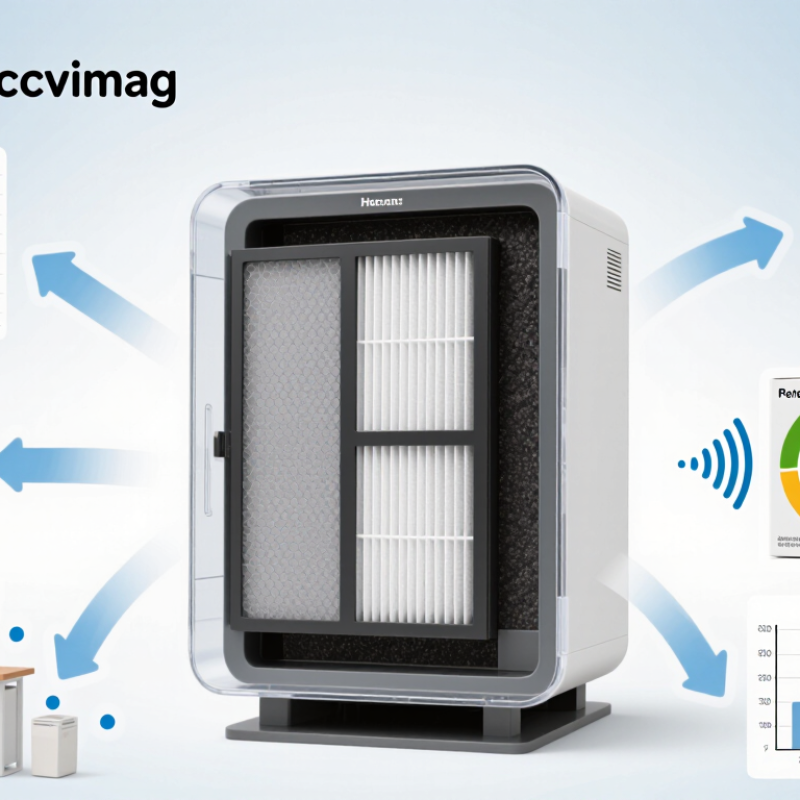
7 Tips for Choosing the Best HEPA Air Filter?

Identify Your Room Size and Air Quality Needs

Measure the room before comparing HEPA air cleaners. Multiply its length by its width, then note the ceiling height and whether doors usually stay open. AHAM recommends a smoke CADR of at least two-thirds of a room’s floor area, assuming an eight-foot ceiling. For a 240-square-foot room, that means a smoke CADR of at least 160. A tape measure beats a guess. Taller ceilings or open-plan spaces may need more cleaning capacity than the floor-area estimate suggests.

Room size is only half the decision. Consider what you actually notice: cooking particles near the kitchen, seasonal pollen by an open window, or pet dander on the sofa. The U.S. EPA’s Guide to Air Cleaners in the Home explains that CADR helps compare particle removal for smoke, dust, and pollen; it does not measure removal of gases or odors. EPA’s indoor-air guide reports that concentrations of some indoor pollutants are often two to five times outdoor levels, though conditions vary widely. If odors or chemical vapors are your main concern, a particle filter alone may disappoint. Check the cleaner’s stated room coverage, and be cautious when that number assumes a low fan speed you would rarely tolerate.

7 Tips for Choosing the Best HEPA Air Filter: Match CADR to Room Size

For a quick sizing estimate, choose a smoke CADR of at least two-thirds of your room’s floor area, assuming an 8-foot ceiling. For example, a 300-square-foot room calls for a smoke CADR of about 200 cubic feet per minute. Consider a higher CADR if you need faster air cleaning or have greater particle sources, such as smoke or pets.

Check HEPA Standards and Filter Efficiency

A “HEPA” label is useful, but the test standard behind it matters. In the United States, the U.S. Department of Energy defines HEPA filtration as capturing at least 99.97% of particles measuring 0.3 microns. That figure is a benchmark, not a promise that every purifier will clean a whole room equally well. Check whether the maker identifies the test method and whether the filter was tested as a complete unit. Small gaps around a filter can let air bypass it. Details matter.

Efficiency is only one part of performance. The U.S. Environmental Protection Agency’s guide to air cleaners recommends comparing clean air delivery rate (CADR) with room size; CADR estimates how quickly a unit supplies filtered air. A highly efficient filter in an undersized machine may still clean a large room slowly. Check the stated room area, airflow, and replacement schedule. A dense filter can also restrict airflow if the device is not designed for it.

Look for clear, verifiable test information. Ask whether results apply to the filter alone or the assembled device, and check which particle sizes were tested. “99% efficient” sounds impressive, but without the particle size and test conditions, it tells you little. I would not treat a vague label as proof. Even published figures have limits. Air leaks, poor placement, and a clogged filter can change real-world results.

7 Tips for Choosing the Best HEPA Air Filter? — Check HEPA Standards and Filter Efficiency

Tip What to Check Why It Matters
1. Verify the HEPA standard Look for a clearly stated test standard and efficiency result. In the United States, HEPA is commonly described as capturing at least 99.97% of particles at 0.3 microns. Under EN 1822, H13 and H14 filters have stated efficiency thresholds measured at the most penetrating particle size (MPPS). A named standard and test result are more informative than an undefined “HEPA-like” or “HEPA-type” claim. Ratings measured under different methods should not be treated as directly interchangeable.
2. Check the efficiency rating and test details Confirm the particle size, test method, and whether the reported efficiency applies to the filter media or the complete filter unit. For EN 1822 classifications, check the stated class and the relevant test documentation. Efficiency figures are meaningful only in the context of how and what was tested. A media rating alone does not show whether air can bypass the filter in the assembled device.
3. Look for a well-sealed filter path Check that the filter fits securely, seals around its edges, and has no obvious gaps between the filter and housing. Prefer documentation that evaluates the complete unit for leakage or bypass. Air that leaks around the filter is not cleaned by the filter media, so the device’s real-world particle removal can be lower than the media efficiency suggests.
4. Match clean-air delivery to the room Compare the unit’s clean air delivery rate (CADR), where available, with the room size and the air-cleaning rate you need. Check which particle category the CADR covers and whether the rating reflects the operating speed you plan to use. A highly efficient filter may still clean a room slowly if the airflow is low. CADR helps assess the amount of cleaned air delivered, not just the filter’s single-pass efficiency.
5. Do not confuse MERV with HEPA If a product lists a MERV rating, treat it as a separate rating system for HVAC filters. Check the specific particle-size efficiency information and do not assume that a MERV rating is equivalent to a HEPA classification. MERV and HEPA classifications use different rating frameworks. A number from one system cannot be directly substituted for a rating from the other.
6. Consider airflow and replacement needs Review the recommended replacement interval, filter availability, and any airflow or pressure-drop information. Follow the device instructions, since replacement timing depends on use and conditions. A loaded filter can affect airflow, and a filter that is difficult to obtain or replace may be harder to maintain as intended. Replacement intervals are not universal.
7. Request credible supporting documentation Look for a dated test report or technical datasheet identifying the test method, filter class or efficiency, test conditions, and whether testing covered the filter media or the complete unit. Specific, traceable evidence makes it easier to assess performance claims and compare filters on a like-for-like basis.

Match the Filter’s CADR to Your Space

CADR, or Clean Air Delivery Rate, tells you how quickly a purifier supplies filtered air. Match it to the room where the unit will actually run, not the entire home. Measure the room’s length and width, then check the purifier’s CADR and stated coverage. For a typical eight-foot ceiling, a rough target of five air changes per hour is about two-thirds of the room’s area in square feet, expressed as CADR in cubic feet per minute.

A 300-square-foot room would therefore need roughly 200 CFM. Treat this as a planning estimate, not a guarantee.

Check which particle rating you are comparing. Smoke CADR is often the most useful figure for fine particles, but test methods and conditions can differ. A high-efficiency HEPA filter alone does not tell you how much clean air the complete unit delivers.

Keep doors, ceiling height, and open-plan layouts in mind; a divider or tall ceiling can make a room behave larger than its floor area suggests. A little extra capacity may help when the purifier runs quietly on a lower setting.

Still, bigger is not automatically better. Noise, placement, and regular filter changes affect whether you will use it consistently. The numbers help, but they are only part of the decision.

Verify Compatibility with Your Air Purifier

A HEPA label does not guarantee a filter will fit your purifier. Check the exact model number in the owner’s manual, then compare the replacement filter’s length, width, depth, and frame shape. Even a small gap can let air bypass the filter. Check the airflow arrow, too; installing a filter backward can restrict airflow. It’s an easy detail to miss.

Fit matters. The U.S. Environmental Protection Agency says HEPA filters capture at least 99.97% of particles at 0.3 microns under specified test conditions. That figure describes filtration performance, not whether a filter works in a particular purifier. Check that the unit’s fan can handle the filter and that its gasket seals against the housing. For room coverage, EPA guidance recommends a smoke CADR of at least two-thirds of the room’s floor area in square feet, assuming an eight-foot ceiling. A compatible filter alone does not establish that performance. Measure your room, confirm the purifier’s rated CADR, and follow its manual. Fit can still be confusing when product listings use similar dimensions but different frames. Verify before buying.

Compare Replacement Costs and Maintenance Needs

Choosing a HEPA air filter means comparing more than its purchase price. The U.S. Environmental Protection Agency says true HEPA filters capture at least 99.97% of particles measuring 0.3 micrometers under test conditions. Replacement filters, however, vary in price and recommended service life. Tip: check the replacement-filter price before buying, then divide it by the expected months of use. A low-cost unit can become expensive if its filter needs frequent replacement.

Maintenance affects the real cost, too. Some units have washable or vacuumable prefilters; others require regular replacement. Check the manual, since washing a non-washable filter can damage it. The U.S. Energy Information Administration reported an average residential electricity price of about 16 cents per kilowatt-hour in 2023. At that rate, a 50-watt purifier running continuously uses roughly 438 kilowatt-hours yearly, or about $70 in electricity. Your local rate and actual fan setting will change that estimate.

Tip: compare filter costs, replacement intervals, and energy use on the same yearly basis. Also check whether filters are easy to find and whether the unit signals when service is due. Small parts add up. I would not trust a single “filter lasts a year” claim without checking the room’s dust, pets, and daily operating hours; those conditions are rarely identical.

Exclusive Access

Unlimited Resources

Detailed information on our products to assist you with the planning of your cable management project

Register Now

BIM Files

Step Files

Installation Manuals

User Guides

Best Practice Guides

Technical Charts