7 Tips for Choosing the Right Plastic Cable Tray
Selecting the right plastic cable tray is more than choosing a low-cost pathway for wires. It affects cable protection, installation speed, maintenance access, and long-term system reliability. A suitable tray should match the cable load, environment, support spacing, and expected temperature changes. Small details matter. A crowded tray can trap heat. Poorly placed supports may cause sagging between mounting points.
This guide presents seven practical tips for evaluating a plastic cable tray before purchase or installation. It considers material quality, load capacity, dimensions, ventilation, fire performance, accessories, and maintenance needs. These factors reflect common installation experience and manufacturer guidance, but every project still requires careful site assessment. Indoor office wiring has different demands than cables running through a humid plant room or exposed service corridor.
Look closely at the tray surface. Cracks, sharp edges, or weak joints can damage insulation during pulling. Check whether covers close firmly, especially where dust or accidental contact is possible. It is also wise to review technical data instead of relying on appearance alone. A stronger tray may cost more initially, yet reduce replacement work later.
Perfect choices are rare. Even experienced installers can overlook future cable additions or unusual support conditions. That is why flexible planning matters. Measure the route, estimate realistic cable growth, and confirm compatibility with clamps, bends, and mounting hardware. A careful decision today can prevent a messy rerouting job tomorrow.
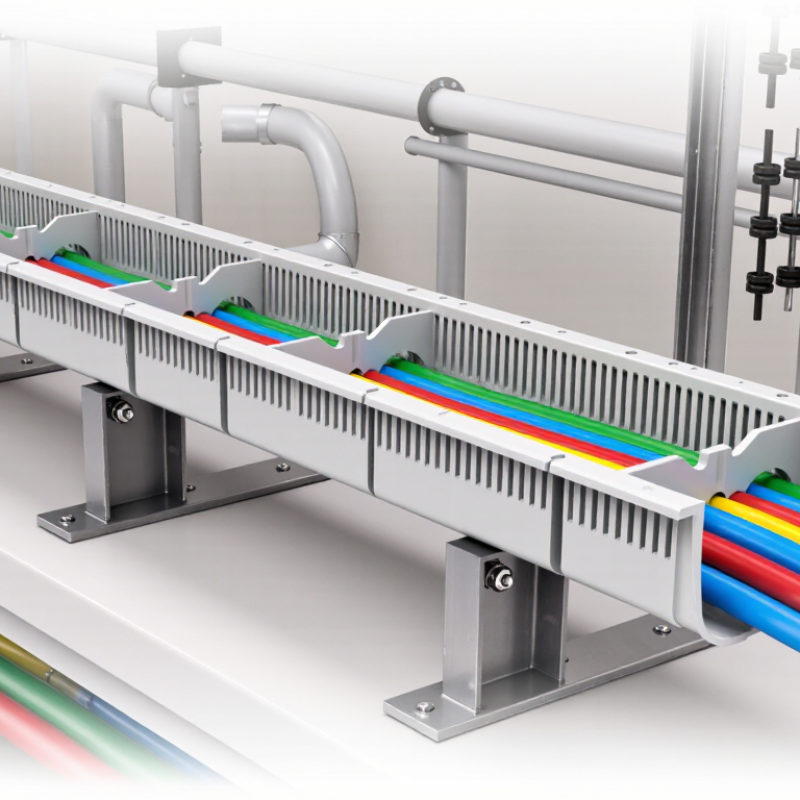
Define Cable Load and Fill Limits Under IEC 61537 Guidelines
7 Tips for Choosing the Right Plastic Cable Tray
Define Cable Load and Fill Limits Under IEC 61537 Guidelines
Choosing a plastic cable tray starts with measured load, not appearance. IEC 61537 provides requirements and test methods for cable management systems. It does not offer one universal fill percentage for every installation. Treat each tray as a tested system.
Measure every cable’s outside diameter, including insulation and protective layers. Add the occupied cross-sectional area, then compare it with the tray’s usable internal area. Leave practical space for ventilation, future additions, and safe cable placement. A crowded tray can increase heat and complicate maintenance. Sometimes, less is safer.
Check the manufacturer’s load data for the exact tray width, support span, and installation direction. Plastic performance can change with temperature, ultraviolet exposure, and chemical contact. Do not copy a load value from a different span. It may look acceptable on paper, yet fail under real conditions. That mistake deserves a second review.
Include cable weight per metre, fittings, covers, and possible ice or external forces where relevant. Confirm deflection limits, fixing distances, and cable bend radii before installation. Heavy power cables should not be mixed casually with sensitive control wiring. Separation may improve reliability. Record your assumptions, because future installers may not know them. A clear calculation is useful, but field conditions can still challenge it.
Select PVC, HDPE, or Fiberglass by Temperature and Chemical Exposure
7 Tips for Choosing the Right Plastic Cable Tray
Temperature changes everything. PVC trays suit moderate indoor conditions, but heat can soften them and cold can make them brittle. Check the manufacturer’s continuous operating range, not only the brief peak temperature. For many facilities, HDPE offers better impact resistance across wider temperature swings. It can perform well outdoors, although ultraviolet exposure may reduce service life without suitable protection.
Chemical exposure needs equal attention. PVC generally handles many acids, salts, and diluted alkalis, while some solvents may cause swelling or cracking. HDPE often resists moisture, oils, and several aggressive chemicals, but compatibility still depends on concentration and temperature. Fiberglass trays can tolerate demanding industrial environments, especially where heat, corrosion, and mechanical strength overlap. Resin selection matters. Fiberglass is not automatically chemical-proof.
Inspect the actual installation area before choosing. Record the highest surface temperature, cleaning chemicals, vapor exposure, sunlight, and expected cable load. I have seen trays selected from room temperature data fail near hot process lines. A small sample test can reveal stress cracking that a chart misses. Check expansion, support spacing, flame performance, and fastener compatibility as well. The best material on paper may perform poorly with the wrong supports. Recheck the decision when operating conditions change.
7 Tips for Choosing the Right Plastic Cable Tray
Select PVC, HDPE, or Fiberglass by Temperature and Chemical Exposure
PVC
A cost-effective option for indoor and general-purpose installations. It typically handles mild acids, alkalis, salts, and moisture well, but is less suitable for strong solvents and elevated temperatures.
HDPE
Suitable for cold environments and many wet or chemically exposed areas. HDPE generally provides strong resistance to aqueous chemicals, but compatibility with oxidizing agents and organic solvents must be verified.
Fiberglass
Fiberglass-reinforced polyester offers the broadest typical temperature range and strong corrosion resistance. Performance depends on the resin system, so confirm compatibility with acids, solvents, and oxidizers.
Temperature ranges are typical continuous-service values for commonly specified materials. Actual limits depend on formulation, loading, installation conditions, UV exposure, and chemical concentration. Always confirm the manufacturer’s technical data before selection.
Verify Flame Performance with UL 94 V-0 or Equivalent Ratings
Choosing the right plastic cable tray requires more than checking load capacity and dimensions. Flame performance deserves equal attention. NFPA’s Fire Loss in the United States During 2023 reported about 1.39 million fires and 3,670 civilian deaths in the U.S. Electrical equipment remains a persistent ignition concern. A tray that limits flame spread can help reduce secondary damage, although it cannot prevent every fire.
UL 94 V-0 is a useful screening requirement. In the vertical flame test, each specimen must stop flaming within 10 seconds. The five-sample total must remain within 50 seconds. Flaming drips must not ignite the cotton indicator. These details matter. A supplier should identify the tested polymer, wall thickness, conditioning method, and certificate scope. The rating may not apply to a thinner tray.
Equivalent ratings require careful comparison. IEC 60695-11-10 uses related vertical-burning classifications, but test conditions and documentation still need review. Do not accept “flame retardant” as sufficient evidence. Ask for a current test report and traceability to production batches. Check cut edges, joints, and support points during installation. Those areas can behave differently from flat laboratory specimens.
I still treat V-0 as a screening point, not a promise. Real cable bundles may add fuel, restrict airflow, or create hotter pockets. A practical selection also considers spacing, ventilation, nearby ignition sources, and the fire code for the installation. The uncomfortable detail is simple: laboratory performance and field performance are not identical.
Match Tray Dimensions to Cable Diameter, Fill, and Bend Radius Data
Choosing a plastic cable tray starts with the cable bundle, not the tray catalog. Measure actual outside diameters, including insulation, glands, and protective jackets. A 25 mm cable may become wider near connectors. Small details matter. Add the diameters of all cables planned for one section. Then apply the permitted fill ratio from the project specification and local electrical requirements. Do not treat the tray’s full internal width as usable space. Reserve room for future cables, heat dissipation, and installation access. A 40–50% fill level is often practical, but the approved project requirement controls.
Depth must match the largest cable diameter and its separation needs. A shallow tray can pinch cables or force sharp crossings. Check the stated internal dimensions, because outside measurements can mislead. At every turn, compare the tray bend radius with the cable’s minimum bend radius. The cable usually sets the limit. A 90-degree elbow may look generous but still fold a stiff power cable. Use the largest required radius, not the average cable value. Measure the route in the field when possible. Drawings can be optimistic.
I have seen installations fail during pulling because the straight section fit, but the elbow did not.
Allow extra width near tees, drops, and termination points. Keep heavy cables supported without crushing smaller control cables. Verify loading, support spacing, temperature, and chemical exposure before approving the plastic grade. One overlooked solvent can weaken the tray. Review the calculation with the installer, then inspect a sample section before full delivery. This check is cheap. It may expose an assumption that looked reasonable on paper.
Check UV Resistance and Service Life for Indoor or Outdoor Installation
7 Tips for Choosing the Right Plastic Cable Tray
Check the installation environment before selecting a plastic cable tray. Indoor systems may face fluorescent lighting, heat, dust, and chemical vapors. Outdoor systems endure sunlight, rain, frost, and daily temperature swings. Check the manufacturer’s stated UV exposure rating, not just “weather resistant.” That phrase is too vague.
Look for testing based on ASTM G154 or ISO 4892-3. These standards use controlled ultraviolet exposure and condensation cycles. However, test hours do not equal fixed outdoor years. Local sunlight, humidity, color, and mounting position change the result. Avoid simple conversion charts. They look precise, but they can mislead. Ask for retained impact strength, color change, and tensile data after testing. Service life needs evidence.
Confirm compliance with IEC 61537:2023 for cable management system performance. Check whether the tray uses UV-stabilized material, suitable wall thickness, and protected fittings. Darker materials may absorb more heat, while poor ventilation can soften plastic near hot equipment.
Measure the expected cable load and ambient temperature together. Inspect exposed trays for chalking, cracks, brittleness, and distorted covers during maintenance. Replace damaged sections early. Small cracks spread faster than many teams expect.
A tray can pass a laboratory test and still fail in a harsh coastal location. That is an uncomfortable but important limitation. Record the installation date, exposure direction, and inspection findings. This practical history often improves future selection more than a generic service-life claim.