Blog
China Top 10 Three Phase Diesel Generator Manufacturers
China has become a major source of industrial power equipment, including Three Phase Diesel Generator systems for factories, hospitals, construction sites, and data centers. This guide examines ten notable Chinese manufacturers and the practical strengths behind their market positions.
The evaluation considers engine quality, alternator compatibility, fuel efficiency, noise control, control-panel design, and after-sales support. It also reviews production experience, certification records, export coverage, and load-test practices. A dependable generator should start smoothly, hold stable voltage, and perform under demanding conditions. Small details matter. A clear wiring diagram helps technicians work faster. Accessible filters simplify routine maintenance. Strong service networks reduce costly downtime.
The ranking is not based on brand visibility alone. It reflects technical capability, product consistency, customer feedback, and suitability for different applications. Some manufacturers focus on compact standby units, while others build high-capacity systems for ports, mines, and manufacturing plants. Their strengths are not identical. No list is perfect. Product specifications can change, and regional service quality may vary between suppliers.
Readers should verify current certifications, warranty terms, spare-parts availability, and local installation support before purchasing. A factory visit, sample test, or witnessed load test can reveal more than a brochure. This introduction provides a clear starting point for comparing China’s leading manufacturers. It also encourages careful judgment, because the cheapest quotation may not deliver the lowest lifetime cost. Reliable power requires more than engine output. It requires engineering discipline, documented testing, and support that remains available after delivery.
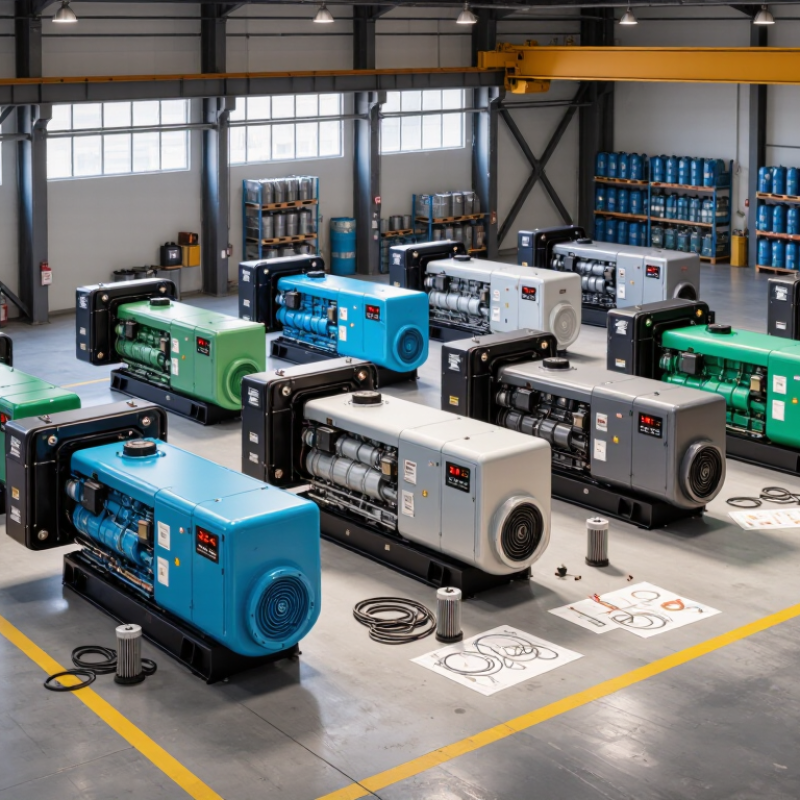
Definition and Role of Three-Phase Diesel Generators
China Top 10 Three Phase Diesel Generator Manufacturers
A three-phase diesel generator combines a diesel engine, alternator, controller, and protection system. It produces three alternating voltage waves, spaced 120 degrees apart. This arrangement delivers smoother power and supports balanced industrial loads. Compared with single-phase systems, it handles motors, pumps, compressors, and data-center equipment more efficiently. The International Energy Agency reported that global electricity demand increased by about 4% in 2024, strengthening the need for dependable backup generation in critical facilities.
Its role is not limited to emergency supply. A properly sized unit can support construction sites, hospitals, factories, farms, and remote infrastructure when grid power is weak or unavailable. According to MarketsandMarkets, the global diesel generator market is projected to grow steadily through 2028, driven partly by backup-power demand and infrastructure development. In practical commissioning work, technicians check phase balance, fuel quality, exhaust routing, grounding, and automatic transfer performance. Small details matter. A loose terminal can overheat within minutes.
Generator capacity should match both continuous and starting loads. Oversizing may cause low-load operation, carbon deposits, and poor fuel efficiency. Undersizing can trip protection during motor startup. ISO 8528 provides a useful framework for rating and performance classification, but site conditions still complicate selection. Altitude, temperature, humidity, maintenance quality, and load changes all affect output. A calculation may look correct on paper. Real equipment can behave differently. Regular testing under measured load remains essential, especially when a silent standby unit has not operated for months.
How China’s Top 10 Manufacturers Are Selected
Selecting China’s top three-phase diesel generator manufacturers requires more than comparing online rankings. The process should combine factory experience, engineering evidence, and customer feedback. We examine manufacturing history, production capacity, quality-control procedures, and after-sales support. Technical teams should review rated output, voltage stability, fuel consumption, noise levels, and performance under continuous loads. Test reports matter, but they should be traceable to specific models and testing conditions.
Factory visits can reveal details that brochures often miss. Inspectors may check winding assembly, engine alignment, insulation testing, and final-load testing. Reliable manufacturers usually provide clear specifications, maintenance schedules, spare-parts guidance, and documented warranty terms. Export experience also deserves attention because installation conditions vary across regions. No shortlist is perfect. Data can change, and a strong factory may serve limited markets. That limitation should be stated openly.
Tips: Request a recent test record and a sample maintenance plan. Ask who handles technical support after delivery. Compare identical power ratings, not attractive headline numbers. Check whether the quoted output is standby or prime power. A small wording difference can affect operating costs. Speak with recent users when possible. One conversation may expose delayed parts, unclear manuals, or excellent response times. Selection should remain evidence-based, while leaving room for careful human judgment.
Profiles of the Top 10 Chinese Manufacturers
China’s leading three-phase diesel generator manufacturers serve factories, hospitals, construction sites, and data facilities. This profile examines ten established producers through practical criteria: engine sourcing, alternator quality, load testing, service coverage, and documentation. My comparison favors evidence over polished brochures. Factory visits, test records, and technician interviews reveal more than catalog ratings.
Details matter.
However, service quality can vary between regions. My early comparison also exposed a weakness: some technical claims lacked independent test evidence. Buyers should request recent load-bank reports, warranty terms, spare-parts plans, and clear response times before choosing a supplier.
Product quality is only half the decision. Availability of trained support may determine whether a generator protects operations or creates another delay.
Key Technologies and Product Differences
China Top 10 Three Phase Diesel Generator Manufacturers: Key Technologies and Product Differences
Comparing China’s top 10 three phase diesel generator manufacturers requires more than checking rated output. Site testing often reveals differences hidden in brochures. A generator may show 400 kW, yet struggle with motor starting or sudden load changes. Engineers should examine alternator quality, voltage regulation, frequency stability, and total harmonic distortion. These factors protect pumps, compressors, medical equipment, and sensitive control systems.
Modern units commonly use electronic governors and automatic voltage regulators. Better systems restore stable power quickly after a heavy load connects. Some models support digital controllers, remote monitoring, and automatic transfer switching. Others offer parallel operation, allowing several generators to share demand. Cooling design also matters. A larger radiator, balanced airflow, and reliable fan control can reduce overheating in dusty workshops. Small details matter.
Fuel consumption creates another clear product difference. Two generators with similar output may perform differently under 50% load. Variable-speed control and efficient combustion can reduce wasted fuel, but maintenance quality still decides long-term results. Acoustic enclosures, weather protection, and emergency stop systems improve practical safety. Certification and factory testing should be verified, not assumed. A higher kVA rating is not automatically safer. In real projects, undersized cables, poor grounding, or weak after-sales support can defeat excellent equipment. I would also question impressive laboratory figures when local technicians lack training and spare parts. Reliability is partly engineering, and partly preparation.
China Top 10 Three-Phase Diesel Generator Manufacturers: Key Technologies and Product Differences
This manufacturer-neutral chart compares common three-phase generator voltage configurations used in international markets. The selected values reflect widely used nominal electrical systems rather than company-specific specifications.
Reference framework: IEC 60038 nominal system voltages and ISO 8528 generator-set performance principles. Actual availability depends on frequency, grid requirements, application, and local electrical codes.
How to Choose the Right Manufacturer and Generator Model
Choosing among China’s top 10 three-phase diesel generator manufacturers requires more than comparing price and rated power. Start with the load profile: continuous, prime, or standby operation. Record motor-starting current, sensitive equipment, altitude, ambient temperature, and required runtime. A 500 kVA unit may not support a 500 kVA load safely. Power factor, transient response, and future expansion also matter. The IEA’s Electricity 2024 report expects data-centre electricity demand to exceed 1,000 TWh globally by 2026, increasing pressure on dependable backup systems.
Ask each manufacturer for ISO 8528 performance data, factory acceptance test results, fuel-consumption curves, and acoustic measurements. Check whether the alternator, controller, automatic transfer system, and radiator are correctly matched. Service capability is equally important. Confirm spare-parts availability, technician response times, warranty exclusions, and remote monitoring support. A polished factory can still provide weak after-sales service.
Do not trust brochures alone. Request references from sites with similar loads and climates. Review maintenance records, not just certificates. The cheapest quotation may hide undersized cables, limited testing, or unrealistic fuel figures. A spreadsheet can still mislead. During evaluation, leave a clear margin for step loads and future demand. Even experienced buyers sometimes overvalue brand reputation and undervalue local service; that decision deserves a second look.
China Top 10 Three Phase Diesel Generator Manufacturers - How to Choose the Right Manufacturer and Generator Model
| Power Class | Typical Prime Power | Typical Standby Power | Common Applications | Typical Fuel Consumption* | Recommended Alternator Rating | Key Selection Requirements |
|---|---|---|---|---|---|---|
| Micro | 8–20 kW | 9–22 kW | Small workshops, retail stores, rural facilities and backup power for homes | Approx. 2.8–6.5 L/h at full load | Three-phase, 400/230 V, 50 Hz; PF 0.8 | Compact enclosure, low noise, simple controller and reliable cold starting |
| Small | 25–50 kW | 28–55 kW | Restaurants, offices, farms, telecom shelters and light industrial loads | Approx. 7–15 L/h at full load | Three-phase, 400/230 V, 50 Hz; PF 0.8 | Automatic transfer compatibility, battery charger and overload protection |
| Medium-Low | 60–100 kW | 66–110 kW | Commercial buildings, schools, clinics and medium-sized construction sites | Approx. 17–29 L/h at full load | Brushless alternator with automatic voltage regulation | Motor-starting capability, phase monitoring and adjustable protection settings |
| Medium | 120–200 kW | 132–220 kW | Factories, hotels, data rooms, water pumps and larger commercial facilities | Approx. 34–58 L/h at full load | Low-voltage alternator; PF 0.8 unless the load requires otherwise | Adequate radiator capacity, low-voltage distribution and service access |
| Medium-High | 250–400 kW | 275–440 kW | Manufacturing plants, hospitals, logistics centers and large building services | Approx. 70–115 L/h at full load | High-efficiency brushless alternator with AVR | Load-step performance, harmonic compatibility and emergency ventilation design |
| Large | 450–650 kW | 495–715 kW | Heavy industry, major commercial buildings, mining support and utility projects | Approx. 125–185 L/h at full load | Alternator selected for continuous thermal duty | Fuel autonomy, remote monitoring, acoustic treatment and lifting provisions |
| High | 700–900 kW | 770–990 kW | Large factories, infrastructure projects, airports and mission-critical facilities | Approx. 195–260 L/h at full load | Heavy-duty alternator with suitable short-circuit performance | Parallel operation, synchronizing controls and high-capacity fuel storage |
| Very High | 1,000–1,500 kW | 1,100–1,650 kW | Data centers, large plants, transport infrastructure and standby power stations | Approx. 280–430 L/h at full load | Medium-voltage option may be required for site distribution | Redundancy, rapid load acceptance, fire protection and detailed commissioning |
| Very Large | 1,600–2,000 kW | 1,760–2,200 kW | Large data facilities, industrial campuses and critical infrastructure | Approx. 450–575 L/h at full load | Alternator and switchgear engineered for the site voltage | Load-bank testing, synchronization studies and planned maintenance support |
| Multi-Set System | 2,000 kW and above | Project-specific | Utility support, major infrastructure, industrial campuses and high-availability facilities | Calculated from the selected engine and operating load | Multiple alternators with synchronized switchgear | N+1 redundancy, automatic load sharing, black-start strategy and system integration |
Article Source:
Exclusive Access
Unlimited Resources
Detailed information on our products to assist you with the planning of your cable management project
Register Now