

Who Are the Top 10 Concrete Screw Manufacturers in China?
Concrete Screws are small components, but their performance can shape installation speed, holding strength, and maintenance demands. In concrete and masonry work, buyers often compare thread geometry, steel grade, coating, head style, and required pilot-hole size. Details matter. A screw suited to indoor fixing may not perform well in damp or exposed conditions.
China has a broad network of fastener producers, from specialized factories to large export suppliers. This guide introduces ten manufacturers as a practical starting point for buyers. It is not a universal ranking. Product ranges, factory capabilities, and service quality can change, while published claims may not tell the whole story. Verify them. This selection may also miss capable smaller firms.
A useful supplier review looks beyond price and catalog photos. Ask for material specifications, dimensional tolerances, coating information, installation guidance, and relevant test reports. Check whether samples match the quoted product, and confirm packaging, lead times, minimum order quantities, and communication arrangements. For demanding loads or exposure, involve a qualified engineer and assess the fastener for the actual base material and installation method. A neat datasheet helps, but it cannot replace application testing. That distinction is easy to miss.
The manufacturers profiled below are candidates for further research, not endorsements. Compare their evidence against your project requirements. Even a promising factory deserves careful checking.
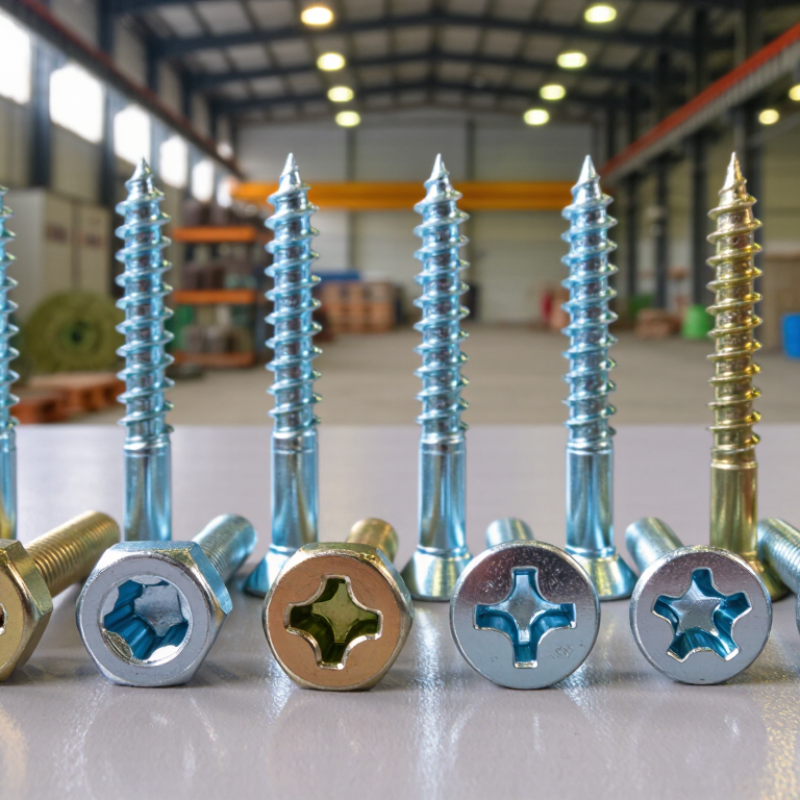
Understanding Concrete Screws and Their Common Applications
Concrete screws are designed to engage threads in predrilled holes in concrete or masonry. Common uses include securing electrical boxes, shelving rails, handrail brackets, door frames, and light equipment. A technician might fasten a junction box to a basement wall, while a contractor anchors a track along a concrete slab. Small details matter.
Hole diameter and embedment depth should follow the fastener specifications. Dust left inside a hole can interfere with engagement, so clear it before installation. A snug fit is useful; forcing a screw into an undersized hole may damage its threads or the surrounding concrete. Check edge distance, base material condition, and expected load, especially near cracked or weathered areas. Fit matters. Corrosion-resistant finishes may suit damp locations, but exposure and service life still need consideration. Concrete screws can make installation and later removal simpler, yet they are not a substitute for engineered anchors when loads are critical. A tidy installation can still be poorly suited to the actual load.
Who Are the Top 10 Concrete Screw Manufacturers in China? - Understanding Concrete Screws and Their Common Applications
Scope: This manufacturer-independent guide summarizes ten common concrete screw features and applications. It does not provide a verified company ranking or company-specific product data.
| No. | Comparison Dimension | Common Options or Characteristics | Typical Application | Selection Consideration |
|---|---|---|---|---|
| 1 | Fastener type | Concrete screw with a hardened, specially formed thread | Attaching fixtures directly to concrete or suitable masonry | Confirm that the fastener is specified for the base material and installation method. |
| 2 | Base material | Commonly specified for concrete; some products are also approved for particular masonry substrates | Anchoring brackets, tracks, or other components to a solid base | Concrete, brick, and block are not interchangeable; check the product approval for each substrate. |
| 3 | Head style | Hex washer head, flat countersunk head, or other product-specific head forms | Hex heads suit accessible surface fastening; countersunk heads can sit closer to flush when designed for that use. | Match the head profile to the fixture, clearance, and required finished appearance. |
| 4 | Drive style | Drive recess varies by product, including hex and other shaped drives | Installation with a compatible driver or bit | Use the correct drive tool and follow the installation instructions to reduce the risk of damage. |
| 5 | Diameter and length | Offered in multiple sizes; available dimensions vary by product | Light-duty fixtures through heavier attachments, subject to design requirements | Choose dimensions using the required embedment, fixture thickness, edge distance, and load data—not appearance alone. |
| 6 | Installation hole | A predrilled hole is commonly required; drill-bit size and hole depth are product-specific | Preparing concrete for screw installation | Follow the specified drilling diameter and depth, and clear dust from the hole as directed. |
| 7 | Material and finish | Steel fasteners may be supplied with different coatings or corrosion-resistant material options | Indoor and, where suitably rated, outdoor fastening | Corrosion resistance depends on the material, coating, and environment; verify suitability for exposure conditions. |
| 8 | Common fixture applications | Examples include metal brackets, electrical supports, light-duty framing, and equipment attachments | Fixing compatible fixtures to concrete or an approved masonry base | Check the fastener’s load limits and the fixture’s requirements for the specific installation. |
| 9 | Edge and spacing requirements | Minimum edge distances and spacing depend on the product and design conditions | Multiple fasteners installed near slab edges or in groups | Insufficient spacing or edge distance can reduce performance; use the applicable product data and design guidance. |
| 10 | Load and approval data | Allowable loads, test data, and approvals are product-specific | Projects where structural performance or code compliance matters | Use current technical documentation for the exact fastener, substrate, embedment, and installation conditions. |
Exclusive Access
Unlimited Resources
Detailed information on our products to assist you with the planning of your cable management project
Register Now
BIM Files

Step Files

Installation Manuals

User Guides

Best Practice Guides
