China Top 10 Portable Power Station Manufacturers?
China Top 10 Portable Power Station Manufacturers? This question reflects a rapidly expanding energy-storage market. Grand View Research valued the global Portable Power Station market at approximately USD 545 million in 2023. Its report forecasts strong growth through 2030, supported by outdoor recreation, emergency backup demand, and wider renewable-energy adoption. Mordor Intelligence also projects substantial expansion, although its market definition and estimates differ.
The numbers are not identical. That matters. Market reports often classify products differently, especially compact battery generators and larger home backup systems. Therefore, this guide examines Chinese manufacturers through practical criteria, rather than relying only on market size claims. These criteria include battery chemistry, usable capacity, inverter efficiency, charging speed, cycle life, thermal protection, product certification, warranty coverage, and after-sales support.
Real-world details reveal more than a brochure. A reliable unit should power a refrigerator during an outage, recharge beside a vehicle, and operate safely in changing temperatures. Manufacturers such as EcoFlow, Bluetti, Jackery, Anker, and other Chinese suppliers have built strong visibility through product innovation and international distribution. However, brand popularity does not automatically prove long-term reliability.
No ranking is perfect.
This selection combines public company information, technical specifications, industry reports, and user-focused performance considerations. It also recognizes a limitation: laboratory ratings may not match field conditions. Actual results depend on load type, ambient temperature, charging habits, and maintenance. Readers should verify certifications, local service availability, and warranty terms before making a purchase.
What Is a Portable Power Station?
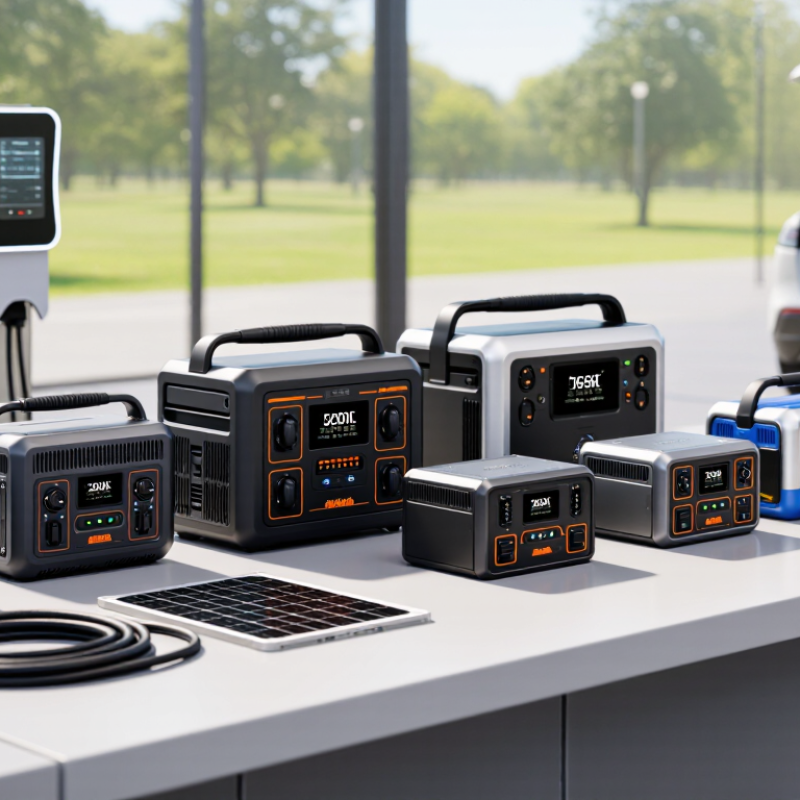
A portable power station is a rechargeable battery system designed to supply electricity away from a wall outlet. It usually combines a battery pack, inverter, charging circuit, and multiple output ports. Unlike a simple power bank, it can run household devices through AC outlets. USB ports and 12-volt sockets support phones, lights, routers, and small medical equipment.
Its capacity is measured in watt-hours, while output is measured in watts. A 500-watt-hour unit may not deliver 500 watt-hours to your devices because conversion causes energy loss. I learned this during a weekend field test. A small refrigerator consumed more power than expected after repeated compressor starts. Check both continuous output and peak surge capacity before choosing a unit. The battery management system should monitor temperature, voltage, and overcharging risks.
Portable power stations are useful for camping, emergency communication, outdoor work, and temporary home backup. Solar charging can extend operation, but sunlight changes quickly with clouds, shade, and panel angle. Keep the station dry and ventilated. Do not cover its cooling vents. Inspect cables and connectors regularly. My early assumption was simple: larger capacity always meant a better product. It did not. Weight, recharge time, noise, battery chemistry, and service support often matter more in daily use. A reliable model should provide clear specifications, tested protections, and realistic performance data.
How to Evaluate China’s Portable Power Station Manufacturers
Choosing among China’s top portable power station manufacturers requires more than comparing battery capacity. A reliable evaluation starts with factory evidence. Check production experience, quality-control procedures, cell traceability, and independent safety testing. Ask for test reports covering overheating, short circuits, overcharging, and repeated charging cycles. A serious manufacturer should explain these results clearly, not send vague certificates. Review the inverter’s continuous output, peak output, battery chemistry, operating temperature, and expected cycle life. These details affect real use during camping, field work, and emergency backup.
Tips: Request a working sample before placing a large order. Test it with a refrigerator, lamp, laptop, and high-load tool. Measure charging time and output stability. Compare the printed specifications with actual performance. Also inspect the casing, fan noise, screen accuracy, ports, and cable quality. Small defects often reveal weak process control. Ask how replacement parts, firmware updates, warranty claims, and technical support are handled. Written procedures are more dependable than friendly promises.
Supplier verification should include a factory video call or an independent audit. Review export experience, inspection records, and production capacity during peak seasons. A low price may reflect efficient manufacturing, but it may also signal weaker components. I once treated a polished catalog as proof of quality; that was a poor assumption. Samples can also be unusually well prepared. For stronger confidence, order multiple units from different production batches and compare their results. Reliability is demonstrated through consistent evidence, not attractive claims.
China’s Top 10 Portable Power Station Manufacturers
China’s top 10 portable power station manufacturers are often judged by engineering depth, production control, and after-sales reliability. A credible shortlist should examine factory capacity, battery traceability, inverter efficiency, and safety testing. It should also review real product samples, not only catalog claims.
Leading manufacturers usually offer several capacities, from compact 300Wh units to larger systems above 2,000Wh. Their factories may support lithium battery assembly, circuit-board testing, thermal management, and final quality inspection. Reliable suppliers clearly state cycle life, charging time, output limits, and protection features. They also provide test reports for electrical safety and transport compliance. Details matter.
Field experience can reveal weaknesses that brochures hide. Some units perform well indoors but lose efficiency in cold workshops. Others show excellent peak output but recharge slowly. No factory is perfect. That is worth admitting. Buyers should ask about warranty handling, spare parts, firmware updates, and inspection records before placing orders. A professional evaluation also checks noise levels, screen accuracy, cable quality, and long-duration performance. China’s strongest portable power station manufacturers understand that dependable energy storage requires continuous testing, honest specifications, and responsive technical support.
Key Products, Technologies, and Market Strengths
China’s top 10 portable power station manufacturers compete through battery safety, fast charging, and practical design. Their product ranges often include compact 300Wh units, family-sized 1,000Wh models, and expandable systems above 2,000Wh. These stations support camping, emergency backup, field work, and home energy management.
Lithium iron phosphate batteries are becoming a major strength. They offer strong thermal stability and longer cycle life than many older chemistries. Advanced models combine pure sine-wave inverters, solar charging, app monitoring, and multiple output ports. Some systems can recharge from solar panels within several hours, depending on sunlight and panel capacity. Manufacturing quality still varies. Buyers should examine certification records, warranty terms, battery management systems, and repair support. A bright display does not prove reliability.
Tips: Compare usable capacity, not only advertised capacity. Check inverter output for refrigerators, tools, or medical equipment. Test cable fit and screen readability before outdoor use. Heat affects performance. So does cold. Consider local service access, because shipping a heavy battery can become expensive and slow. Independent testing is valuable, but one review cannot represent every production batch. This is where careful judgment matters.
How to Choose the Right Chinese Manufacturer
Choosing a Chinese portable power station manufacturer requires more than comparing prices. Check whether the factory actually produces the battery system, inverter, and control board. A trading company may still be useful, but its technical control can be limited.
Request a sample from the same production line used for mass orders. Test charging speed, output stability, fan noise, and shutdown behavior under heavy loads. Ask for battery cell specifications, BMS protections, cycle-test records, and traceability documents. Verify relevant safety certifications for your target market. Documents should match the exact model, not a similar product. Small details matter.
Visit the facility when possible. Examine the assembly area, aging-test racks, incoming inspection process, and warehouse conditions. Ask how defects are recorded and corrected. A reliable manufacturer should explain warranty handling, spare parts, firmware updates, minimum order quantities, and realistic lead times. Avoid promises that sound perfect. In practice, even experienced suppliers can miss a deadline or change a component without clear notice. Put every approved specification into a signed agreement, including capacity tolerance, noise limits, packaging, and inspection standards. Independent pre-shipment testing is worth considering, especially for large orders. It adds cost, but it can expose problems before containers leave the factory. Also test communication during development. Slow replies now may become serious delays later.


