Main menu Open search

Blog

China Top 10 Screw Centrifuge Manufacturers

China’s Screw Centrifuge industry has moved from basic fabrication toward process-focused engineering. Manufacturers now serve wastewater treatment, food processing, mining, chemicals, and biogas applications. MarketsandMarkets’ 2024 Decanter Centrifuge Market report identifies wastewater expansion and industrial separation demand as major growth drivers. Grand View Research also reports continuing investment in industrial centrifugation equipment, supported by stricter water-management requirements.

Performance, however, is not determined by catalog capacity alone. A reliable Screw Centrifuge must match feed solids, particle size, viscosity, torque, differential speed, and required cake dryness. Small design details matter. Look closely at the scroll flights, wear protection, gearbox, bearings, and control cabinet. These parts decide whether a machine survives continuous operation or struggles after a few months.

Separation specialist Dr. Rainer Kretzschmar has stated, “A decanter centrifuge is only as good as the process data behind it.” This practical point deserves attention when comparing China’s top manufacturers. Factory experience, pilot testing, documented case studies, and after-sales support should carry more weight than a polished brochure. ISO certificates help, but they do not replace operating evidence. Published market figures also vary between reports, because product categories and regional definitions differ. That weakness should be acknowledged.

This guide reviews ten leading Chinese manufacturers through engineering capability, customization, testing practice, export experience, and service reliability. The ranking is not permanent. A supplier strong in sludge dewatering may be less suitable for edible oils or mineral recovery. Real performance depends on the application, not the label.
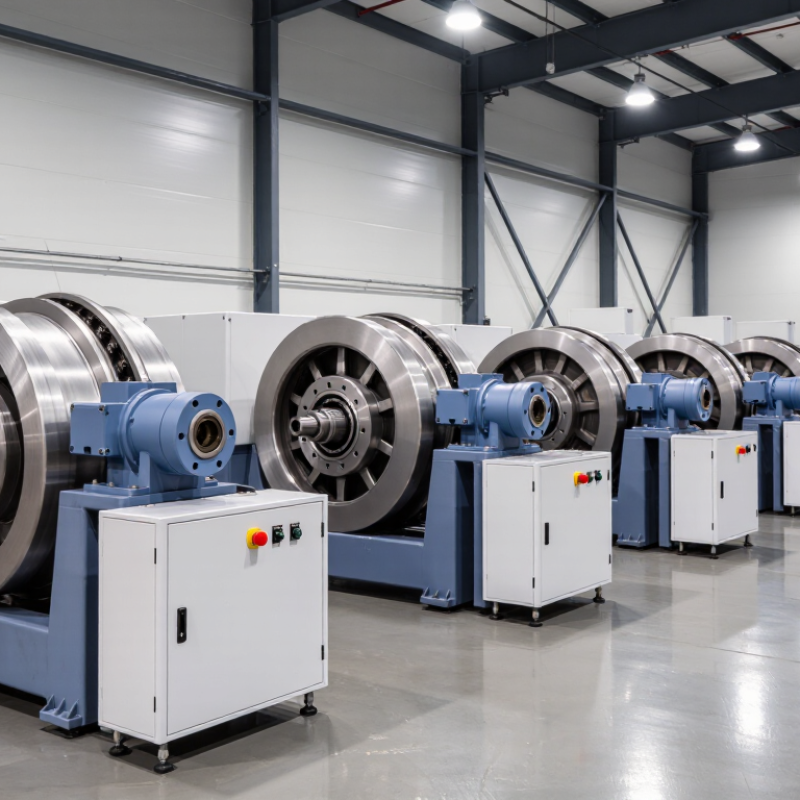
China Top 10 Screw Centrifuge Manufacturers

Screw Centrifuge Fundamentals: 2,000–4,000 G and 20–35% Cake Solids

China Top 10 Screw Centrifuge Manufacturers

Screw centrifuges separate solids through a rotating bowl and conveyor. Their performance depends on feed type, polymer dosage, torque, and residence time. A practical design window is 2,000–4,000 G. This range supports efficient clarification without always demanding extreme power consumption. The U.S. EPA’s Biosolids Technology Fact Sheet: Centrifuges reports typical dewatered cake solids near 20–35%, depending on sludge characteristics and conditioning. Field results vary.

Cake solids are not guaranteed. Waste activated sludge may produce softer cake than primary sludge. High oil content, fine particles, or unstable polymer mixing can reduce capture and raise centrate turbidity. The Water Environment Federation’s technical guidance also emphasizes testing feed chemistry before selecting operating settings. A 25% cake may be excellent for one plant but disappointing for another. That detail is often missed.

Tips: Ask manufacturers for pilot-test data at your actual feed concentration. Check G-force calculations, torque limits, differential speed, and polymer consumption. Request cake-solids results from continuous operation, not only laboratory samples. Keep records for several weeks. Small adjustments matter. My practical concern is simple: a higher G value may improve separation, but it can also increase wear and energy use. Equipment selection should balance dryness, throughput, maintenance access, and lifecycle cost.

Evaluation Criteria for China’s Top 10: Capacity, G-Force, and ISO 9001

China Top 10 Screw Centrifuge Manufacturers

Evaluating China’s leading screw centrifuge manufacturers requires more than comparing catalog figures. Production capacity should include machining equipment, assembly space, testing facilities, and documented annual output. A factory may claim high capacity, yet delayed delivery can reveal limited scheduling control. Ask for recent production records, inspection procedures, and realistic lead times. These details show operational experience better than polished brochures.

G-force is another essential measure. It affects separation performance, solids transport, and wear inside the bowl. Review the maximum G-force, normal operating range, bowl diameter, and rotational speed together. A higher value is not automatically better. Feed characteristics, particle size, moisture, and throughput must match the selected design. During technical discussions, request test data using similar materials. Small differences in feed behavior can change results significantly.

ISO 9001 certification supports reliability, but the certificate itself is not enough. Check its validity, certification scope, issuing body, and coverage of design, manufacturing, testing, and after-sales service. Quality should also appear in traceable material records, dimensional reports, vibration checks, and final acceptance tests. Factory visits can reveal practical habits, such as labeled components and controlled assembly areas. Still, one visit is only a snapshot. I would keep questioning the evidence. Suppliers can improve, but evaluation should remain cautious, measurable, and based on current records.

China’s Top 10 Screw Centrifuge Manufacturers: Product and Market Profiles

China Top 10 Screw Centrifuge Manufacturers

China’s Top 10 Screw Centrifuge Manufacturers: Product and Market Profiles

China’s leading screw centrifuge manufacturers serve wastewater treatment, food processing, chemicals, mining, and municipal projects. The top ten should be viewed as a capability comparison, not a permanent ranking. Some manufacturers produce compact dewatering units for small plants. Others design heavy-duty centrifuges for continuous industrial operation. Key product differences include bowl diameter, differential speed, torque capacity, feed volume, and material selection. Stainless steel construction matters when processing corrosive sludge. Automatic control systems can also reduce operator workload and improve consistency.

Market profiles reveal different strengths. Some suppliers focus on export-ready equipment, technical documents, and remote commissioning. Others compete through customized designs, shorter delivery times, or local engineering support. Buyers should examine actual case data rather than polished catalogues. A catalogue can look convincing. It cannot replace a site trial. Performance may change with sludge concentration, temperature, and particle size. This is where many comparisons become too simple. A reliable evaluation should include power use, noise levels, polymer demand, maintenance access, and spare-part availability. Certification and factory quality controls also deserve careful review.

Tips: Request a sample test before ordering. Ask for feed data, dry-solids results, and energy records. Confirm warranty terms, installation support, and technician response times. Leave room for uncertainty; real sludge rarely behaves exactly like laboratory material.

China Top 10 Screw Centrifuge Manufacturers - China’s Top 10 Screw Centrifuge Manufacturers: Product and Market Profiles

Rank Anonymous Manufacturer Profile Primary Product Positioning Typical Bowl Diameter Typical Capacity Common Separation Application Key Configuration Typical Construction Materials Main Market Focus
1 Profile A Heavy-duty industrial decanter centrifuges 350–1,000 mm 1–120 m³/h Municipal sludge, industrial wastewater, mining slurry Variable differential speed and adjustable pond depth Stainless steel with carbide-protected wear zones Domestic infrastructure projects and export markets
2 Profile B Sludge dewatering systems for wastewater plants 250–800 mm 0.5–80 m³/h Activated sludge, primary sludge, digested sludge Polymer dosing, torque monitoring, automated control 304 or 316 stainless steel; hardened conveyor flights Municipal wastewater and engineering contractors
3 Profile C Food and beverage separation equipment 200–650 mm 0.3–60 m³/h Starch, fruit juice, vegetable residues, edible oils Hygienic design with clean-in-place capability Food-grade stainless steel and polished product-contact surfaces Food processors and beverage manufacturers
4 Profile D Oilfield and drilling-fluid centrifuges 350–700 mm 10–100 m³/h Drilling mud, barite recovery, cuttings control High-speed bowl, wear-resistant feed zone, explosion-risk options Alloy steel, stainless steel, tungsten-carbide wear protection Oilfield service providers and drilling contractors
5 Profile E Mining and mineral-processing centrifuges 400–1,000 mm 5–150 m³/h Coal fines, tailings, sand, kaolin and mineral concentrates High-torque drive with replaceable wear liners Wear-resistant alloy, ceramic or carbide-lined components Mining regions and bulk-material processing plants
6 Profile F Chemical and pharmaceutical separation units 200–600 mm 0.2–40 m³/h Crystals, pigments, catalysts and fine chemical solids Closed design, hygienic seals and programmable operation 316L stainless steel and corrosion-resistant alloys Chemical, pharmaceutical and specialty-material plants
7 Profile G Compact municipal and industrial wastewater models 200–500 mm 0.2–25 m³/h Small treatment plants, food wastewater and septage Skid-mounted layout with simplified automated controls Stainless steel process zone with carbon-steel support frame Small and medium-sized treatment facilities
8 Profile H Biofuel, rendering and renewable-resource systems 250–650 mm 1–70 m³/h Digestate, animal by-products, algae and biomass slurries Oil-resistant seals, odor-control enclosure and variable-speed drive Stainless steel wetted parts with abrasion-resistant inserts Biogas, biofuel and resource-recovery projects
9 Profile I General-purpose industrial centrifuges 250–800 mm 0.5–90 m³/h Mixed industrial solids, process water and emulsions Modular bowl, conveyor and control-system options 304 stainless steel or coated carbon steel, application dependent Industrial distributors and custom equipment integrators
10 Profile J Budget-oriented export and replacement-equipment segment 200–600 mm 0.3–50 m³/h Basic sludge dewatering and solid-liquid separation Standardized components with optional automation packages Stainless steel process parts and coated structural steel Price-sensitive overseas markets and retrofit projects

Note: Capacity, bowl diameter and configuration ranges are representative engineering ranges for Chinese-manufactured screw decanter centrifuge products. Actual performance depends on feed concentration, particle size, viscosity, differential speed, polymer dosage and required cake dryness.

Performance Comparison: 5–200 m³/h Feed Rates, Power, and Cake Moisture

China Top 10 Screw Centrifuge Manufacturers

Comparing China’s top ten screw centrifuge manufacturers requires more than reading catalog ratings. The practical range is wide, from 5 to 200 m³/h feed capacity. Smaller units suit laboratory trials, pilot lines, and limited sludge streams. Larger models need stable feeding, stronger torque control, and reliable discharge systems.

Power consumption changes sharply with throughput and material properties. A 5 m³/h machine may operate with modest motor demand, while a 200 m³/h unit requires substantially higher installed power. However, motor size alone does not prove efficiency. During plant tests, operators should record feed solids, differential speed, torque, and hourly electricity use. A low-power result can be misleading if the cake remains too wet.

Cake moisture is often the decisive performance measure. Many systems produce approximately 20–30% moisture for suitable sludge, but oily, fibrous, or poorly conditioned feed can perform worse. Polymer dosage and bowl speed matter. So does the operator’s experience. A small speed change may improve clarity while reducing cake dryness. Trade-offs are real.

A useful comparison should use the same feed and testing period. Otherwise, rankings become fragile. Some suppliers provide strong laboratory data but limited long-term field evidence. That gap deserves attention. Maintenance access, wear protection, vibration control, and spare-part response also affect lifetime cost. The best performer on paper may not be the best fit for every plant.

China Top 10 Screw Centrifuge Manufacturers — Performance Comparison

Indicative operating points for screw centrifuge configurations covering 5–200 m³/h feed rates. Bars show installed motor power, while the line shows typical cake moisture. Values represent realistic industry operating ranges and are not assigned to any company or brand.

Actual performance depends on solids concentration, particle size, feed characteristics, differential speed, pond depth, and polymer or chemical conditioning.

Key Applications: Wastewater, Sludge, Food, and Chemical Processing

China Top 10 Screw Centrifuge Manufacturers

Screw centrifuges support demanding wastewater and sludge operations. The World Bank’s 2019 report, Wastewater: From Waste to Resource, notes that over 80% of global wastewater is released without adequate treatment. This pressure increases the need for compact dewatering equipment. In municipal plants, screw centrifuges continuously separate water from biological sludge. Operators can reduce hauling volume, especially when polymer dosing and feed solids remain stable. The details matter.

Food processors use these systems for starch, vegetable fibers, protein residues, and wash water. A stainless-steel design helps manage frequent cleaning and humid rooms.

In chemical processing, centrifuges handle mineral suspensions, catalyst residues, and process slurries. Material compatibility is critical. The wrong alloy may fail quietly, then become expensive.

The FAO’s 2022 report on food and agriculture also highlights rising resource efficiency demands across food production. Energy use, water recovery, and solids quality now influence equipment selection.

Tips: Ask for a site-specific pilot test before purchasing. Record feed concentration, flow, temperature, and polymer consumption. Check torque trends during peak loading. Request performance data from comparable sludge or food streams. A laboratory sample can mislead. Real feed changes hourly. Also review cleaning access, noise levels, spare-part availability, and operator training. The top ten manufacturers should be compared by verified field results, not catalogue capacity alone.

Exclusive Access

Unlimited Resources

Detailed information on our products to assist you with the planning of your cable management project

Register Now

BIM Files

Step Files

Installation Manuals

User Guides

Best Practice Guides

Technical Charts