Main menu Open search

Blog

Top 10 Threaded Couplers for Global Buyers?

Global buyers rarely choose Threaded Couplers by appearance alone. They examine thread accuracy, pressure ratings, material compatibility, sealing methods, and supplier consistency. A coupler may look robust on a warehouse shelf, yet fail after repeated assembly, vibration, corrosion, or temperature changes. Small details matter. So does documentation.

Dr. Robert W. Messler Jr., a respected joining-technology specialist, emphasizes, “A joint is a system, not merely a point of contact.” This principle fits threaded connections well. Reliable performance depends on the coupler, mating threads, sealant, torque, and operating environment working together. Buyers should also review inspection records, traceability, testing methods, and production experience. These checks can reveal differences between a polished product page and dependable field performance.

This guide examines the Top 10 Threaded Couplers for Global Buyers through a practical purchasing lens. It considers stainless steel, carbon steel, brass, and engineered materials. It also compares thread standards, size ranges, connection designs, and common application demands. Some rankings remain debatable. Market data changes. Supplier claims require verification. That uncertainty deserves attention, not avoidance. The strongest choice may not be the cheapest coupler or the most widely advertised model. It should match the fluid, pressure, temperature, installation method, and maintenance conditions. Buyers can use these comparisons to narrow options, ask sharper technical questions, and avoid costly mismatches across international supply chains.
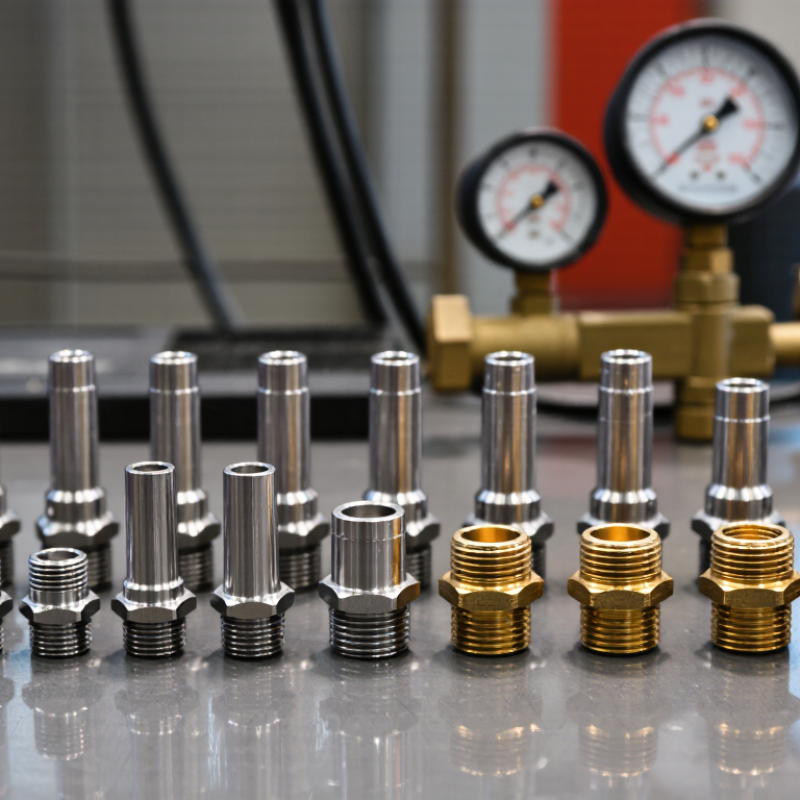
Top 10 Threaded Couplers for Global Buyers?

Threaded Couplers: Definition, Structure, and Core Functions

Threaded Couplers: Definition, Structure, and Core Functions

Threaded couplers are short sleeves that join two components through matching threads. They may use internal threads, external threads, or both. Common materials include carbon steel, stainless steel, brass, and reinforced polymers. Their structure usually includes a threaded bore, a hexagonal or round body, and sealing surfaces. Some designs also include shoulders for accurate positioning.

The core function is simple: create a detachable, load-bearing connection. Couplers transfer pressure, torque, vibration, or mechanical force between connected parts. In piping, thread form and sealing method are critical. ASME B1.20.1 defines pipe-thread dimensions, while ISO 965 addresses general thread tolerances. A 2024 Grand View Research report estimates the global pipe fittings market may grow at roughly 4.7% annually through 2030. This growth increases demand for reliable connection components, but market growth does not guarantee product quality. A clean thread can still fail under poor alignment.

Tips: Check thread compatibility, material strength, pressure rating, and operating temperature. Inspect the first three threads carefully. They often reveal damage. Use the correct sealant, but avoid excessive tightening. Over-torquing can deform threads and reduce service life. For global buyers comparing the top 10 threaded couplers, certification records and traceable test data matter more than appearance. This is where purchasing decisions sometimes become too optimistic. A lower price may hide inconsistent tolerances, incomplete inspection, or weak documentation.

Key Types of Threaded Couplers and Their Industrial Applications

Top 10 Threaded Couplers for Global Buyers?

Key Types of Threaded Couplers and Their Industrial Applications

Threaded couplers connect pipes, rods, hoses, and structural bars where quick installation matters. The main types include straight, reducing, union, bulkhead, swivel, compression-threaded, NPT, BSP, metric, and rebar couplers. Straight couplers join equal diameters in process lines. Reducing versions connect different sizes. Unions support maintenance because technicians can disconnect them without rotating long pipe sections.

NPT couplers suit many North American fluid systems, while BSP threads remain common across Europe, Asia, and other regions. Metric couplers support machinery, automation, and mobile equipment. Swivel designs help control hose movement near pumps. Bulkhead couplers pass through panels or tanks. Rebar couplers transfer tensile loads in reinforced concrete structures. Selection should consider pressure, temperature, vibration, corrosion, and thread tolerance. Small errors matter.

Grand View Research’s 2024 industrial fasteners assessment valued the wider global market at more than US$80 billion, showing the scale of standardized joining hardware. For piping, ASME B1.20.1 defines NPT thread requirements, while ISO 7-1 addresses pressure-tight pipe threads. These references improve purchasing reliability, but they do not replace field verification. In practice, mixed thread systems still cause leaks. This is an easy detail to overlook. Buyers should request material certificates, dimensional inspection records, and pressure-test evidence before approving large orders.

Top 10 Threaded Couplers Compared by Design, Materials, and Performance

The top 10 threaded couplers differ mainly in thread form, body design, material, and sealing method. Straight couplers suit aligned pipe runs, while reducing couplers connect different diameters. Bulkhead and union designs help where access is limited. Swivel types tolerate movement, but they may introduce more leakage points.

A 2024 industrial valves market report estimated the sector at about USD 78 billion, with growth near 5% annually. That demand increases pressure on coupler reliability. Carbon steel offers strength and lower cost. Stainless steel performs better against moisture and aggressive fluids. Brass remains practical for moderate pressure and clean water systems. Nylon is lightweight, but heat resistance can become a weakness. Small detail. It matters.

For performance checks, I compare thread accuracy with ASME B1.20.1 and sealing compatibility with ISO 7-1. A coupler may pass a pressure test yet fail after repeated thermal cycling. That is where many product comparisons become too simple. Field inspection should examine burrs, thread damage, wall thickness, and wrench clearance. ASTM material certificates also improve traceability, especially for high-pressure service. One 2023 process-equipment reliability survey reported that poor installation and maintenance contributed to more than one-third of connection failures. The figure varies by industry, so it deserves caution. My practical ranking favors forged bodies, clean threads, documented pressure ratings, and replaceable seals over attractive surface finishes. Performance is not only maximum pressure. It is stable sealing after installation, vibration, temperature changes, and routine servicing.

How Global Buyers Evaluate Standards, Compatibility, and Supplier Quality

Top 10 Threaded Couplers for Global Buyers

Global buyers should judge threaded couplers beyond price and appearance. Thread profiles must match the application, not just the nominal diameter. NPT, BSPT, BSPP, and metric threads can look similar but seal differently. ISO 7-1 covers pressure-tight pipe threads, while ISO 228-1 covers threads that do not seal on the thread itself. Confusing these standards can create leaks, rejected shipments, and expensive field repairs. Material certificates, pressure ratings, temperature limits, and corrosion data should appear on the technical file.

Supplier quality also needs measurable evidence. The ISO Survey 2022 recorded more than 1.26 million ISO 9001 certificates worldwide. Certification is useful, but it is not proof of every batch. Ask for inspection plans, thread-gauge records, heat numbers, and corrective-action reports. Independent laboratory testing adds confidence for critical couplers. The World Bank’s 2023 Logistics Performance Index also shows why delivery reliability matters; customs delays and tracking gaps can weaken an otherwise strong sourcing decision. A perfect specification can still fail in transit.

Tips: Request one sample from normal production, not a special demonstration batch. Verify thread gauges at receipt. Compare sealing performance under actual pressure and temperature. Keep drawings revision-controlled. I have seen buyers approve a fitting from a photograph alone. That shortcut is risky. Standards help, but human assumptions still cause failures.

Top 10 Threaded Couplers for Global Buyers? — How Global Buyers Evaluate Standards, Compatibility, and Supplier Quality
Rank Coupler Type Applicable Thread Standard Thread and Sealing Characteristics Common Nominal Sizes Typical Materials Preferred Sealing Method Typical Buyer Application Key Supplier-Quality Checks
1 NPT Full Coupling ASME B1.20.1 60° tapered pipe thread; the thread interference helps form the mechanical seal. 1/8 to 4 in Carbon steel, stainless steel, brass, ductile iron Thread sealant or PTFE tape compatible with the service fluid General industrial piping, compressed air, water, oil, and low-to-medium pressure services Verify thread gauge inspection, material certificate, dimensional report, pressure test record, and traceability marking.
2 NPT Reducing Coupling ASME B1.20.1 Tapered NPT threads with different nominal pipe sizes at each end. Commonly 1/4 × 1/8 in to 2 × 1 in Stainless steel, brass, carbon steel, malleable iron Approved liquid or anaerobic thread sealant; avoid over-tightening thin-wall fittings Branch-size transitions and compact equipment connections Check both thread sizes independently, wall thickness at the reduction zone, concentricity, burr-free ports, and hydrostatic or pneumatic test results.
3 BSPP Parallel Coupling ISO 228-1 Parallel Whitworth-profile pipe thread; the thread itself is not normally the primary seal. G 1/8 to G 4 Brass, stainless steel, carbon steel, nickel-plated brass Bonded washer, O-ring, or gasket at the port face European and international equipment with face-sealing or washer-sealing ports Confirm G-thread designation, sealing-face flatness, O-ring groove dimensions, surface finish, and compatibility with the mating port.
4 BSPT Tapered Coupling ISO 7-1 Tapered Whitworth-profile pipe thread designed to seal through thread engagement. R 1/8 to R 4 Stainless steel, brass, carbon steel, ductile iron Thread sealant selected for temperature, pressure, and chemical exposure Industrial piping and equipment manufactured for tapered BSP connections Ensure the supplier clearly distinguishes R, Rc, and Rp designations; request thread gauges, pitch verification, and leak-test documentation.
5 Metric Parallel-Thread Coupling ISO 261 and ISO 262 for general metric thread dimensions Metric parallel thread; sealing normally occurs with an O-ring, gasket, or sealing washer. M8 × 1 to M42 × 2 Carbon steel, stainless steel, aluminum alloy, brass O-ring, copper washer, bonded seal, or face gasket Machinery, instrumentation, automotive systems, and metric equipment assemblies Check major diameter, pitch, thread class, sealing-surface geometry, O-ring compound, and dimensional compatibility with the equipment drawing.
6 SAE Straight-Thread Hydraulic Coupler SAE J514; exact port type must be specified Straight thread with a separate elastomeric or metal sealing interface; thread alone is not the seal. Commonly -4 to -24 dash sizes Zinc-plated carbon steel, stainless steel, carbon steel O-ring boss, bonded seal, or 37° flare according to the selected configuration Hydraulic power units, mobile equipment, industrial cylinders, and fluid-control assemblies Verify port designation, O-ring size and compound, flare angle where applicable, burst pressure, impulse testing, and cleanliness control.
7 37° Flared Threaded Adapter SAE J514 Straight or tapered external thread combined with a 37° metal-to-metal flare seat. Commonly -4 to -20 dash sizes Carbon steel, stainless steel, brass 37° flare seat; additional thread sealant is not used on the flare surface High-pressure hydraulic tubing and vibration-prone fluid lines Inspect flare angle, seat concentricity, tube-stop geometry, thread gauges, proof pressure, burst pressure, and surface damage.
8 UN and UNF Straight-Thread Coupling ASME B1.1 Unified inch straight thread; sealing requires a face seal, O-ring, gasket, or flare design. Commonly 1/4-20 to 1-1/2-12 Alloy steel, stainless steel, brass, aluminum alloy O-ring, gasket, washer, or flare seat depending on the fitting design North American machinery, instrumentation, and mechanical assemblies Confirm UNC versus UNF, thread class, pitch diameter, sealing interface, material grade, plating thickness, and gauge inspection records.
9 Bulkhead Threaded Coupler May use NPT, BSP, metric, or SAE thread systems Two threaded ends separated by a panel nut or shoulder for mounting through a wall or enclosure. 1/8 to 2 in pipe sizes; metric equivalents available Stainless steel, brass, plated steel, engineering polymer Panel gasket, O-ring, bonded seal, or thread sealant according to the port design Tanks, cabinets, manifolds, hydraulic reservoirs, and process skids Check panel thickness range, shoulder dimensions, locking-nut engagement, sealing compression, pull-out resistance, and corrosion protection.
10 Sanitary Threaded Union Coupler DIN 11851 or another specified hygienic connection standard Large-profile round-nut connection with a replaceable gasket; designed for frequent disassembly. DN10 to DN100, depending on the selected standard Austenitic stainless steel, typically 304 or 316/316L grades Food-grade elastomer gasket such as EPDM, silicone, or PTFE, selected for the process Food, beverage, dairy, pharmaceutical, and hygienic process piping Request material certificates, internal surface-finish data, weld inspection, passivation records, gasket compliance documents, and cleanability verification.

Buyer note: Thread size, nominal size, pressure capacity, temperature range, and allowable media vary by design and material. Before ordering, require a supplier drawing, applicable standard designation, pressure and temperature ratings, material certificates, dimensional inspection records, and sample-fit verification with the mating component.

Purchasing Guide: Pricing, Certifications, Customization, and Shipping Factors

For global buyers, selecting the top 10 threaded couplers requires more than comparing unit prices. Check thread standards carefully, including NPT, BSP, and metric profiles. A matching thread can still fail if pitch, tolerance, or sealing method differs. Confirm material grades, pressure ratings, temperature limits, and fluid compatibility before requesting quotations.

Pricing should include testing, packaging, tooling, and delivery terms. Ask for a clear breakdown of minimum order quantities and sample costs. Certifications may include material reports, dimensional inspection records, pressure-test results, and quality-management documentation. Requirements vary by industry and destination. Request current documents, not generic certificates copied from older projects. This is often overlooked.

Customization can cover thread size, body length, plating, seals, markings, and private packaging. However, special designs may increase tooling charges and lead times. Approve a technical drawing before production begins. Shipping decisions also affect the final cost. Compare air freight, sea freight, and consolidated cargo using the same delivery terms. Protect couplers with caps, moisture barriers, and strong cartons. Ask about carton dimensions and pallet limits. A low factory price may become expensive after freight, insurance, duties, and port handling. Recheck the figures. Even experienced purchasing teams sometimes miss one fee.

Top 10 Threaded Couplers for Global Buyers

The chart compares indicative unit prices for common threaded coupler configurations at an order quantity of approximately 100 pieces. Prices vary according to thread size, pressure rating, material, surface treatment, inspection requirements, and destination.

For purchasing, verify the applicable thread standard, pressure and temperature ratings, material certificates, ISO 9001 supplier controls, product-specific compliance requirements, customization lead time, and shipping terms such as FOB, CIF, or DDP before placing an order.

Exclusive Access

Unlimited Resources

Detailed information on our products to assist you with the planning of your cable management project

Register Now

BIM Files

Step Files

Installation Manuals

User Guides

Best Practice Guides

Technical Charts