Blog
Top 10 Bath Towel Making Machines for Global Buyers
The global bath towel industry is becoming more demanding, not merely larger. Buyers now evaluate absorbency, drying speed, production consistency, energy use, and after-sales support. A modern Bath Towel Making Machine must handle cotton, recycled fibers, and different terry-loop structures without damaging yarn quality. Small defects become obvious under hotel lighting.
Textile Exchange reported that global fiber production reached about 124 million tonnes in 2023. Its Materials Market Report also projects continued growth toward 2030, increasing pressure on manufacturers to improve resource efficiency. Meanwhile, the International Textile Manufacturers Federation’s machinery shipment statistics show sustained international investment in textile production equipment. These figures do not measure towel machines directly. However, they reveal a clear industrial direction: buyers are seeking scalable, traceable, and less wasteful machinery.
This guide reviews ten Bath Towel Making Machine options for global buyers. The comparison considers weaving performance, loop control, automation, fabric width, maintenance access, and supplier reliability. It also examines practical details, such as noise near the operator panel, lint around the cutting unit, and the time required for a machine changeover. These details matter.
A low purchase price can hide expensive downtime. A high-speed specification can also mislead when actual fabric quality declines. That is why technical brochures should be checked against factory trials, reference installations, and documented service records. No machine is perfect. Careful verification remains essential.
What Are Bath Towel Making Machines?
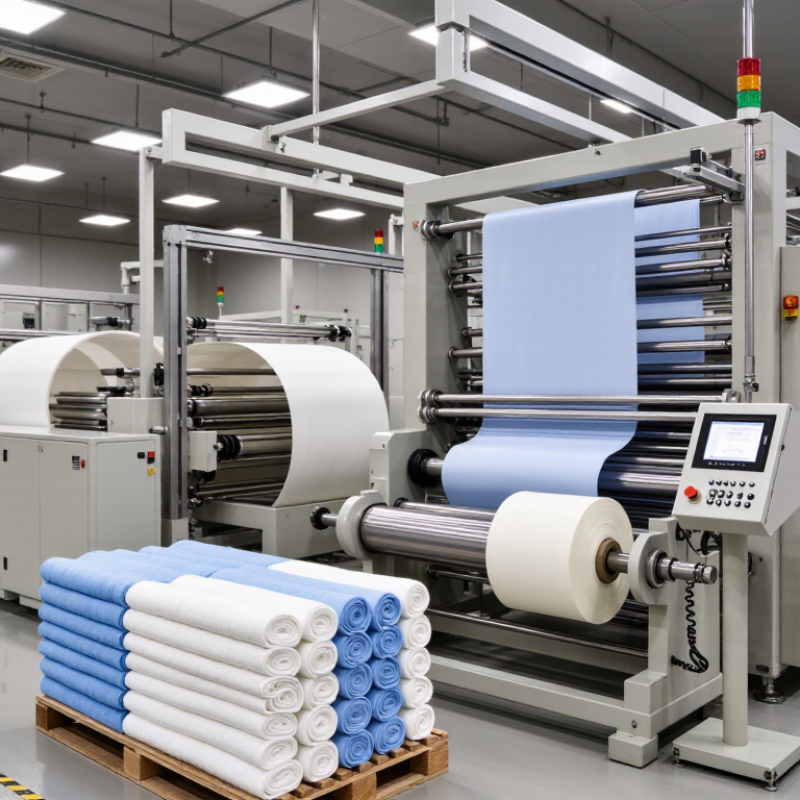
Bath towel making machines are industrial systems that turn yarn into absorbent, finished towels. They are not always one complete machine. A production line may include yarn preparation equipment, terry looms, dyeing units, dryers, shearing machines, and folding equipment.
A terry loom creates the towel’s raised loops, which hold water against the skin. The loop height, fabric density, yarn quality, and weaving speed affect softness and durability. Dyeing machines add color, while dryers control moisture before cutting and packaging. Some systems also support edge stitching, label attachment, and automated folding. In my experience, stable tension matters more than impressive speed. A fast machine can still produce uneven loops. No machine is perfect.
Tips: Compare output by towel weight, size, and fabric type. Ask suppliers for test samples using your own yarn. Check energy use, spare-part availability, operator training, and cleaning access. A machine that looks affordable may require costly maintenance later. Review its safety guards and emergency controls before purchase. Also, measure your factory space carefully; service clearance is often forgotten. Buyers comparing the top 10 bath towel making machines should examine actual fabric consistency, not only catalog specifications. A small defect may become obvious after repeated washing.
How the Bath Towel Manufacturing Process Works
Top 10 Bath Towel Making Machines for Global Buyers
How the Bath Towel Manufacturing Process Works
Bath towel production begins with yarn preparation. Cotton yarn is wound, sized, and checked for strength before entering the weaving machine. Modern terry looms form absorbent loops by controlling ground and pile warp tension. Width, pile height, and fabric weight must remain stable across the roll. A small tension error can create visible stripes.
The process continues through desizing, scouring, bleaching, and dyeing. These stages remove processing chemicals and improve color absorption. After washing, a hydro extractor and drying machine reduce moisture before stentering sets fabric width. Shearing machines trim uneven loops, while raising machines can improve surface softness. Textile Exchange’s Materials Market Report 2024 recorded 124 million tonnes of global fiber production in 2023. This scale makes fiber traceability increasingly important for towel manufacturers. It also exposes a weakness: many factories still measure water and energy separately.
Cutting and sewing machines then shape towel panels, hems, and hanging loops. Automatic inspection systems detect holes, stains, and inconsistent pile density. The International Textile Machinery Federation’s 2023 statistics showed weaker global machinery shipments, reminding buyers to examine maintenance support carefully. ISO 6330 washing procedures can help evaluate dimensional change after laundering. In practice, one test is never enough. Check absorbency, colorfastness, shrinkage, and seam strength after repeated washes. The production line looks efficient, but human inspection still catches defects that sensors may miss.
Top 10 Bath Towel Making Machines for Global Buyers - How the Bath Towel Manufacturing Process Works
| No. | Machine | Main Manufacturing Stage | Primary Function | Typical Working Width / Capacity | Typical Production Range | Important Buying Considerations |
|---|---|---|---|---|---|---|
| 1 | Bale Opener and Blending Machine | Fiber Preparation | Opens compressed cotton or blended-fiber bales, removes large impurities, and creates a consistent fiber blend. | Approx. 500–1,600 mm feed width | About 300–1,500 kg/hour | Check fiber compatibility, dust-control provisions, blending accuracy, and automatic bale-feed options. |
| 2 | Carding Machine | Fiber Cleaning and Web Formation | Individualizes fibers, removes remaining trash, and forms a continuous sliver for spinning. | Approx. 1,000–1,500 mm working width | About 50–150 kg/hour per machine | Evaluate fiber-loss rate, nep removal, sliver uniformity, cylinder speed, and maintenance access. |
| 3 | Draw Frame | Sliver Equalization | Combines several slivers and drafts them to improve evenness, parallelization, and yarn quality. | Usually 6–8 sliver input lines | Approximately 400–800 m/min delivery speed | Look for autolevelling, reliable drafting control, sensor accuracy, and compatibility with the selected yarn count. |
| 4 | Ring Spinning or Rotor Spinning Machine | Yarn Manufacturing | Transforms prepared sliver into yarn used for towel ground fabric, pile loops, and sewing operations. | Ring frames commonly have 500–1,824 spindles | Ring spindle speeds commonly 15,000–25,000 rpm | Select based on yarn count, desired softness, twist level, energy use, automation, and yarn-break monitoring. |
| 5 | Sectional or Direct Warping Machine | Warp Preparation | Arranges warp yarns in the correct order and length before they are transferred to the weaving beam. | Approx. 1,800–3,600 mm working width | Up to about 800–1,200 m/min, depending on yarn and setup | Confirm beam diameter, yarn-tension control, pattern capability, creel size, and compatibility with terry looms. |
| 6 | Yarn Sizing Machine | Warp Strengthening | Applies a protective size coating to warp yarns to reduce abrasion and breakage during weaving. | Approx. 1,800–3,600 mm working width | Commonly 40–100 m/min | Review size-box control, drying capacity, moisture regulation, energy consumption, and easy cleaning of rollers. |
| 7 | Terry Towel Rapier or Air-Jet Loom | Terry Weaving | Weaves ground warp, pile warp, and weft yarns to create the absorbent looped surface of the towel. | Approx. 1,900–3,600 mm reed width | Typically 300–700 rpm, depending on design and fabric weight | Prioritize pile-height control, terry motion stability, design flexibility, weft insertion, and fabric-width requirements. |
| 8 | Towel Dyeing Machine | Coloration | Dyes cotton or blended terry fabric while controlling color uniformity, liquor circulation, and fabric movement. | Rope or open-width systems; about 50–1,000 kg per batch | Batch cycles commonly 2–8 hours | Compare water ratio, heating method, chemical dosing, color reproducibility, wastewater requirements, and batch size. |
| 9 | Hydro Extractor and Towel Dryer | Water Removal and Drying | Removes excess water after dyeing and dries the terry fabric while preserving absorbency and pile appearance. | Typical extractor loads: 25–150 kg | Drying temperature commonly 80–140°C | Assess residual-moisture control, drum capacity, heat recovery, fabric-handling system, and protection against pile flattening. |
| 10 | Towel Cutting, Hemming, and Label Sewing Machine | Cutting and Final Sewing | Cuts fabric into specified towel sizes and sews hems, labels, borders, and decorative details. | Common towel widths: 300–1,800 mm | Approximately 20–60 pieces/minute, depending on operations | Check size accuracy, edge-stitch quality, automatic folding, label placement, fabric-thickness handling, and operator safety. |
Note: The capacities and operating ranges shown are typical industry estimates for commercial textile equipment. Actual performance depends on fiber type, yarn count, towel weight, pile height, machine configuration, automation level, and production conditions.
Top 10 Bath Towel Making Machines for Global Buyers
Global buyers comparing the top 10 bath towel making machines should examine the complete production line, not only loom speed. The leading options include a towel dobby loom, rapier loom, air-jet loom, jacquard loom, warping machine, sizing machine, dyeing machine, pile-cutting machine, edge-sewing machine, and folding machine. Each serves a different stage, from yarn preparation to retail packing.
ITMF’s International Textile Machinery Shipment Statistics 2023 recorded about 96,000 new shuttleless looms shipped worldwide. This figure suggests strong investment in automated weaving, but speed alone can mislead buyers. Towel factories need stable pile height, low yarn breakage, and accurate GSM control. A rapier loom may suit varied designs, while an air-jet loom can support higher output in standardized production. The choice depends on cotton quality, electricity supply, labor skills, and order size.
The International Energy Agency reports that industrial energy efficiency remains a major cost opportunity across manufacturing. Therefore, buyers should compare motor efficiency, compressed-air demand, heat recovery, and standby consumption. A dyeing machine with precise temperature control can reduce reprocessing, although installation costs may rise. In my experience, after-sales training often matters more than a polished specification sheet. Some purchasing teams still overlook spare-part availability. That is a costly weakness. Buyers should request trial samples, maintenance schedules, noise data, and verified production results before signing a contract. No machine wins every plant.
Top 10 Bath Towel Making Machines for Global Buyers
Typical industrial throughput benchmarks by machine category, measured in kilograms per hour. Actual performance depends on towel weight, fabric width, yarn type, and process settings.
Weaving, dyeing, washing, drying, and finishing equipment usually determine the main production capacity of a bath towel line. Buyers should compare rated throughput with energy consumption, working width, automation level, and fabric quality requirements.
Key Features and Specifications to Compare
Top 10 Bath Towel Making Machines for Global Buyers
When comparing the top ten machine types, buyers should examine the entire production route, not only loom speed. A typical line includes a warping machine, sizing machine, terry loom, dobby loom, jacquard loom, dyeing machine, hydro extractor, dryer, slitting machine, and hemming machine. Compare working width, output per hour, pile height, GSM range, warp density, and fabric tension control. For terry looms, stable loop formation matters more than headline speed. A practical target may be 400–700 rpm, depending on towel design and yarn quality. Check electricity demand, compressed-air use, changeover time, and maintenance access.
The Textile Exchange Materials Market Report 2024 states that global fiber production reached 124 million tonnes in 2023 and may reach 160 million tonnes by 2030. This growth increases pressure to reduce waste, water use, and rejected towels. Dyeing machines should therefore disclose liquor ratio, temperature accuracy, and wastewater controls. Dryers need moisture sensors, while sewing units require adjustable stitch density and reliable edge alignment. ITMF’s International Textile Machinery Shipment Statistics provides a useful benchmark for global loom investment and automation trends. However, shipment data does not guarantee better towel quality. That assumption needs testing.
Ask suppliers for trial fabric, energy records, spare-parts availability, and operator training details. A perfect machine rarely exists. Some high-speed models struggle with thick borders or recycled yarn. On-site testing remains more reliable than a polished specification sheet.
How to Choose a Machine for Your Production Needs
Choosing among the top 10 bath towel making machines should begin with your product, not the machine’s advertised speed. Define towel width, fabric weight, pile height, edge style, and daily output. A hotel towel may require dense terry loops, while a lighter retail towel needs different tension control. Measure your real requirements.
Check weaving, cutting, stitching, hemming, and folding functions carefully. Some machines combine several steps, but automation can increase maintenance demands. Ask for a sample made with your yarn and target dimensions. Inspect loop uniformity, edge strength, thread waste, and fabric softness after washing. Fast output means little if rejects fill your storage area.
Consider floor space, power supply, operator skill, noise, cleaning access, and spare-part availability. Request a clear energy estimate and a complete maintenance schedule. For global production, review electrical safety documents and local conformity requirements before ordering. Reliable suppliers should provide manuals, training, warranty terms, and responsive technical support. Remote support helps, but it cannot replace practical training. An overlooked detail is installation: uneven flooring can affect alignment and fabric tension. I would also budget for downtime, because even a well-built machine needs adjustments. The cheapest quotation may become expensive when parts, skilled labor, and lost production are included.
Article Source:
Exclusive Access
Unlimited Resources
Detailed information on our products to assist you with the planning of your cable management project
Register Now