Top Cable Tray Wire Types for Global Buyers
Global electrical infrastructure is expanding, and cable selection is becoming a procurement decision, not a minor specification detail. The IEA Electricity 2024 report projects global electricity demand to grow by an average of 3.2% annually from 2024 to 2026. This growth supports new factories, renewable-energy sites, transport systems, and data centers. Each facility creates different demands for cable tray wire, including ampacity, flexibility, fire performance, corrosion resistance, and installation speed.
The right wire type depends on the tray environment and the local compliance framework. NEMA VE 1 and IEC 61537 provide important guidance for cable tray systems, while NFPA 70 addresses conductor installation and ampacity requirements in many projects. Global buyers should also review IEC 60332 fire-test classifications, project voltage levels, conductor insulation, and temperature ratings. A practical inspection begins with the cable jacket, conductor marking, tray fill, bend radius, and support spacing. Small details matter. A damaged sheath near a sharp tray edge can create a costly failure later.
No single wire wins everywhere. Copper may simplify termination, while aluminum can reduce weight and material cost. XLPE insulation often suits higher-temperature applications, but PVC remains common in general installations. MarketsandMarkets and Grand View Research both identify infrastructure expansion and industrial investment as major cable-market drivers, yet their forecasts cannot replace site engineering. Product catalogs also leave gaps. This guide compares common cable tray wire types for global buyers, while recognizing that climate, standards, maintenance practices, and imperfect field conditions can change the final choice.
Cable Tray Wire Types and Their Core Construction Features
Top Cable Tray Wire Types for Global Buyers
Cable Tray Wire Types and Their Core Construction Features
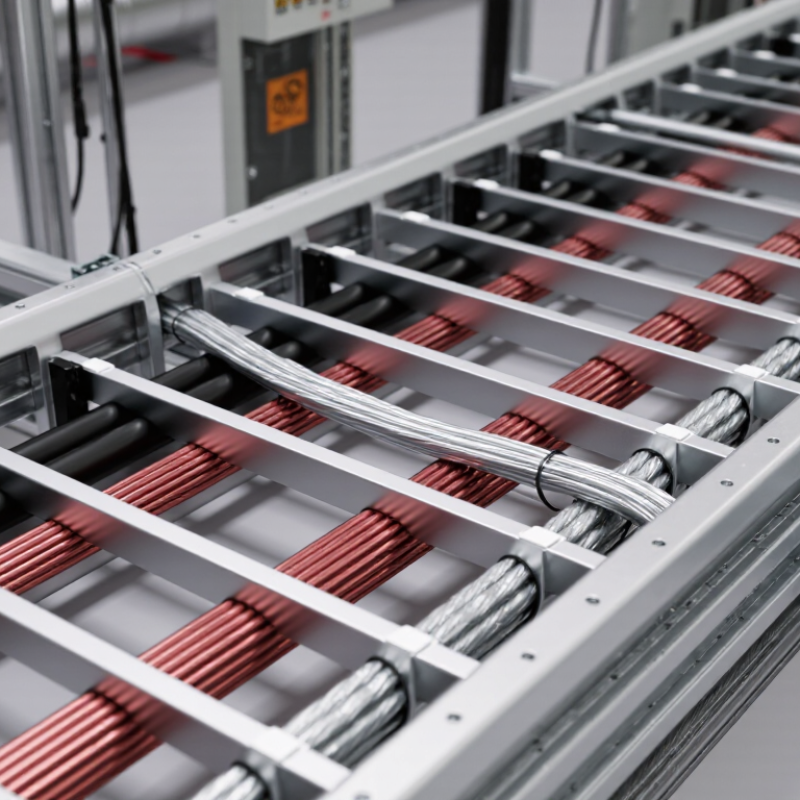
Wire selection begins with the conductor core. Copper offers high conductivity, strong termination performance, and reliable flexibility. Aluminum weighs less and can reduce installation effort, but its larger cross-section needs careful lug and joint preparation. IEC 60228 classifies conductors by construction, from solid cores to highly flexible stranded cores. Class 2 stranded conductors suit fixed tray routes, while Classes 5 and 6 work better near vibration or repeated movement. The choice is not always obvious.
Insulation controls heat, moisture, and chemical resistance. PVC is practical for general indoor routes. XLPE supports higher operating temperatures and can improve ampacity in congested trays. Some cables add a metal screen, drain wire, or armour for electromagnetic control and mechanical protection. NEMA VE 1 and IEC 61537 provide cable tray installation guidance, but local ampacity rules still govern final sizing. The IEA’s Electricity 2024 report expects global electricity demand to grow strongly through 2026, increasing pressure on compact, dependable distribution systems. More capacity can mean more heat.
Tips: Check conductor class, insulation temperature rating, tray fill, short-circuit performance, and bending radius together. Never size from conductor diameter alone. Confirm torque requirements for aluminum connections. That detail is often missed. Field conditions may expose assumptions that looked correct on paper. A qualified engineer should verify derating, earthing, and environmental exposure before purchase.
Common Insulation Materials for Cable Tray Wiring
Top Cable Tray Wire Types for Global Buyers
Common Insulation Materials for Cable Tray Wiring
PVC insulation remains a practical choice for many indoor cable tray systems. It resists moisture, abrasion, and common industrial oils. However, standard PVC may soften near high-temperature equipment. Check the cable’s rated operating temperature, not only the insulation name.
XLPE insulation handles higher continuous temperatures and often supports better current capacity. It performs well in power distribution trays, where heat can build between tightly grouped cables. PE insulation offers strong moisture resistance, especially in dry outdoor locations. It may need extra protection against sunlight and mechanical damage.
Low-smoke zero-halogen insulation is selected for crowded buildings, transit areas, and enclosed facilities. During a fire, it can reduce corrosive smoke, but it is not automatically suitable for every environment. EPR insulation provides useful flexibility and electrical stability in demanding industrial installations. Fluoropolymer materials suit severe heat or chemical exposure, although their cost can be higher.
Look beyond the material label. Confirm voltage rating, flame performance, UV resistance, oil compatibility, bend radius, and temperature derating. Field inspections often find cables pressed tightly against tray edges, despite correct insulation selection. That detail matters. Ventilation, separation, and support spacing affect service life too. Global buyers should compare independent test reports and installation requirements with local project standards. No single insulation material wins everywhere.
How Wire Types Perform in Different Environmental Conditions
Top Cable Tray Wire Types for Global Buyers
How Wire Types Perform in Different Environmental Conditions
Cable tray wiring performs differently as temperature, moisture, and chemical exposure change. Copper conductors offer excellent conductivity and flexible installation. Aluminum conductors reduce weight, but installers must manage larger sizes and connection quality carefully. The conductor is only part of the decision.
Insulation often determines long-term reliability. PVC suits many dry indoor areas and moderate temperatures. XLPE handles higher operating temperatures and can perform better near heat-producing equipment. LSZH insulation is useful in crowded public spaces because it produces less smoke and fewer corrosive gases during fire. It still needs correct installation.
Wet locations require water-resistant construction, sealed entries, and suitable tray placement. Coastal air can attack exposed metal components and cable surfaces. Chemical plants need insulation tested against oils, solvents, or acids, not merely described as “industrial grade.” Outdoor cables also face sunlight, wind, and repeated heating during the day. UV resistance matters.
Cold climates can make some jackets stiff and more vulnerable to cracking during installation. Hot climates increase conductor resistance and may require ampacity derating. A cable that passes a factory test may still underperform when trays are crowded or ventilation is poor. Check the technical datasheet, local electrical requirements, bending radius, and fire performance. Small details matter. The difficult part is admitting that one wire type rarely fits every project.
A Practical Comparison for International Cable Tray Buyers
For international cable tray buyers, wire selection starts with the environment, not price. The International Energy Agency’s Electricity 2024 report forecasts global electricity demand to grow by about 3.4% annually through 2026. More projects mean more varied tray conditions.
Copper conductors offer strong conductivity and easier termination, but they increase material weight and cost. Aluminum is lighter and often more economical for long feeder routes. However, installers must check joint compounds, terminal ratings, and thermal expansion. Small details matter.
Insulation changes the decision. PVC-insulated wires suit many dry indoor installations, while XLPE generally provides higher thermal endurance and better performance in demanding systems. For wet, oily, or outdoor areas, buyers should verify water resistance and sunlight ratings. Armored cable can improve mechanical protection, but it adds weight and reduces bending flexibility. That trade-off is easy to underestimate.
IEC 61537 provides requirements for cable tray systems, while NFPA 70 addresses conductor ampacity, separation, and installation practices in relevant jurisdictions. These references do not replace local approval rules. They guide the conversation.
Cable fill and heat deserve a physical check. A crowded tray can raise conductor temperature and reduce usable ampacity. The U.S. National Electrical Code applies adjustment factors when current-carrying conductors share a raceway or cable system. Yet catalog tables may not reflect dusty sites, grouped trays, or future circuits.
A practical comparison should record voltage, ambient temperature, tray material, corrosion exposure, fire performance, and termination method. I have seen buyers compare only conductor size. That shortcut looks efficient, but it can create expensive redesigns.