Top Flue Gas Desulfurization Equipment Manufacturers
Flue Gas Desulfurization Equipment remains essential for power plants, steel mills, cement factories, and waste-to-energy facilities. These systems reduce sulfur dioxide emissions before exhaust gases reach the atmosphere. The need is practical, not theoretical. Sulfur compounds can damage ecosystems, corrode equipment, and worsen respiratory risks.
The International Energy Agency reported in Coal 2023 that global coal demand reached a record level in 2022. Its later market updates also show continued pressure to control emissions from coal-fired generation. The U.S. Environmental Protection Agency’s Air Pollution Control Cost Manual identifies wet scrubbers as a mature control technology. Under suitable operating conditions, wet systems can achieve sulfur dioxide removal efficiencies above 90 percent. Actual performance depends on fuel chemistry, reagent quality, gas flow, and maintenance discipline.
That last point is often underestimated.
This guide examines top Flue Gas Desulfurization Equipment manufacturers through technical capability, project experience, reliability, and after-sales support. It considers wet limestone systems, seawater scrubbers, dry scrubbers, and semi-dry technologies. Manufacturer scale alone is not enough. A smaller supplier may deliver better site integration, while a global vendor may offer stronger spare-parts networks. The European Commission’s Best Available Techniques Reference Document for Large Combustion Plants emphasizes emission performance, energy use, waste control, and operational monitoring. These factors should shape any serious comparison.
The market is changing quickly. Decarbonization may reduce some coal capacity, but heavy industries still require dependable sulfur control. Selection should therefore match the plant’s fuel, space, water availability, local standards, and long-term operating budget. No ranking is permanently correct. Procurement teams should verify test results, references, guarantees, and lifecycle costs before signing contracts.
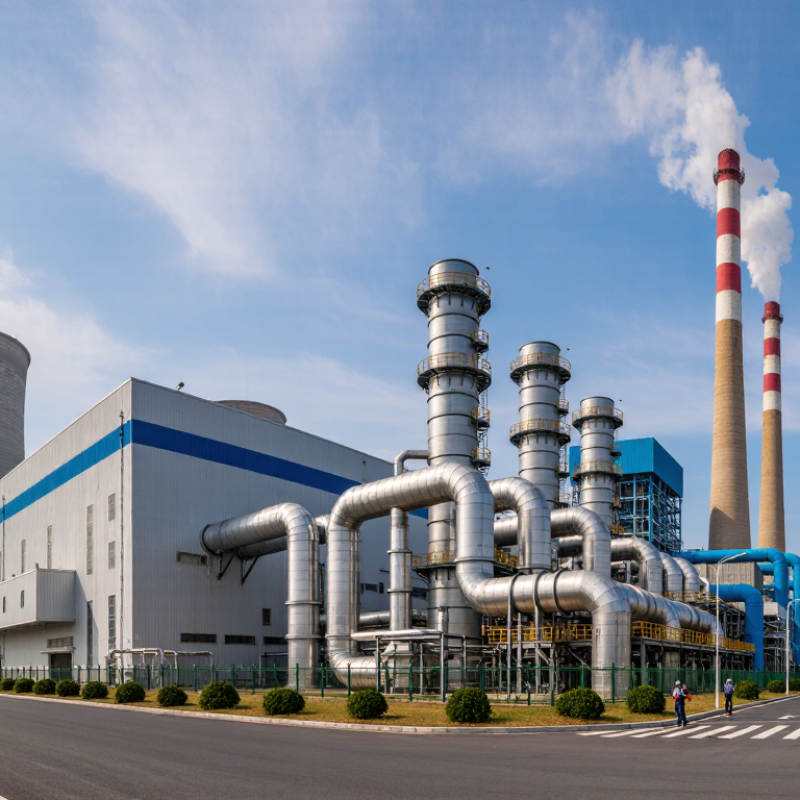
Flue Gas Desulfurization: Definition, Purpose, and Operating Principles
Flue gas desulfurization (FGD) removes sulfur dioxide from combustion exhaust before it reaches the atmosphere. It is essential for coal-fired power plants, industrial boilers, and waste-to-energy facilities. The U.S. Environmental Protection Agency reports that well-designed wet scrubbers can achieve over 90% SO₂ removal, depending on fuel chemistry and operating conditions.
Wet limestone FGD is widely used. Hot flue gas enters an absorber tower, where limestone slurry contacts the gas through sprays. Sulfur dioxide dissolves into the liquid and reacts with alkaline compounds. Forced oxidation then converts the by-product into gypsum.
The European Commission’s Large Combustion Plants BREF identifies high removal efficiency, reagent use, wastewater control, and by-product quality as critical performance factors. Small details matter.
Top FGD equipment manufacturers usually compete through absorber design, corrosion resistance, mist eliminators, pumps, and digital controls. Dry and semi-dry systems require less water but may produce more solid residue. The U.S. EPA Air Pollution Control Cost Manual notes that operating costs depend heavily on limestone quality, electricity use, waste handling, and maintenance frequency.
Real sites are less tidy. Scaling can block spray nozzles, while poor oxidation can reduce gypsum quality. A system may meet its design target during testing, yet underperform during load changes. Operators should therefore review field data, inspection records, and long-term efficiency instead of trusting brochure figures alone.
Major Types of Flue Gas Desulfurization Equipment
Major Types of Flue Gas Desulfurization Equipment
Flue gas desulfurization equipment is selected by sulfur content, boiler load, water supply, and residue handling. Wet limestone scrubbers remain the most widely applied option for large coal-fired units. The U.S. EPA Air Pollution Control Cost Manual reports typical sulfur dioxide removal efficiencies of about 90–99% for well-designed wet systems. A tall absorber tower sprays limestone slurry across rising gas. Gypsum can form as a saleable by-product, but wastewater treatment adds cost and operational risk.
Spray-dry absorbers use atomized lime slurry and produce a dry residue. They usually require less water and smaller buildings than wet systems. EPA guidance commonly places their removal performance near 80–95%, depending on reagent quality and gas conditions.
Dry sorbent injection is simpler still. It feeds hydrated lime or another alkaline powder directly into the duct. Capital costs can be lower, yet sulfur dioxide capture may fall when residence time is short. This is often overlooked.
The EU Large Combustion Plants Best Available Techniques Reference Document identifies wet, spray-dry, and dry sorbent systems as established control routes. Seawater FGD is another specialized type for coastal facilities with suitable water chemistry. It avoids limestone handling, but local environmental conditions must support discharge control.
In field projects, equipment sizing often looks precise on paper. Actual performance still depends on nozzle wear, pH stability, ash loading, and maintenance discipline. No type fits every plant.
Key Features of Top FGD Equipment Manufacturers
Top flue gas desulfurization equipment manufacturers distinguish themselves through practical engineering, stable performance, and transparent technical support. Their systems should match fuel sulfur content, gas volume, moisture, and site temperature. A wet scrubber may suit large power facilities, while dry or semi-dry systems often require less water. Good manufacturers explain this choice clearly.
Strong suppliers provide corrosion-resistant materials, efficient absorber design, and dependable slurry circulation. They also integrate sulfur dioxide monitoring, pressure controls, and automatic dosing. These features help operators maintain consistent removal efficiency during changing loads.
Field experience matters here.
Installation problems often appear in duct transitions, pumps, or mist eliminators. A reliable manufacturer studies those details before production. Certification and test records should be available, not merely promised. Some equipment still looks impressive on paper but performs poorly during fluctuating operation.
Tips:
Ask for verified performance data from comparable facilities. Check access doors, nozzle maintenance, spare-part availability, and control-system compatibility. Request lifecycle cost estimates, including water, power, waste handling, and downtime. Do not judge equipment by purchase price alone. I would also review the manufacturer’s commissioning process and response time. A small weakness in after-sales service can become an expensive plant interruption. Even experienced teams can overlook maintenance space, so challenge the layout before approval.
Applications Across Power, Industrial, and Marine Facilities
Top Flue Gas Desulfurization Equipment Manufacturers
Flue gas desulfurization equipment serves different duties across power, industrial, and marine facilities. In power plants, large scrubbers remove sulfur dioxide from boilers burning coal or heavy fuel. Effective systems manage high gas volumes, moisture, and gypsum by-products. Manufacturers should provide verified removal data, corrosion-resistant materials, and reliable control systems. Site measurements matter more than brochure claims.
Industrial facilities often face changing loads and complex fuels. Refineries, cement plants, metal factories, and chemical sites may need compact systems with flexible dosing. Operators should examine pressure loss, reagent storage, wastewater treatment, and access for maintenance. A system that works well at full load may perform poorly during frequent start-ups. This is an easy detail to overlook. Marine applications demand lighter equipment, smaller footprints, and strong vibration resistance. Scrubbers must also manage seawater quality, washwater monitoring, and limited onboard space. Experienced manufacturers can support ship integration, commissioning, and crew training. Still, every vessel has different routing and operating conditions.
Tips: Compare measured emissions, energy use, and maintenance records before selecting a supplier. Request material certificates and independent performance testing. Check whether sensors remain accurate under wet, salty conditions. Ask for spare-part availability in major ports. A pilot test can reveal unexpected scaling or corrosion. It may cost more initially, but poor assumptions cost more later.
Top Flue Gas Desulfurization Equipment Manufacturers: Applications Across Power, Industrial, and Marine Facilities
The chart presents representative sulfur dioxide removal-efficiency ranges commonly associated with major flue gas desulfurization applications. Wet limestone systems are widely used in power generation, while dry and semi-dry systems are common in industrial, cement, metals, and waste-to-energy facilities. Marine scrubbers typically achieve high removal performance when correctly sized and operated. Actual results vary with fuel sulfur content, gas flow, reagent quality, operating conditions, and emissions requirements.
How to Evaluate and Select an FGD Equipment Manufacturer
Selecting an FGD equipment manufacturer requires more than comparing quoted prices. Start with the supplier’s experience with your fuel, gas volume, sulfur level, and operating profile. Request performance data from facilities with similar conditions. A polished brochure is not enough.
Evaluate the proposed absorber, mist eliminator, slurry system, pumps, and oxidation equipment as one process. Ask how the design controls corrosion, scaling, pressure drop, and wastewater quality. Materials should match chloride exposure and temperature changes. Review energy and water consumption under normal and peak loads. Demand evidence. Independent test results are valuable, but their boundaries matter.
A reliable manufacturer explains assumptions clearly and identifies risks before signing a contract. Check engineering calculations, maintenance access, spare-parts support, operator training, and response times. Visit an operating installation if possible, and speak with its maintenance team. Their comments may reveal small failures hidden in formal reports. Ask how performance is verified after commissioning, including sampling methods and instrument calibration. Guarantees should define measurable conditions, remedies, and exclusions.
Do not ignore project communication. Late drawings can delay foundations, ductwork, and electrical work. During evaluation, keep a written question log and compare every supplier against the same criteria. My practical concern is simple: even a technically sound system can disappoint when operators receive weak training or incomplete manuals. Recheck those details before approval.


