What Are the Top Sewer Line Cleaning Machines?
Choosing the top Sewer Line Cleaning Machine requires more than comparing horsepower, cable length, or water pressure. Pipe diameter, blockage type, access conditions, and operator control matter equally. A compact sectional machine may reach a narrow residential line, while a trailer-mounted jetter may handle long commercial runs more efficiently. The “best” choice changes with the site.
The U.S. Environmental Protection Agency’s 2022 Clean Watersheds Needs Survey estimated $630.1 billion in wastewater infrastructure needs over the next twenty years. That figure highlights the pressure facing municipalities and contractors. The American Society of Civil Engineers also rated U.S. wastewater infrastructure D+ in its 2021 Infrastructure Report Card. Equipment decisions therefore affect maintenance costs, service reliability, and worker exposure to demanding conditions.
Field experience complicates every ranking. Not every blockage needs more power. Excessive force can damage fragile pipes, older joints, or poorly documented connections. Sewer-maintenance specialist Dale Jacobson offers a practical rule: “Match the machine to the pipe, the blockage, and the access.” It is simple, but easy to ignore.
This guide compares cable machines, water jetters, combination units, and robotic cleaning systems. It considers reach, cleaning performance, portability, maintenance, safety features, and long-term value. Manufacturer claims deserve careful checking. Independent demonstrations and documented service records matter more. A perfect machine does not exist. The strongest option is the one that solves the actual cleaning problem without creating another one.
Types of Sewer Line Cleaning Machines and Their Core Functions
What Are the Top Sewer Line Cleaning Machines?
Types of Sewer Line Cleaning Machines and Their Core Functions
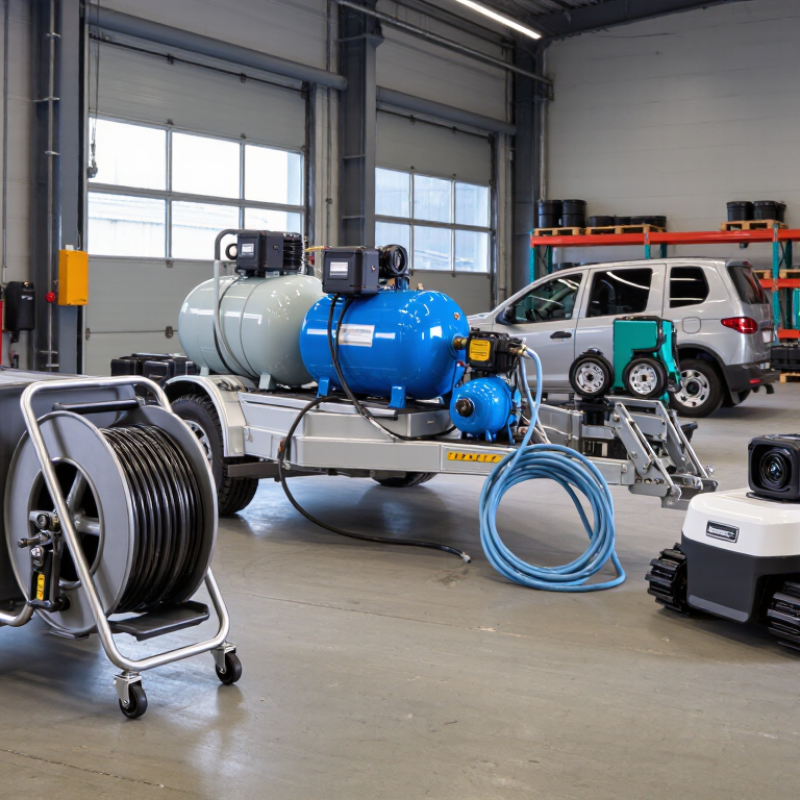
Sewer line cleaning machines differ by blockage type, pipe size, and access conditions. Choosing the wrong system can waste time and damage older pipes. A drum auger uses a rotating cable to break through localized clogs near cleanouts. It works well on household branches and short runs. The enclosed drum helps control cable movement and reduces workspace mess. However, it may struggle with heavy roots or long sewer lines.
Sectional machines use separate cable sections for greater reach and stronger control. Technicians can add or remove sections as the line requires. These machines suit deeper blockages, grease buildup, and larger residential connections. A water jetter uses high-pressure water to scour pipe walls and carry debris downstream. It cleans grease, sludge, and loose sediment effectively. Pressure must match the pipe condition. Excessive force can worsen cracks, especially in aging clay or weakened joints.
Chain flail machines remove hard scale and root growth with rotating cutting chains. They require careful centering to avoid unnecessary contact with the pipe wall. Some crews also use inspection cameras before and after cleaning. The camera reveals offsets, fractures, and remaining deposits that a cable cannot confirm. No machine is perfect. A jetter may move debris without removing the cause, while an auger may open a path but leave residue behind. Reliable work depends on measured pressure, proper tooling, protective equipment, and documented inspection results.
How Sewer Line Cleaning Machines Work
Sewer line cleaning machines remove obstructions by combining mechanical force, controlled water, or both. A cable machine feeds a rotating steel cable through the pipe. Its cutting head breaks grease, roots, and compacted debris into smaller pieces. The operator advances slowly and feels resistance through the cable. That feedback matters. Excessive pressure can damage an aging pipe.
Water-jetting machines use a pump to force water through a flexible hose. Rear-facing openings push the hose forward, while front-facing jets scour the pipe wall. Loosened material moves toward an access point for removal. Pressure and flow must match the pipe’s size, material, and condition. A camera inspection often guides this choice by revealing cracks, offsets, or standing water.
The strongest machine is not always the best choice. Technicians check the access opening, pipe diameter, blockage type, and discharge route first. Protective equipment and controlled work zones reduce avoidable risks. Results should be verified with another camera pass or a measured flow test. Cleaning can restore movement, but it cannot repair a collapsed section. That distinction is easy to miss. Rushed cleaning may create temporary improvement while leaving the main defect untouched. Careful records, honest limits, and follow-up inspection make the service more reliable.
Best Machine Types for Different Sewer Cleaning Conditions
Choosing a sewer cleaning machine depends on the blockage, pipe diameter, access, and disposal conditions. The U.S. EPA’s 2022 Clean Watersheds Needs Survey identified about $115.6 billion in wastewater collection-system needs. That scale makes correct equipment selection more important than maximum pressure.
For grease and routine deposits, a compact water jetter suits smaller service lines and indoor access. It flushes debris forward with controlled flow. Mainline pipes with heavy grease usually need a high-flow jetter and a suitable nozzle. Roots and hardened scale require sectional or drum cable machines with cutting heads. These tools work slowly, but they provide direct mechanical contact. A common mistake is choosing a jetter for every blockage.
Flooded lines and deep sediment call for combination vacuum-and-jetting equipment. Vacuum capacity matters when sand, sludge, or standing water must leave the pipe quickly. The 2021 ASCE Infrastructure Report Card rated U.S. wastewater infrastructure D+ and estimated a $434 billion investment gap over 20 years. That pressure can encourage rushed equipment purchases. I would still inspect pipe condition first. Excessive jetting can damage fragile or poorly joined sections. Field crews should record nozzle size, pressure, flow, cable resistance, and removed material after each job. Small records often reveal larger failures.
Safe Operation and Routine Maintenance Practices
Sewer line cleaning machines demand disciplined operation, whether the crew uses a drum machine, sectional cable unit, or high-pressure water jetter. Before starting, inspect the cable, guards, foot switch, hose, nozzle, and emergency stop. Keep hands away from rotating cable. Never force a blockage. Sudden release can whip the cable backward. OSHA estimates that proper lockout/tagout practices prevent about 120 deaths and 50,000 injuries annually, making energy isolation essential during clearing and repairs.
Wear face protection, waterproof gloves, slip-resistant boots, and hearing protection. Test the work area for poor ventilation, standing water, and unstable surfaces. Sewer gases can collect near access points, even outdoors. Do not enter a manhole without a documented confined-space procedure, atmospheric testing, ventilation, and a trained rescue plan. OSHA reports that more than 60% of confined-space fatalities involve would-be rescuers, so improvised rescue is especially dangerous. That figure should change how supervisors respond under pressure.
Routine maintenance prevents many avoidable failures. Flush and inspect jetting hoses after each shift, then check couplings for cuts or bulges. Clean cable sections, dry them, and apply the manufacturer-approved corrosion protection. Record nozzle wear, motor temperature, unusual vibration, and recurring blockage locations. Replace damaged guards immediately. A useful checklist can still miss a small crack. I have found that rushed end-of-shift inspections create tomorrow’s emergency, so supervisors should review records weekly and question repeated faults rather than simply resetting the machine.


