Why Choose a Peripheral Driving Thickener?
Choosing the right thickening equipment can shape an entire solids-handling process. A Peripheral Driving Thickener offers a practical design for concentrating suspended solids in large circular tanks. Its drive mechanism moves around the tank edge, supporting the rake assembly with steady peripheral force. This arrangement can reduce central mechanical loading and create accessible maintenance points near the perimeter.
In daily operation, the difference appears in small details. Clear overflow should leave the launder evenly. Settled sludge should move smoothly toward the discharge area. Operators may also notice reduced vibration when the drive system is correctly aligned. These benefits matter in mineral processing, wastewater treatment, and industrial recovery systems, where stable underflow density affects downstream performance.
Still, a Peripheral Driving Thickener is not automatically the best choice. Feed characteristics, tank diameter, solids concentration, climate, and available maintenance skills must guide the decision. A thickener that performs well in a demonstration may behave differently with changing particle size or unexpected surges. That assumption deserves testing.
Reliable selection combines operating data, engineering review, and field experience. Torque calculations should match realistic peak conditions, not only average loads. Drive protection, rake lifting, corrosion resistance, and access for inspection also deserve attention. Small oversights can become expensive shutdowns.
The strongest decision is evidence-based. Review historical feed data. Compare lifecycle costs. Ask how the equipment will behave during difficult days, not just normal ones. With careful evaluation, this design can provide dependable clarification, efficient solids transport, and a more maintainable thickening operation. There is no perfect machine. There is only a better-matched one.
What Is a Peripheral Driving Thickener?
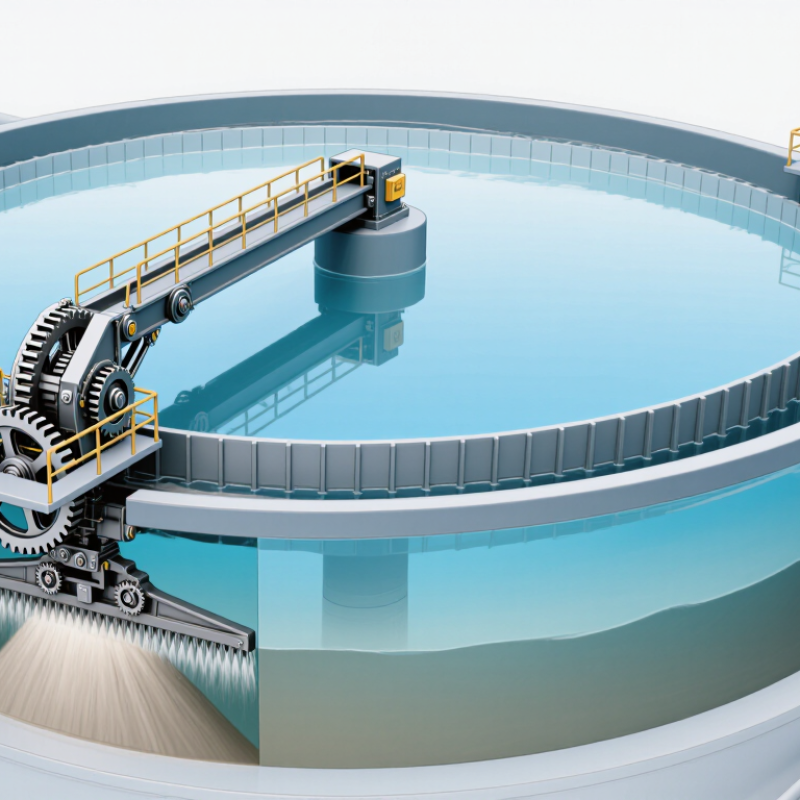
A peripheral driving thickener is a circular settling machine with its drive system positioned around the tank’s outer edge. A rotating bridge moves across the basin, carrying scraper arms through the settled sludge. These scrapers guide concentrated solids toward a central discharge hopper. Surface skimmers can remove floating scum separately.
The peripheral drive transfers motion through a wheel, gearbox, and track installed near the tank wall. This arrangement supports long bridges and large-diameter tanks without placing the main drive above the center. It moves quietly. Operators often monitor torque, track alignment, sludge blanket depth, and underflow density. These readings show whether the machine is collecting solids evenly or pushing against excessive resistance.
In practical wastewater operations, the thickener can reduce sludge volume before dewatering. That may lower handling demands and improve downstream equipment performance. However, the machine does not create concentration by scraping alone. Feed chemistry, hydraulic loading, settling behavior, and rake speed matter greatly. A poorly conditioned sludge can remain loose, even with correct mechanical settings.
Maintenance teams should inspect wheel wear, lubrication points, scraper clearances, and corrosion around submerged parts. Uneven loading may indicate poor feed distribution or an overloaded tank. That assumption can be wrong. Field measurements should confirm it. Selection also requires checking tank diameter, solids characteristics, climate, access, and control requirements. The peripheral drive offers useful structural flexibility, but it is not automatically the best choice for every installation.
How Does a Peripheral Driving Thickener Work?
A peripheral driving thickener is a circular settling machine designed to separate solids from liquid. Its drive system sits around the tank’s outer edge, rather than above the center. This arrangement supports a wide bridge and distributes turning force across the structure. The tank usually includes a central feedwell, where slurry enters at a controlled speed. Inside the feedwell, energy decreases and suspended particles begin to settle.
As solids move downward, rotating scraper arms guide the thickened material toward the central discharge point. Meanwhile, clarified liquid rises and flows gently over the peripheral overflow weir. The drive mechanism moves the bridge and scraper assembly at a slow, steady speed. This prevents unnecessary turbulence, which could lift settled particles back into the water. Operators monitor torque, bed level, overflow clarity, and underflow density during real operation. Small changes matter.
In field conditions, feed concentration rarely stays constant. A sudden increase in solids can raise scraper torque and reduce underflow flowability. Poor leveling may also create uneven overflow, even when the equipment appears to run normally. It is not magic. Correct feed dilution, reliable instrumentation, and regular inspection remain essential. The scraper angle, tank depth, and residence time must match the process requirements. A design can perform well on paper, yet need adjustment after commissioning. This is where operating records become valuable, because actual settling behavior may differ from laboratory predictions.
What Operational Benefits Does It Provide?
A peripheral driving thickener can improve daily sludge handling through steadier torque and controlled rake movement. Its drive system applies force around the tank’s outer rim. This suits large-diameter basins and reduces dependence on a central shaft. Operators also gain clearer access around the feedwell and overflow area. Small details matter.
The U.S. EPA’s Wastewater Technology Fact Sheet on solids treatment reports that gravity thickening can raise sludge concentration from roughly 0.5–1% to about 2–6% solids, depending on sludge type. That change can reduce downstream sludge volume by nearly 80–90%. Less volume means fewer pump cycles, smaller storage demand, and lower hauling frequency. The Water Environment Federation’s Manual of Practice No. 8 also identifies thickening as a key step before digestion, dewatering, or disposal. These benefits are operational, not merely theoretical.
Peripheral drive equipment can also respond more safely to uneven loading. Torque monitoring and rake-lift functions help protect the mechanism when settled solids become dense. However, performance depends on feed consistency, polymer control, and operator adjustment. A powerful drive cannot correct poor sludge conditioning. That is often overlooked. The EPA data provides useful ranges, but actual results vary with solids characteristics and basin design. Regular torque checks, blanket-depth readings, and underflow-density testing remain necessary. Without them, a thickener may consume energy while producing unstable underflow.
Which Materials and Industries Use It?
Mining operations often use peripheral driving thickeners for ore slurries, tailings, and concentrate streams. These machines help separate water from solids before filtration, recycling, or further treatment. Their large circular tanks suit high-volume processing, while the slow rotating rake gathers settled material toward the discharge point.
The material matters. Iron ore, copper-bearing slurry, phosphate, limestone, sand, and coal fines can behave very differently. Fine clay may settle slowly and require controlled flocculant dosing. Coarser mineral particles may compact quickly but create high rake torque. A thickener should match the feed density, particle size, settling rate, and desired underflow concentration.
Mining is only one application. Aggregate plants use thickeners to recover process water and manage fine sand. Cement and mineral powder facilities may treat wash water or slurry streams. Chemical plants can process inorganic suspensions, while industrial wastewater systems handle clarified solids from production lines. Food and paper operations may also use similar separation principles, where permitted process conditions support them.
Field experience shows that performance depends on more than tank diameter. Operators must watch bed level, overflow clarity, torque, and underflow density. Small changes in feed chemistry can cause large operating shifts. Real plants are less tidy than manuals suggest. Pilot testing is still valuable, especially when the slurry contains clay, fluctuating solids, or corrosive components.
How Should You Evaluate and Select One?
Why Choose a Peripheral Driving Thickener?
How Should You Evaluate and Select One?
A peripheral driving thickener suits large settling tanks with high underflow demands. Its drive travels around the tank rim. This arrangement reduces central shaft loading and leaves the feedwell area more accessible. However, selection should begin with process evidence, not equipment appearance.
Define the feed solids, particle size, settling rate, and expected throughput. Laboratory and pilot tests can reveal settling behavior that design tables may miss. Check the required underflow density and overflow clarity under normal and upset conditions. Then compare rake torque, bed depth, drive power, and tank diameter. Ask how the unit responds when solids suddenly increase. A strong design includes torque protection, reliable instrumentation, and safe access for inspection.
Review the mechanical details closely. Examine corrosion allowances, bearing protection, scraper stiffness, and emergency stopping methods. Confirm whether the civil structure can support the operating load, including an uneven sludge bed. Request performance data from comparable duties. Supplier calculations should clearly show assumptions and safety margins. References matter, but similar feed material matters more.
Do not ignore maintenance time. A peripheral drive can simplify access, yet rim components still need regular inspection. I would also test control logic during commissioning, because a perfect calculation cannot predict every plant habit. My own selection process would include a review by operations staff. They notice practical problems engineers sometimes miss. A neat specification can still be wrong. That is worth admitting early.
Why Choose a Peripheral Driving Thickener?
How should you evaluate and select one?
How to use this chart: These indicative evaluation weights reflect common engineering priorities when selecting a peripheral driving thickener. Process performance and solids handling should be assessed first, followed by mechanical reliability, operating cost, site fit, and maintenance access. Final selection should be verified against laboratory settling tests, design loading, torque requirements, and local operating conditions.


