Blog
Why Choose a Roll Crusher for Your Business?
Choosing a Roll Crusher is not merely a matter of selecting a machine from a catalog. It is a production decision shaped by feed size, material hardness, moisture, and the product your operation must deliver. The stakes are real. The U.S. Geological Survey’s Mineral Commodity Summaries 2024 estimated U.S. crushed-stone output at roughly 1.5 billion tons in 2023, illustrating the scale of the materials sector. That figure describes the market, not roll-crusher sales, but it shows why dependable size reduction matters.
A Roll Crusher can offer controlled reduction, a relatively simple layout, and a product with fewer fines in suitable applications. Its twin rolls draw material through a gap; the setting, roll surface, and feed conditions influence the result. Barry A. Wills, a recognized mineral-processing author, emphasizes matching equipment to the material and process requirements. Put plainly, the crusher must suit the feed and target size. This is a paraphrase of his general guidance, not a direct quotation.
There are trade-offs. Abrasive feed can increase wear, while sticky material may affect consistent feeding. Capacity also depends on more than the machine’s nameplate rating. Test results and site-specific operating data are more useful than broad promises. A careful comparison should examine maintenance access, expected product gradation, energy use, and downstream equipment. Even then, estimates can miss real plant conditions. That is worth admitting. This guide explains when a Roll Crusher may fit your business, what to check before purchase, and where another crusher type may be the better choice.
What a Roll Crusher Is and How Its Main Components Work
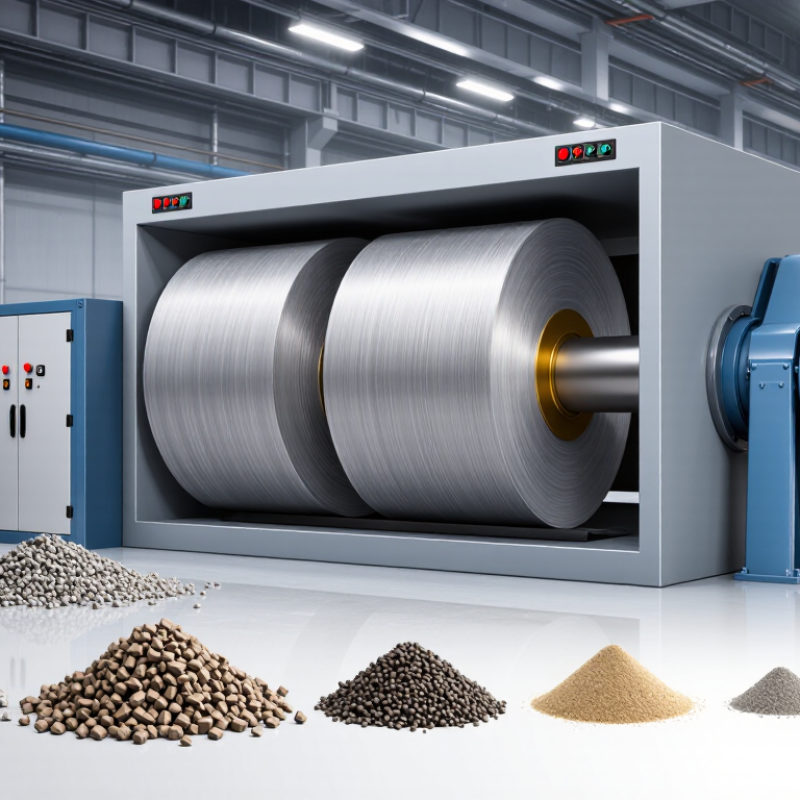
A roll crusher reduces material between two cylindrical rolls that rotate toward each other. The feed enters through a hopper and drops into the nip, where the rolls apply pressure. Depending on the material and roll surface, crushing may also involve some shearing. The result is usually a more controlled product size than rough, uncontrolled breakage.
The idea is simple. Choosing the right roll design is less so.
The main components include the rolls, a supporting frame, bearings, and a drive system. A motor and gearbox turn the rolls at a set speed, while bearings keep the shafts aligned under load. Smooth rolls are often used for finer, more uniform reduction; toothed rolls can grip larger, tougher feed. An adjustable gap sets the approximate output size. It is not a perfect guarantee: feed moisture, hardness, and uneven loading can all affect the result.
Small details matter.
Operators should also understand the feed arrangement and the machine’s protective guards. A steady feed helps prevent one section of a roll from carrying too much load. Scrapers may remove material that sticks to the roll surfaces, but they need inspection and adjustment. In practice, wear changes the gap over time, so checking roll condition and measuring product size are useful routine steps. A crusher that suits one material may perform poorly with another. Trial data is better than guesswork.
How Roll Crushers Process and Reduce Material
A roll crusher reduces material between two rotating rolls. As feed enters the nip, the rolls draw it inward and apply compression; some materials also experience mild shear. The distance between the rolls, called the gap, helps control the discharged particle size. For example, a consistent feed of dry limestone may pass through a narrow gap and leave as smaller, more uniform pieces. Not magic. Oversized rocks, sticky feed, or uneven loading can change the result and place extra strain on the machine.
Operators usually adjust the gap to suit the next processing step, then check the product with a screen or sample. A wider setting can increase throughput, while a tighter one may produce finer material, but it can also reduce capacity. Roll speed, roll surface, moisture, and feed rate matter too. In practice, a steady stream works better than dumping a large pile at once. Watch for uneven wear: one side may polish faster if material feeds off-center. That detail is easy to miss. Regular inspection and representative samples help show whether the crusher is meeting the required size range, rather than merely running smoothly.
Key Advantages of Choosing a Roll Crusher for Business
A roll crusher can make production more predictable when a business needs a fairly uniform output. Two rotating rolls compress material through a set gap, allowing operators to adjust the product size for the next processing stage. That control can reduce unnecessary recirculation. It may also limit excess fines, depending on the material and operating conditions. Every feed behaves differently.
For many operations, the practical advantages are straightforward. A compact layout can fit into an existing line, while accessible components may simplify inspection and routine maintenance. Lower-speed crushing can also use less energy than some alternatives, though actual consumption depends on feed size, hardness, moisture, and throughput. Check the figures against your own material.
There are trade-offs. Sticky or unusually hard feed can cause uneven performance, and worn roll surfaces may change the product size over time. Operators should inspect the gap, collect regular samples, and watch for buildup near the feed opening. A roll crusher is not automatically the best choice. A short material trial can reveal whether its capacity, maintenance needs, and finished product suit the business.
Industries and Materials Suited to Roll Crushing
Roll crushers suit businesses that need steady, controlled size reduction rather than very fine grinding. In quarries and aggregate plants, they can process limestone, shale, and other relatively soft, brittle rock. Material passes between two rotating rolls, and the gap helps determine the product size. That can mean fewer unwanted fines. Feed consistency still matters.
Cement operations may use roll crushers to prepare limestone and clay before further processing. Coal preparation plants, salt producers, and mineral processors also use them for suitable feed materials. In fertilizer production, some phosphate rock can be reduced in size with this equipment. Operators often value the straightforward adjustment of the roll gap. The actual result depends on the material and machine settings.
Roll crushing is not ideal for every feed. Very hard, highly abrasive rock can wear the rolls quickly, while wet or sticky material may cling and disrupt flow. That is not automatic. A small sample test can reveal whether the material fractures cleanly and whether the product meets the next process’s needs. Check moisture, feed size, and expected wear before choosing a system.
Factors to Consider When Selecting a Roll Crusher
Why Choose a Roll Crusher for Your Business?
Factors to Consider When Selecting a Roll Crusher
Selecting a roll crusher starts with the material, not the machine. Record the feed’s maximum size, hardness, moisture, and abrasiveness. These details affect throughput, wear, and product consistency. A unit that handles dry limestone may perform differently with damp, sticky feed. Define the required output size and daily capacity before comparing specifications.
Tips: Measure twice. Compare the stated capacity with your actual feed conditions, not just ideal figures. Ask how the roll gap is adjusted and how worn surfaces are replaced.
Consider the reduction ratio and the product shape your process needs. A narrow gap can produce finer material, but may reduce throughput or increase wear. Check motor power, access for maintenance, guarding, and dust control. These practical details matter during routine operation. Request test data using representative material when possible. Also review expected wear-part life and service intervals. Estimates can vary; treat them as estimates, not guarantees. A crusher may suit the numbers on paper, yet prove awkward to clean or inspect in a cramped plant. That trade-off deserves a close look.
Why Choose a Roll Crusher for Your Business? — Factors to Consider When Selecting a Roll Crusher
| Selection Factor | When a Roll Crusher May Be a Good Fit | What to Check Before Buying | Business Impact |
|---|---|---|---|
| Material characteristics | Often used for friable materials such as coal, limestone, salt, and some ores. | Confirm hardness, abrasiveness, moisture, clay content, and whether the feed contains tramp metal. Very hard or highly abrasive feed can cause rapid wear. | Material suitability affects wear-part life, maintenance frequency, and operating cost. |
| Feed size and consistency | Can handle a range of feed sizes, depending on roll diameter, tooth design, and crusher configuration. | Compare the largest expected lump size—not just the average—with the machine’s specified maximum feed size. Assess how much feed preparation is needed. | A compatible feed can reduce blockages and avoid extra screening or pre-crushing equipment. |
| Required product size | Roll gap adjustment can help control the product size; toothed and smooth rolls produce different size distributions. | Ask for test results using representative material. Product size also depends on feed grading, roll profile, speed, and condition. | Meeting the target size can reduce downstream screening, recirculation, or additional crushing. |
| Reduction ratio | Well suited to moderate size reduction. Smooth-roll machines commonly operate at lower reduction ratios than many toothed designs. | Match the feed-to-product reduction required to the proposed configuration; a single roll-crushing stage may not achieve every target. | Correct stage selection helps balance equipment cost, product consistency, and the number of process steps. |
| Throughput requirement | Available in sizes for different production rates, with capacity strongly dependent on machine dimensions and material properties. | Size the crusher using the required sustained throughput, feed bulk density, moisture, particle-size distribution, and operating schedule. | Proper sizing helps prevent production bottlenecks and avoids paying for unnecessary capacity. |
| Moisture and sticky feed | May work with some damp materials, but performance depends on material behavior and roll design. | Check whether the material smears, cakes, or builds up on the rolls. Request an assessment or test for wet, clay-rich, or sticky feed. | Build-up can reduce capacity, make product size less consistent, and increase cleaning downtime. |
| Energy and operating cost | Compression between rolls can be an efficient way to reduce suitable materials, particularly when excessive fines are undesirable. | Compare expected power draw, wear-part cost, labor, lubrication, and maintenance needs under your actual operating conditions. | Total cost of ownership is more useful than purchase price alone when comparing crusher options. |
| Maintenance and access | Many designs provide access to rolls and wear components for inspection and replacement. | Review roll change procedures, adjustment systems, spare-parts availability, service access, and the time required for routine maintenance. | Accessible maintenance can reduce planned service time and improve equipment availability. |
| Safety and protection | Can be integrated with guarding, interlocks, and overload protection as part of a complete crushing system. | Verify the machine’s safety features and ensure the installation includes appropriate guarding, isolation procedures, and protection against tramp material. | Good safety design supports safer operation and helps limit damage from unexpected objects. |
| Site and process integration | Often considered for secondary or tertiary crushing and can be incorporated into screening and conveying circuits. | Check footprint, feed and discharge arrangements, foundation loads, dust control, noise requirements, and compatibility with existing equipment. | Early layout checks can avoid costly changes during installation and commissioning. |
Selection note: Capacity, achievable product size, power demand, and wear life vary with the material and machine design. Use representative material testing and site-specific operating data to confirm final equipment sizing.
Article Source:
Exclusive Access
Unlimited Resources
Detailed information on our products to assist you with the planning of your cable management project
Register Now